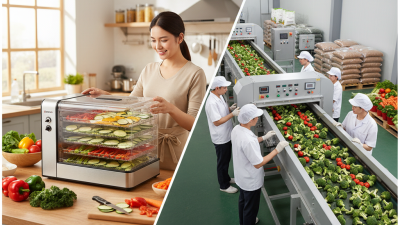
Fruit and vegetable drying is moving from a small preservation method toward a more measured industrial process. The 2026 Top Fruit Vegetable Dryer Manufacturers Guide examines suppliers, technologies, capacity claims, and practical operating evidence. It is designed for processors comparing cabinet, tunnel, belt, vacuum, and heat-pump systems.
The need is substantial. FAO reported that 14% of global food is lost between harvest and retail in The State of Food and Agriculture 2019. UNEP’s Food Waste Index Report 2024 estimated 1.05 billion tonnes of food waste in 2022. Drying cannot solve every loss, but it can extend shelf life when raw materials, temperature, airflow, and packaging are controlled.
Numbers vary.
Market forecasts also differ because analysts define the category differently. Some include household machines, while others focus on industrial dehydration equipment. This guide therefore avoids treating market size alone as proof of manufacturer quality. It considers documented throughput, moisture consistency, energy use, food-contact materials, cleaning access, spare-parts support, and installation experience.
A credible Fruit Vegetable Dryer manufacturer should explain how its system handles sliced apples, leafy vegetables, mushrooms, or dense roots. A useful test report should show starting moisture, final moisture, drying time, batch weight, and energy consumption. Claims need proof.
Readers should also review HACCP procedures, applicable food-safety requirements, electrical certifications, warranty terms, and local service coverage. These details often matter more than polished brochures. Some supplier information may remain incomplete, and that weakness deserves attention. Real performance depends on product size, loading density, climate, and operator training. This guide treats manufacturers as candidates for verification, not automatic endorsements.
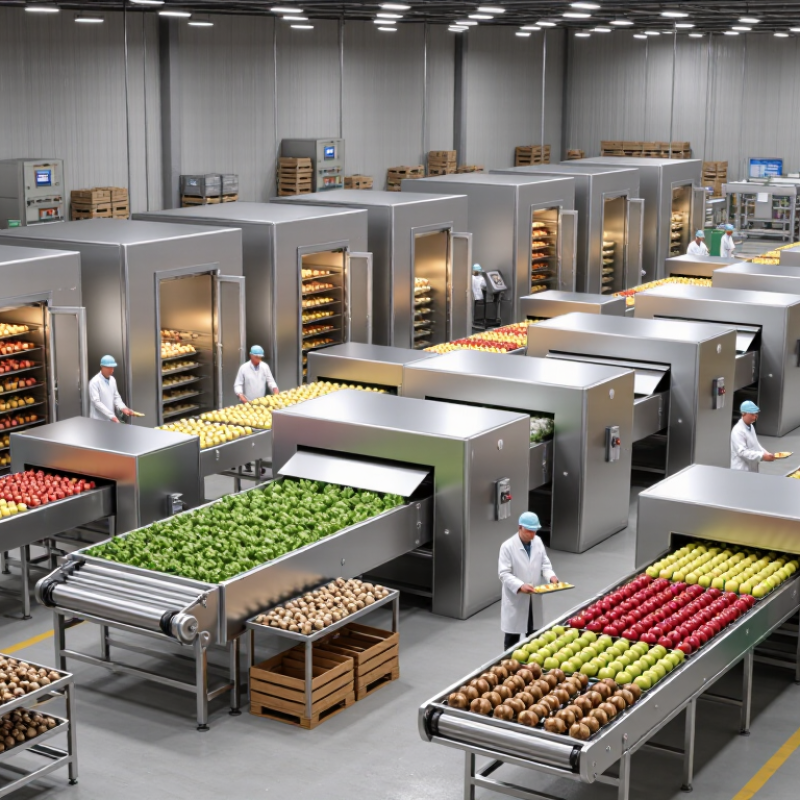
A fruit and vegetable dryer is a controlled dehydration system. It removes moisture through heated air, airflow, infrared energy, vacuum, or freeze-drying. The aim is not simply to make produce smaller. It is to lower water activity, slow microbial growth, and preserve useful color, flavor, and nutrients.
Fresh produce often contains 70% to 95% water. A well-designed dryer gradually reduces this moisture without scorching thin apple slices or leaving damp centers in carrots. Water activity below 0.60 generally prevents the growth of most bacteria, yeasts, and molds, according to food-safety guidance.
However, drying does not sterilize food. That distinction matters.
The demand is practical. FAO reported that 13.2% of food was lost between harvest and retail globally in 2021. The UNEP Food Waste Index Report 2024 estimated 1.05 billion tonnes of food waste in 2022. Drying can extend usability, especially where cold storage is limited.
Yet the process is not automatically efficient. Poor airflow may create uneven batches, while excessive heat can darken fruit and damage texture. In field testing, operators should record inlet temperature, product temperature, drying time, final moisture, and water activity. I would not trust appearance alone. A bright, crisp surface can hide moisture inside, which is an easy mistake for inexperienced users.
Fruit and vegetable drying equipment is selected by moisture level, product shape, and production volume. Hot-air tray dryers suit sliced apples, carrots, mushrooms, and herbs. Operators place food on perforated trays, then control temperature, airflow, and drying time. This design is practical for small and medium processors. It also allows easy inspection during drying.
Continuous belt dryers handle larger quantities. Sliced produce moves slowly through several temperature zones. This supports steadier moisture removal and reduces manual handling. Tunnel dryers use carts or racks inside an insulated chamber. They work well for batches with different loading sizes. However, uneven slicing can still produce soft centers and brittle edges.
Vacuum dryers remove moisture at lower temperatures. They help protect color, aroma, and heat-sensitive nutrients in berries or leafy vegetables. Freeze dryers preserve structure especially well, but their energy use and purchase cost are high. Microwave-assisted systems can shorten drying time, yet they require careful power control. Overheating may create dark spots or hard surfaces.
Small details matter. A two-millimeter difference in slice thickness can change the final texture. Pre-treatment, such as blanching, may reduce browning in selected vegetables. Still, it can also cause nutrient loss or a softer bite. No dryer performs perfectly without testing. Moisture checks, sample weighing, and recorded batch data make equipment decisions more reliable.
| Drying Equipment Type | Typical Operating Temperature | Typical Product Capacity | Typical Final Moisture Range | Best-Suited Fruits and Vegetables | Main Advantages | Key Purchasing Considerations |
|---|---|---|---|---|---|---|
| Hot-Air Tray Dryer | 50–90 °C | 50–500 kg fresh product per batch | 5–15% | Apple slices, banana, mango, carrot, onion, garlic, leafy vegetables | Simple construction, flexible batch sizes, easy product changeover, and relatively low initial investment. | Check airflow uniformity, tray loading density, insulation quality, temperature control, and labor requirements. |
| Continuous Belt Dryer | 50–120 °C | 100–2,000 kg fresh product per hour | 4–12% | Vegetable flakes, sliced carrots, onions, mushrooms, herbs, and fruit pieces | Suitable for continuous production, scalable capacity, and consistent residence-time control. | Evaluate belt width, number of drying zones, belt-cleaning access, air recirculation, and product bed depth. |
| Tunnel Dryer | 55–100 °C | 300–5,000 kg fresh product per batch or cycle | 5–15% | Plums, dates, grapes, peppers, tomatoes, apples, and large-volume sliced vegetables | High throughput, compatibility with wheeled trolleys, and efficient use of industrial floor space. | Review trolley design, airflow direction, tunnel sealing, loading method, and heat-recovery options. |
| Heat-Pump Dehumidification Dryer | 35–70 °C | 100–1,000 kg fresh product per batch | 3–12% | High-value fruits, berries, mushrooms, herbs, leafy vegetables, and color-sensitive products | Lower-temperature drying, good control of color and aroma, and reduced dependence on ambient humidity. | Compare coefficient of performance, dehumidification capacity, compressor service access, and drying uniformity. |
| Vacuum Dryer | 30–80 °C product temperature | 20–500 kg fresh product per batch | 2–10% | Fruit pieces, vegetable powders, delicate herbs, and oxygen-sensitive ingredients | Lower boiling temperature, reduced oxidation, and improved retention of volatile flavor compounds. | Consider vacuum level, chamber volume, condenser capacity, gasket durability, and batch-cycle length. |
| Microwave-Vacuum Dryer | 30–70 °C product temperature | 20–300 kg fresh product per batch | 2–8% | Fruit chips, berries, vegetable slices, and premium ingredients requiring short drying times | Rapid internal heating, shorter drying cycles, and potential improvement in crispness and color retention. | Assess microwave power distribution, shielding, vacuum stability, safety interlocks, and process validation. |
| Freeze Dryer | Shelf temperature typically −40 to +60 °C | 10–500 kg fresh product per batch | 1–5% | Berries, tropical fruits, probiotics, herbs, and premium vegetable ingredients | Excellent preservation of shape, color, aroma, and rehydration performance. | Compare condenser temperature, ice capacity, vacuum pump performance, cycle duration, and energy consumption. |
| Spray Dryer | Inlet air: 140–220 °C; outlet air: 60–100 °C | 10–500 kg water evaporation per hour | 2–6% | Fruit juice powders, vegetable extracts, purees, and liquid concentrates | Converts pumpable liquids into free-flowing powders in a continuous process. | Check feed solids content, atomizer type, powder recovery, wall deposition control, and exhaust filtration. |
| Fluidized-Bed Dryer | 50–120 °C | 50–1,500 kg fresh product per hour | 3–10% | Peas, diced carrots, corn, diced potatoes, fruit pieces, and granular vegetable products | Efficient heat and mass transfer, relatively short drying time, and good suitability for free-flowing pieces. | Confirm particle-size range, airflow velocity, pressure drop, dust collection, and product attrition risk. |
| Solar-Assisted Dryer | 40–70 °C | 20–500 kg fresh product per batch | 8–18% | Seasonal fruits, sliced vegetables, herbs, and small-scale agricultural products | Can reduce fossil-fuel use and operating costs where solar radiation is reliable. | Evaluate backup heating, weather protection, drying-season availability, thermal storage, and hygiene controls. |
In 2026, evaluating a fruit and vegetable dryer manufacturer requires more than comparing catalog prices. Ask for evidence from pilot runs, not polished promises. A capable manufacturer should explain airflow, heat recovery, humidity control, and loading density in plain language. Request test data for your actual products, such as apple slices, mango, mushrooms, or leafy vegetables. Moisture results should include sampling methods and final water activity, not only drying time. Look for batch uniformity. One tray should not feel leathery while another remains soft.
Visit the production site, physically or through a live video audit. Check welding quality, insulation, door seals, electrical panels, and cleaning access. Food-contact surfaces should use suitable, corrosion-resistant materials. Ask who makes critical parts and how replacements are tracked. Reliable suppliers provide drawings, manuals, calibration records, and a clear commissioning plan. They also explain capacity honestly. A quoted output based on empty trays is not useful.
Before signing, run a paid sample test using your raw material, target thickness, and packaging conditions. Measure energy use, drying time, color retention, texture, and labor needs. Speak with recent customers about response times after installation. Warranty language matters, but service skills matter more. I would be cautious with perfect claims. Real crops vary, and even a well-designed machine needs adjustment. A manufacturer that records failures and updates procedures may be more trustworthy than one hiding every weakness.
Top Fruit and Vegetable Dryer Manufacturers for 2026
The best fruit and vegetable dryer manufacturers in 2026 focus on stable drying, not impressive brochures. Their equipment should maintain even airflow across every tray. Temperature control matters, especially for thin apple slices, herbs, and high-moisture vegetables. A useful machine should also record temperature, humidity, drying time, and batch conditions.
Look for manufacturers that provide trial drying before purchase. A sample test can reveal uneven color, brittle edges, or moisture trapped inside thicker pieces. Ask for airflow diagrams, heat distribution data, food-contact material details, and cleaning instructions. Stainless steel construction helps, but design quality matters more than appearance. Door seals, removable trays, and accessible fans can reduce daily maintenance.
Reliable manufacturers explain their limits clearly. They should state the expected capacity, energy use, drying range, and installation requirements. Technical support must include spare parts and practical troubleshooting. In real production, a small sensor error can damage an entire batch. That is not a minor issue.
Some claims still deserve skepticism. Faster drying may affect flavor, color, or texture. Buyers should compare test results under identical conditions. The most suitable supplier may not offer the largest chamber. It should offer repeatable results, transparent documentation, and support that remains useful after installation.
This comparison shows typical hot-air dehydration temperature ranges used for common fruit and vegetable products. Actual settings vary with slice thickness, initial moisture, airflow, pretreatment, and the desired final moisture level.
Reference basis: commonly published food-dehydration guidance from university extension and food-preservation resources. Values are shown in °C.
Choosing a fruit and vegetable dryer begins with the product, not the machine. FAO’s State of Food and Agriculture 2019 estimates that 14% of food is lost between harvest and retail. A suitable dryer can reduce moisture quickly while protecting color, texture, and nutrients. Ask manufacturers for trial data using your actual mango slices, apple rings, or mushroom pieces. Test results should show inlet temperature, drying time, final moisture, and energy use.
Look for adjustable airflow, accurate temperature control, hygienic contact surfaces, and simple cleaning access. The manufacturer should explain capacity using real loading conditions, not empty-tray figures. Request records for calibration, maintenance, spare parts, and operator training. UNEP’s Food Waste Index Report 2024 estimates that 1.05 billion tonnes of food were wasted in 2022 across households, food service, and retail. Efficiency matters, but exaggerated savings claims need checking. A low purchase price may hide high electricity costs or difficult repairs. I would also question any supplier that avoids a product trial. A spreadsheet can look precise. Your farm rarely does. Seasonal moisture, uneven cutting, and unstable power can change the result. Choose a manufacturer that measures these problems openly and helps you improve the process.