Best Rice Dryer Options for Global Buyers in China
In recent years, the rice dryer industry has seen significant advancements, particularly in China. According to a report by the International Rice Research Institute, global rice production is expected to reach 520 million tons by 2025. Efficient drying methods will be crucial to maintaining rice quality. Expert Dr. Li Ming states, "Investing in advanced rice dryer technology can reduce post-harvest losses by up to 30%."
Modern rice dryers utilize various technologies, including continuous flow and batch drying. These systems address the unique needs of diverse rice varieties. However, selecting the right equipment can be challenging for global buyers. Many encounter difficulties in ensuring optimal performance and energy efficiency. This reflection points to the need for informed decisions supported by industry expertise.
As competition grows, understanding rice dryer options is vital. With rising standards in quality and efficiency, buyers must consider innovative solutions. This helps them meet market demands while reducing waste. Investing in the right technology will shape the future of the rice industry in China and beyond.
Best Rice Dryer Options for Global Buyers in China
When selecting the best rice dryer options in China, global buyers should prioritize efficiency and reliability. The rise in demand for quality rice processing has intensified the competition in the global market. According to industry reports, the global rice dryer market is projected to grow at a CAGR of 5.2% from 2021 to 2027. This growth highlights the need for effective drying technology, as inadequate drying can lead to significant post-harvest losses.
Understanding moisture content is crucial. Ideally, harvested rice should have a moisture level of about 20%. Drying it to 14% is essential for storage. However, overshooting this level can damage the grains. The right equipment must maintain optimal temperatures without compromising quality. Improper drying can result in texture changes and nutritional losses.
Tip: Always check the energy consumption of drying machines. Higher efficiency can reduce operational costs in the long term.
Moreover, buyers should consider maintenance and service availability. Equipment downtime can cost money and affect production schedules. Some products may require frequent repairs, which can become an unforeseen burden. Researching user reviews and expert opinions can yield invaluable insights into long-term performance.
Tip: Consider investing in a machine with easy-to-access components for maintenance purposes. This will help ensure operational continuity and reduce overall costs.
Understanding the Importance of Rice Drying Technology
Rice drying technology plays a crucial role in preserving the quality of harvested rice. When rice is harvested, it contains moisture levels of 20% or higher. If not dried properly, this moisture can lead to mold growth and spoilage. Reports indicate that improper drying can cause up to 25% loss in yield during storage. Effective drying systems maintain the right moisture content, which should be around 14% for safe storage.
Many global buyers are investing in advanced rice dryers. These systems ensure an even drying process, which is vital. Some options include batch dryers and continuous flow dryers. Each option has its advantages and limitations. Continuous flow dryers are efficient for larger operations, while batch dryers can be more suitable for smaller farms. The choice often depends on the scale of production and budget constraints.
Tips: Always assess the specific needs of your operation before purchasing a dryer. Consider factors such as local climate, drying capacity, and energy sources. Regular maintenance of drying equipment is essential to avoid inefficiencies. Inexperience can lead to selecting the wrong type of dryer, which may hinder operations.
By investing in the right drying technology, buyers can enhance rice quality and reduce post-harvest losses. Leveraging reliable data can guide smarter decisions for future investments in rice drying systems.
Types of Rice Dryers Available in the Chinese Market
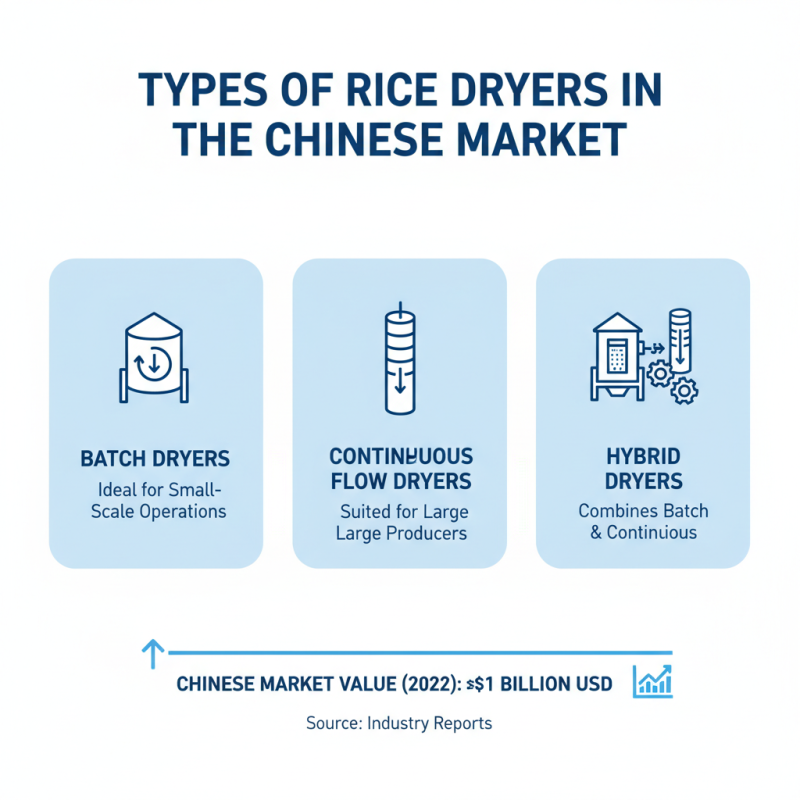
The variety of rice dryers in the Chinese market reflects the diverse needs of global buyers. Common types include batch dryers, continuous flow dryers, and hybrid dryers. Each type serves specific purposes, with batch dryers typically suited for smaller operations, while continuous flow models cater to larger producers. According to industry reports, the market for rice drying equipment in China was valued at approximately $1 billion in 2022, showing robust growth.
Batch dryers are often favored for their simplicity and lower initial costs. They can handle 1-10 tons per batch, making them ideal for small-scale farmers. However, their throughput may require longer operational hours. Continuous flow dryers offer higher efficiency and scalability, processing 5-50 tons per hour. A report by the China Agricultural Machinery Industry Association highlights a growing preference for continuous systems due to labor cost reductions.
Hybrid dryers combine features of both types, providing flexibility. They often incorporate advanced technologies like temperature control systems, improving the quality of dried rice. The adoption of energy-efficient models is also becoming crucial, with studies showing that 30% of energy consumption can be reduced through better designs. However, the upfront investment can be substantial for smaller buyers, preventing widespread adoption.
Key Features to Look for in Rice Dryers
When selecting a rice dryer, certain key features can significantly enhance performance.
Consider the drying capacity; a higher throughput often leads to more efficient operations.
Look for units that can handle varying moisture levels.
This adaptability is crucial in different climates.
Temperature control is another essential feature. Uniform heating ensures that rice dries evenly, preventing spoilage.
Categorizing dryers based on their energy consumption can lead to cost savings over time.
Remember, sustainability is increasingly important in modern agriculture.
Additionally, ease of use and maintenance plays a vital role.
Dryers with user-friendly interfaces allow for quick adjustments.
Easy cleaning mechanisms also contribute to lower downtime.
While these features matter, weigh them against your specific needs.
Customization may sometimes lead to extra expenses or complicate operations.
Balancing efficiency and cost can demand careful thought.
Top Manufacturers of Rice Dryers in China
When considering rice dryers, understanding the top manufacturers in China is crucial. The country is renowned for its advanced agricultural machinery. Many companies specialize in rice drying technology, ensuring efficiency and quality. Their innovations often focus on energy conservation and improved drying methods.
One notable feature among these manufacturers is their strong emphasis on customization. They understand varied grain types and moisture levels vary globally. This allows them to cater to different needs in the rice market. However, not all solutions fit every climate or crop type. Some buyers have reported mismatched systems, prompting them to rethink their choices.
Quality control is another area of concern. While many manufacturers boast of high standards, discrepancies can occur. Regular maintenance is vital to ensure consistent performance. New buyers must consider not only the initial investment but also long-term reliability. It's essential to research and verify the credibility of these producers before making significant purchases.
Conclusion
This article explores the best rice dryer options available for global buyers in China, emphasizing the critical role of rice drying technology in ensuring grain quality and marketability. It outlines various types of rice dryers found in the Chinese market, highlighting their unique features and the advancements in drying methods that improve efficiency and reduce costs.
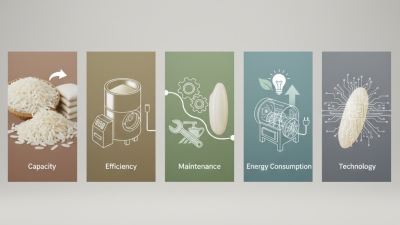
In addition, the article provides a comparative analysis of rice dryer prices and performance, enabling buyers to make informed decisions based on their specific needs. Key features to consider when selecting a rice dryer include capacity, energy efficiency, and drying uniformity. Overall, the insights provided aim to assist international customers in navigating the diverse offerings of rice dryers in the Chinese market, ensuring they choose an option that best fits their agricultural requirements.