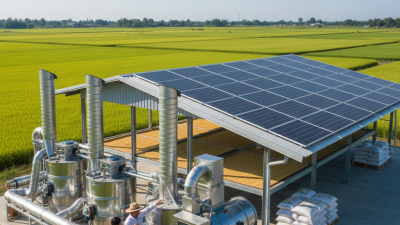
Leave Your Message
Choosing a Rice Dryer in 2026 is not simply a matter of buying the largest machine. The right option depends on harvest volume, available labor, energy costs, and how quickly paddy must be dried. A small batch dryer may suit farms with staggered harvests and limited space. Continuous-flow systems can handle larger, steady volumes, but need suitable handling equipment and reliable power. Mixed-flow and recirculating designs offer other ways to manage airflow and drying uniformity. Each type has trade-offs.
Details matter. Ask how the dryer controls grain temperature, measures moisture, and limits uneven drying. Check its rated capacity against your real harvest conditions, not just a supplier’s ideal figures. A full bin of wet rice behaves differently from a small test load. Very different. Also compare fuel use, maintenance access, spare-parts availability, and the local service team. Request performance data for rice, then verify it against the machine’s manual and your operating conditions. Rice variety, starting moisture, and weather can all change results.
This guide will compare common dryer types and explain which buyers each may suit. It will also consider purchase price alongside installation, energy, and maintenance costs. No machine is perfect. A high-capacity unit may sit underused, while a cheaper model may create bottlenecks during peak harvest. I would treat advertised savings cautiously until the assumptions are clear. Use the comparison to build a shortlist, then ask suppliers specific questions and, where possible, inspect a working installation before deciding.
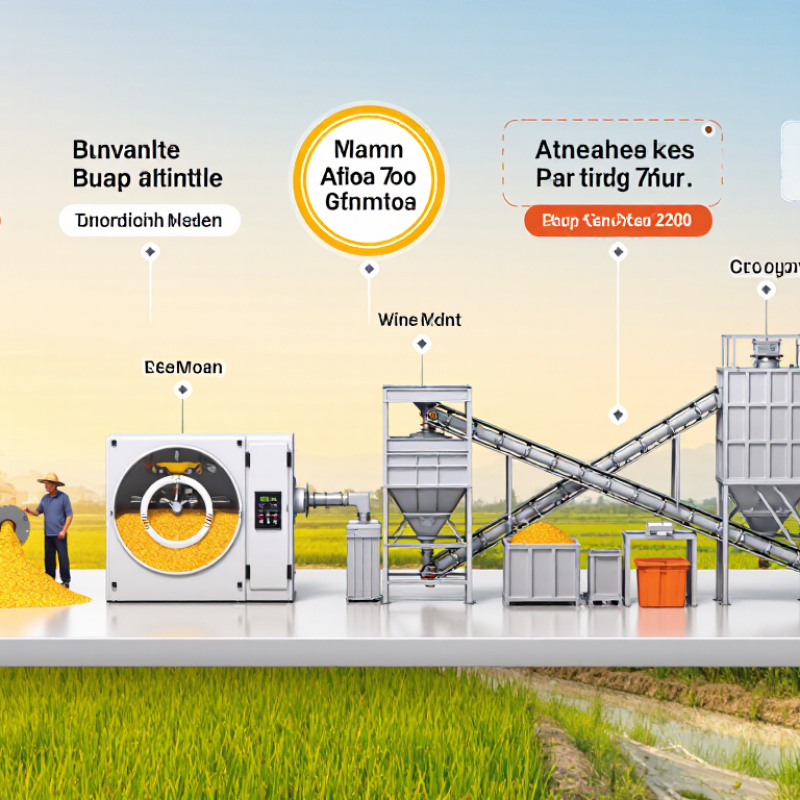
Freshly harvested rice contains more moisture than it can safely hold in storage. A rice dryer moves heated air through the grain, encouraging water to evaporate from each kernel. Fans and ducts distribute the airflow; temperature, airflow rate, and drying time work together. Too much heat can crack kernels, while drying too slowly may encourage spoilage. Balance matters.
In practice, moisture readings are not perfectly even. Grain near an air inlet may dry faster than grain deeper in the bed. A reliable moisture meter, checked at several points, helps reveal those differences. Many storage plans aim for roughly 12–14% moisture, but the right target depends on storage time and local conditions. Check the intended use, too: rice for milling may need careful drying to limit fissures and broken kernels. Some dryers use batches; others move grain continuously. When comparing models for 2026, look for even airflow, adjustable heat, and controls that make moisture checks straightforward. Ask how the dryer handles changing harvest conditions. A large capacity looks useful on paper. It may not suit a small, uneven crop.
| Dryer Type | How It Removes Moisture | Typical Strengths | Considerations | Best Suited For |
|---|---|---|---|---|
| Flat-bed batch dryer | Heated air passes through a stationary bed of paddy, commonly moving upward through a perforated floor. Moisture evaporates from the grain and is carried away in the exhaust air. | Relatively simple operation; can handle different batch sizes; often practical for smaller-scale drying. | Airflow and drying can vary across a deep or uneven grain bed. Proper loading, airflow, and monitoring help reduce uneven moisture levels. | Small farms, cooperatives, or operations that dry separate batches. |
| Recirculating batch dryer | Grain repeatedly moves through a heated-air drying section and returns to a holding area. Circulation mixes the grain, while moisture-laden air is discharged. | Repeated movement can help even out drying; batch operation offers flexibility between loads. | Requires grain-handling equipment and operator attention. Tempering or rest periods may be used to allow moisture within kernels to redistribute. | Operations needing batch flexibility and more uniform drying than a stationary bed may provide. |
| Continuous-flow column dryer | Grain moves downward by gravity through a drying column as heated air passes through it. Dried grain is discharged continuously or in a controlled flow. | Suitable for steady intake and higher-throughput processing; can be integrated with a continuous handling line. | Needs a consistent grain supply and careful control of airflow, grain flow, and drying conditions. Poor settings can lead to uneven drying or excessive grain stress. | Medium- to large-scale mills and harvest operations with regular grain throughput. |
| Mixed-flow continuous dryer | Grain descends through a column while air passes through alternating air ducts. The alternating airflow helps expose moving grain to drying air from different directions. | Designed for continuous operation; alternating airflow can support more even exposure across the grain stream. | Requires suitable installation, grain-handling capacity, and management of drying conditions. It may be more complex than a basic batch system. | Commercial operations seeking continuous drying and able to support the required equipment and throughput. |
| How Rice Dryers Remove Moisture | ||||
| 1. Air is heated and moved | A burner or other heat source warms the drying air, and a fan moves it through or across the grain. The heat source and airflow design vary by dryer type. | |||
| 2. Water evaporates from the grain | Heat encourages water to move from inside the kernels toward their surfaces, where it evaporates into the air. Airflow carries the resulting water vapor away. | |||
| 3. Grain is cooled and checked | After drying, grain is commonly cooled and its moisture content checked before storage or further processing. Gradual drying and appropriate tempering can help limit stress cracking and preserve milling quality. | |||
| Practical Buying Guide | ||||
| For smaller or variable harvest batches | Consider a batch dryer if simplicity and flexibility are priorities and the available labor, floor space, and airflow capacity match the required batch size. | |||
| For steady, higher-volume intake | Consider a continuous-flow system when grain can be supplied and handled consistently and the site can support its installation and operating requirements. | |||
| Before choosing a model | Compare rated capacity, airflow, heat source, energy availability, grain-handling needs, controls, maintenance access, and the ability to monitor grain moisture and temperature. Actual drying time and energy use depend on initial moisture, weather, operating settings, and dryer design. | |||
| The best dryer depends on harvest volume, desired throughput, available energy, labor, site layout, and grain-quality requirements. Follow the equipment manual and local guidance for safe operating settings. | ||||