How to Choose the Best Monoblock Heat Pump for Your Home?
When selecting the best Monoblock Heat Pump for your home, it's crucial to do thorough research. According to Dr. Emily Carter, a prominent expert in the heating industry, “Choosing the right Monoblock Heat Pump can significantly enhance your comfort and energy efficiency.” Her insights highlight the importance of understanding your specific heating needs.
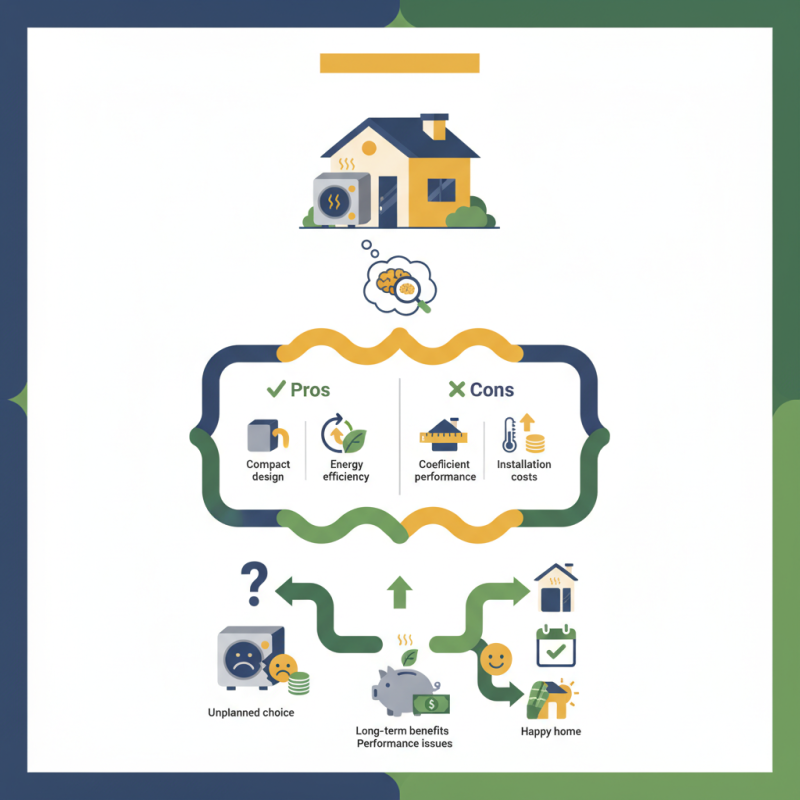
Monoblock Heat Pumps are gaining popularity for their compact design and efficiency. However, many homeowners struggle with the selection process. Factors like size, coefficient of performance, and installation costs can be overwhelming. You want a unit that fits your home well, not one that underperforms or overuses energy.
Reflecting on my experience, I found that an unplanned choice led to performance issues in my previous setup. It's easy to focus only on price but forget about long-term benefits. Your heat pump should be reliable and compatible with your existing system. Investing time in research will pay off in comfort and savings.
Understanding Monoblock Heat Pumps: An Overview of the Technology
Monoblock heat pumps are an innovative technology revolutionizing home heating and cooling. Unlike traditional systems, they combine all components in one unit. This simplification allows for easier installation and maintenance. According to industry reports, monoblock heat pumps can achieve a coefficient of performance (COP) of up to 4.0. This means for every unit of energy consumed, four units of heat can be generated. It's energy-efficient and environmentally friendly.
When choosing a monoblock heat pump, consider the climate. These systems perform best in moderate climates. They might struggle in extreme temperatures. A study showed performance drops significantly below freezing. Therefore, assess your local weather patterns.
Tip: Always check the seasonal energy efficiency ratio (SEER) rating. A higher SEER means better efficiency. Don’t overlook the noise levels, too. Some units can be quite loud, impacting your home’s comfort.
While monoblock heat pumps are beneficial, installation is key. Poor installation can lead to inefficiencies. A weak seal or incorrect placement can severely affect performance. Research local installers and read reviews. Take your time in making a decision; it impacts your home’s comfort for years.
Evaluating Your Home’s Heating and Cooling Needs for Monoblock Systems
When choosing a monoblock heat pump for your home, evaluating your heating and cooling needs is crucial. Start by assessing your home’s size. For example, a standard 2,000-square-foot home typically requires around 30,000 BTUs to heat efficiently. This means a system that matches this capacity will better meet your needs. Additionally, consider the climate in your area. Cooler regions may need a more robust unit.
Tip: Perform a heat loss calculation to understand how much energy your home uses. This can help identify the appropriate size for your heat pump.
Another factor is insulation quality. Homes with older insulation might benefit from a higher capacity unit. Conversely, homes with excellent insulation can operate efficiently with a smaller unit. Don’t ignore windows and doors either. Leaky ones can lead to significant energy loss.
Tip: Seal any gaps or cracks in your home. This simple step can enhance your heat pump’s performance and efficiency.
Take your time evaluating these aspects. Every home is unique. What works for one might not fit another. Research thoroughly and reflect on each decision. Making informed choices can lead to significant savings and comfort over time.
Key Features to Look for in a Monoblock Heat Pump
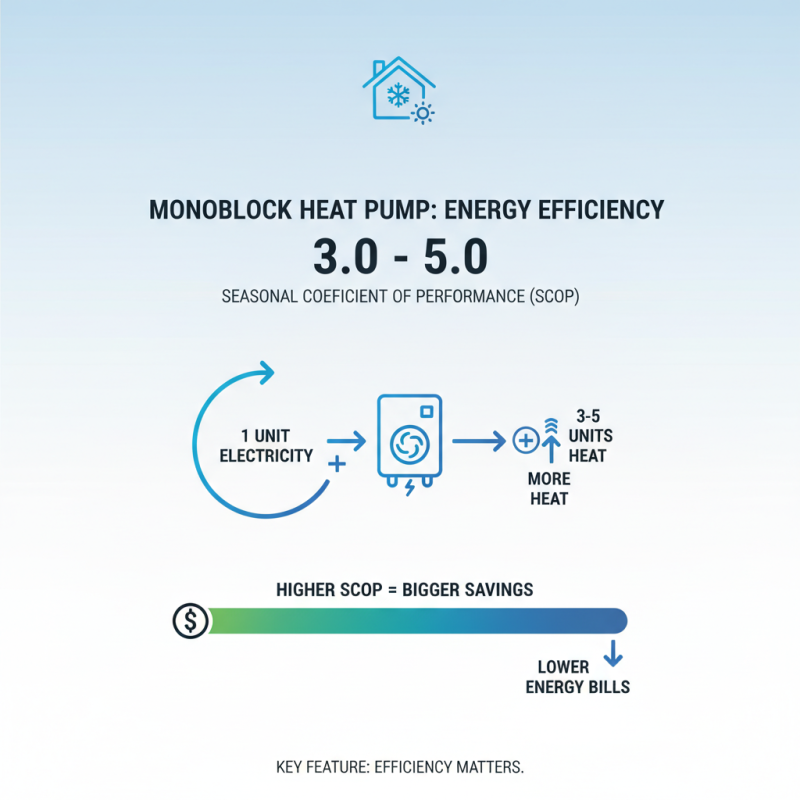
When choosing a monoblock heat pump, key features matter. Consider its energy efficiency. Heat pumps typically have a seasonal coefficient of performance (SCOP) between 3.0 and 5.0. This means for every unit of electricity, they generate 3 to 5 units of heat. A higher SCOP can lead to significant savings on energy bills.
Look at the heating capacity. Sizing is essential; an undersized unit may struggle in colder months. A mismatch can lead to inefficiency. The right capacity ensures comfortable indoor temperatures, regardless of the season. Also, examine the noise level. A quiet pump enhances comfort. Most units should operate below 60 decibels.
Tips: Always check the unit's placement. Effective installation improves performance. Regular maintenance is crucial as well. Clean the filters often to maintain efficiency.
Lastly, investigate the warranty and service options. A reliable warranty suggests manufacturer confidence. It can also save you from future costs. Remember, investing time in research pays off in the long run. Making an informed decision can enhance comfort and reduce energy waste.
Comparing Energy Efficiency Ratings and Operating Costs
When choosing a monoblock heat pump, energy efficiency is essential. Look for the Energy Efficiency Ratio (EER) and Seasonal Energy Efficiency Ratio (SEER). Higher ratings typically indicate lower energy usage. A model with a SEER rating above 16 is generally efficient. However, expect variations depending on your climate and home size.
Operating costs also matter. Calculate the annual energy consumption by using your local electricity rates. A pump with better efficiency means lower bills, but initial costs might be higher. Evaluating your long-term budget is vital. You may have to weigh the upfront price against future savings. Consider how frequently the pump will operate, which impacts overall efficiency and expenses.
While efficiency ratings provide a starting point, real-world performance differs. Installation quality and home insulation significantly affect outcomes. Sometimes, homeowners find unexpected costs later. Reflecting on these aspects can guide a more informed choice. Always keep in mind that the perfect heat pump might not exist. Each system has its strengths and weaknesses. Adjusting expectations and understanding your needs will help you select wisely.
Energy Efficiency Ratings of Monoblock Heat Pumps
Installation Considerations for Monoblock Heat Pumps in Residential Settings
When considering a monoblock heat pump for your home, installation plays a critical role. A professional installation ensures optimal performance and longevity. The location of the heat pump is important. It should have ample space around it for airflow. Ensure it’s away from walls or shrubs that could block its efficiency.
Tips: Planning the installation site is crucial. Take measurements carefully. Think about future maintenance access as well. A hard-to-reach unit can lead to costly repairs down the line.
Additionally, consider the noise level of the heat pump. Some units can be quite loud. If your home is near a quiet area, noise could be an issue. Think about how sound travels in your neighborhood. Mounting the unit on resilient pads may reduce vibrations and noise.
Tips: Check local regulations regarding placement. There may be restrictions that dictate how far from boundaries it should be. Ignoring this can lead to fines or forced relocations. Consider consulting a professional for this aspect.