How to Choose the Best Vegetable Dryer Machine for Home Use?
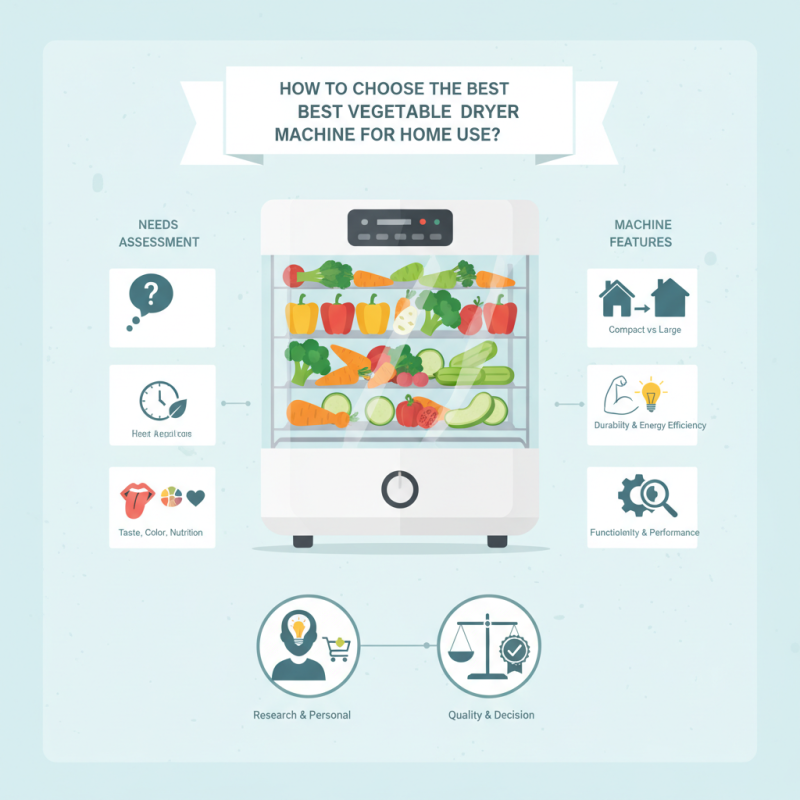
When considering a Vegetable Dryer Machine for home use, it’s essential to understand your needs. These machines vary widely in features and capabilities. A suitable dryer can preserve the taste, color, and nutritional value of vegetables.
Many options are available on the market. It's important to identify what works best for your kitchen. For instance, some dryers are compact, while others are larger and more powerful. Durability and energy efficiency are key factors as well. You might find a model that looks great but lacks the functionality you need.
Choosing the right Vegetable Dryer Machine can be a challenge. You may face options that seem perfect at first glance but don't deliver in performance. Researching each product can be time-consuming but is necessary. Keep in mind, the best choice often balances quality with your personal preferences. So, consider your requirements carefully before making a decision.
Understanding the Basics of Vegetable Dryer Machines for Home Use
When looking for a vegetable dryer machine, it's essential to understand its basic functions. These machines remove moisture from vegetables, preserving them for long-term storage. Knowing different drying methods helps narrow down choices. Air drying, sun drying, and machine drying have their pros and cons. The right method balances speed and quality.
You should consider capacity based on your needs. Some machines can handle large batches; others are compact for small kitchens. Think about how often you will use it. If it's occasional, a smaller unit might be better. Look for user-friendly designs. Complex controls can be frustrating. A clear display with simple settings is often more effective.
Energy efficiency is another critical factor. Machines consume varying amounts of power. Evaluate your electricity costs to avoid surprises. Check reviews to gauge reliability. Many options online may appear appealing but could fall short in performance. Selecting a dryer needs thorough research. Sometimes, appealing features can lead to impractical choices. Always weigh your priorities carefully.
How to Choose the Best Vegetable Dryer Machine for Home Use? - Understanding the Basics of Vegetable Dryer Machines for Home Use
| Feature |
Description |
Importance |
| Drying Capacity |
Refers to the amount of vegetables that can be dried at once, generally measured in pounds or kg. |
Essential for home users to meet their volume needs, especially for bulk drying. |
| Temperature Control |
Allows the user to set specific drying temperatures that are optimal for different types of vegetables. |
Crucial for preserving nutrients and flavors in dried vegetables. |
| Energy Efficiency |
The amount of energy used during operation, usually measured in watts. |
Important for reducing electricity bills and environmental impact. |
| Size and Portability |
The dimensions of the machine and its weight, affecting where and how easily it can be stored and used. |
Key for home kitchens with limited space. |
| Ease of Use |
How simple it is to operate the machine, including controls and settings. |
Vital for users who may not be tech-savvy or are using it infrequently. |
| Cleaning and Maintenance |
Refers to how easy it is to clean the machine after use and any maintenance required. |
Important for hygiene and prolonging the lifespan of the machine. |
| Price |
The cost of the vegetable dryer, which can vary significantly based on features. |
Must fit within the user’s budget while meeting their needs. |
Key Features to Look for in a Home Vegetable Dryer Machine
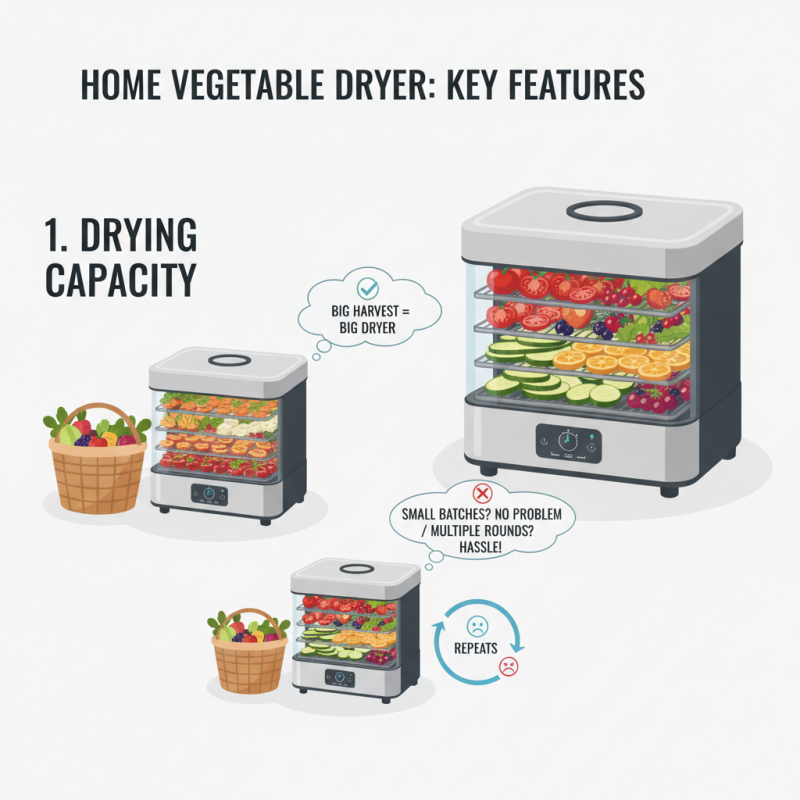
When selecting a vegetable dryer machine for home use, the key features should be your main focus. First, consider the drying capacity. It’s essential to choose a dryer that can handle your needs. A small unit might not keep up with a bountiful harvest. If it’s too small, you may find yourself drying in multiple batches. That can be a hassle.
Temperature control is another critical aspect. Look for a machine that allows you to set specific temperatures. Different vegetables require different heat levels. Without proper control, some veggies may end up overcooked. Think about the drying time as well. Some machines take longer than others. Faster options might seem appealing, but be wary. Quality often suffers when speed is prioritized.
Noise levels can be surprisingly important, too. If the unit is too loud, it can be disruptive in your home. Some dryers can sound like a jet engine. A quieter model may be worth the extra investment. Always ensure your chosen machine is easy to clean. A complicated design can deter you from using it often. You might find yourself reluctant to tackle that task, undermining the machine's intended purpose. Keep these features in mind, and your drying experience will improve significantly.
Comparing Different Types of Vegetable Dryer Machines
When selecting a vegetable dryer machine for home use, understanding the different types available is crucial. There are three primary categories: dehydrators, air fryers, and conventional ovens. Each type has distinct features and specifications. Research indicates that dehydrators often provide the best efficiency. According to industry data, they can preserve up to 97% of nutrients in vegetables when dried properly.
Air fryers offer a more versatile option, allowing for multiple cooking methods. However, they may not achieve the same level of dehydration as dedicated machines. Conventional ovens tend to use more energy and require careful temperature control. A study showed that utilizing dedicated dehydrators can save up to 50% on energy bills compared to ovens.
**Tip:** Before purchasing, consider the capacity. Smaller families might need a dryer with less space, while larger households would benefit from machines that can handle more items at once.
Keep in mind the noise level of each machine type. Some dehydrators can be quite loud. It’s important to choose one that fits your home environment. If you prioritize quiet operation, conducting research on user reviews may help identify the quieter models available.
Comparison of Vegetable Dryer Machines
This chart compares the drying efficiency of different vegetable drying methods. The ratings range from 1 to 10, indicating how effective each method is for home use.
Evaluating Cost and Efficiency in Vegetable Drying
When evaluating cost and efficiency in vegetable drying, consider both initial investment and operational expenses. The price of a vegetable dryer can vary widely. Higher-priced machines often have more features, but cheaper models might meet basic needs. Review the wattage of machines; higher wattage typically means faster drying times. Yet, be cautious; some machines with lower wattage might use less energy over time, proving more efficient.
Think about the size of the dryer. A compact model saves space but may require multiple batches for larger volumes. Look for features like temperature control and timers, which can enhance efficiency. Not all machines with advanced features deliver better results. Sometimes, simpler units might do the job just fine but require more human oversight.
Maintenance is another key factor. Regular cleaning can prolong the machine’s life and improve performance. If not maintained properly, even the most expensive units might falter. Assess your needs carefully. It’s easy to get enticed by high-tech models. Yet, they might end up being less efficient for your specific use. Make a thoughtful choice based on these evaluations.
Maintaining and Caring for Your Vegetable Dryer Machine
Maintaining and caring for your vegetable dryer machine is crucial for optimal performance. Regular cleaning can prevent the buildup of residues that may affect the drying process. According to industry reports, improper maintenance can reduce the machine's efficiency by up to 30%. Clean the trays and interior with a damp cloth to avoid mold growth. This simple action can prolong the life of your machine.
It’s also essential to inspect the machine regularly. Check for any signs of wear or damage. Some users forget to look at the heating element. This part is vital for effective drying. The average lifespan of a vegetable dryer is about seven years, but neglect can shorten this. In a survey, 25% of users reported issues due to lack of inspection.
Storing the machine correctly is equally important. Keep it in a cool, dry place to avoid moisture buildup. Cover it to prevent dust accumulation. This extends the machine’s usability. However, nearly 40% of users do not follow this practice. Reflect on your own usage. Are you doing enough to care for your dryer machine?