Top 5 Essential Tips for Choosing the Best Rice Dryer?
Choosing the right Rice Dryer can significantly impact the quality of your rice. According to industry expert Dr. Jane Smith, "The right dryer can make all the difference in achieving perfect rice." Her insights highlight the importance of selecting an effective drying method.
Many factors influence your decision, such as capacity and efficiency. A good Rice Dryer should cater to your specific needs. An ideal machine balances speed and quality, ensuring rice is dried uniformly. However, overlooking maintenance could lead to decreased performance over time.
When evaluating options, consider energy consumption, cost, and technology. While advanced features may seem tempting, they may not always be necessary. Take time to assess what meets your requirements best. Ultimately, a thoughtful choice can enhance your rice quality, reflecting the care put into the process.
Understanding Different Types of Rice Dryers Available in the Market
When selecting a rice dryer, it’s important to understand the various types available on the market. There are batch dryers, which process rice in batches and offer flexibility for small-scale users. This type is often more affordable but may require more labor and time.
Continuous flow dryers, on the other hand, move rice through the drying process, making them ideal for large-scale operations. They provide efficiency but at a higher initial cost.
Another option is the solar dryer, which utilizes natural sunlight. While this is an eco-friendly choice, it heavily depends on weather conditions. Electric dryers are popular for their reliability, yet can incur high energy costs. The decision should reflect your specific needs, whether it’s volume, cost, or environmental impact.
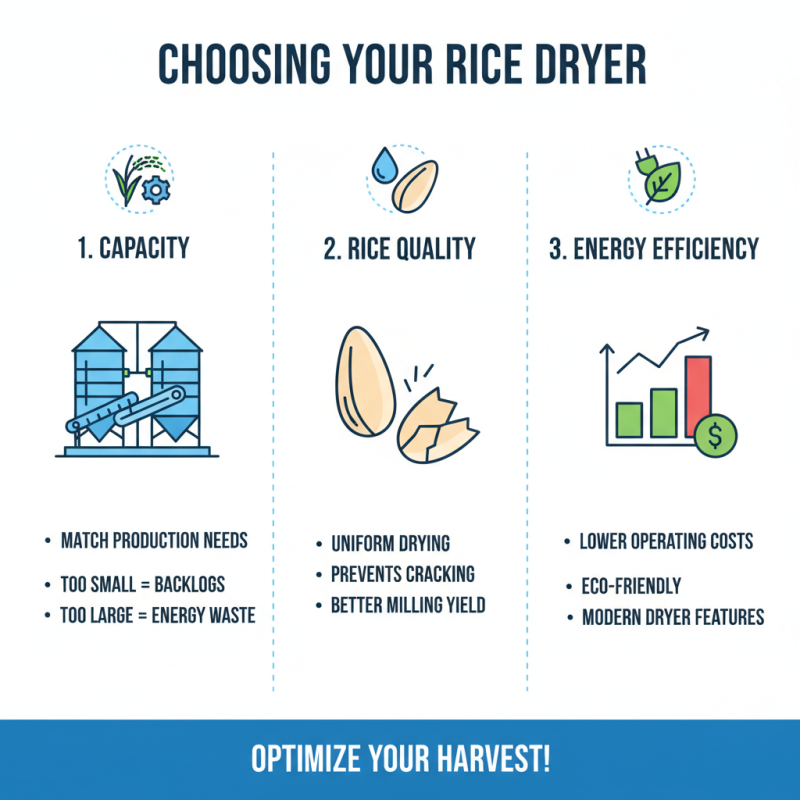
Many overlook the importance of capacity when choosing a dryer. A unit that’s too small may lead to inefficiencies and delays. Conversely, an oversized dryer can waste energy. It’s essential to carefully evaluate your production needs. Miscalculating can cause frustration and increased costs.
Consider maintenance needs, as different types require varying levels of care. This sometimes complicates the operation, leading to unexpected downtime. Reflection on these factors is crucial before making a choice.
Evaluating the Efficiency and Capacity of Rice Dryers
Choosing the right rice dryer involves understanding its efficiency and capacity. According to industry reports, effective drying can reduce grain quality loss significantly, preserving more of your harvest. A good rice dryer should maintain moisture at around 13-14%. This level ensures the rice remains safe for storage and sale.
When evaluating efficiency, consider airflow and temperature controls. High-quality dryers can lower moisture content quickly without damaging the kernels. Data suggests that dryers with uniform airflow can improve drying rate by up to 20%. Additionally, those with adjustable temperatures can adapt to different rice varieties effectively.
Tip: Look for dryers that feature real-time monitoring systems. This helps track progress and ensures optimal drying conditions. Remember that more features may increase costs but can save you energy and improve quality.
Capacity is another vital factor. A dryer should match your harvest size. Research indicates that the right capacity can cut drying time by nearly half. Invest time in assessing your needs before making a purchase. An underperforming dryer can become a costly mistake.
Efficiency Comparison of Different Rice Dryers
This chart illustrates the efficiency and drying capacity of various rice dryer models, measured in tons per hour (TPH) and fuel consumption (liters per ton). When choosing a rice dryer, it is crucial to evaluate these aspects for optimal performance.
Analyzing Energy Consumption and Operating Costs of Rice Dryers
When selecting a rice dryer, energy consumption is a critical factor. Efficient models reduce costs over time. They use advanced technology to enhance drying capacity while lowering energy needs. Analyzing power consumption helps farmers base decisions on long-term savings.
Operating costs are equally important. Higher initial investments can lead to lower operational expenses. It’s essential to calculate the overall lifecycle costs of a dryer. Look beyond purchase prices. Maintenance and repairs can influence the total expense. Consider the availability of spare parts.
Not every dryer meets all needs. Some may excel in efficiency but lack capacity. Others might be affordable but consume excessive energy. Regular evaluations are key. Farmers should track performance diligently, adjusting practices as required. Each decision impacts both productivity and sustainability.
Importance of Brand Reputation and Customer Support in Rice Dryer Selection
When selecting a rice dryer, brand reputation matters greatly. A trusted brand often signifies quality and reliability. Research customer reviews and testimonials. High ratings usually indicate a product that meets expectations. Look for brands with a history of producing durable machines.
Customer support should not be overlooked. A good support system can make a difference when issues arise. Ensure the manufacturer offers easy access to assistance. Prompt responses to inquiries are vital. Some brands may have poor communication, which leads to frustration. Choose wisely.
Invest time in examining both aspects. A reputable brand with excellent support can save you headaches later. Sometimes, personal experiences highlight the importance of these factors. It’s not just about the dryer; it’s about the support you receive after the purchase. Pay attention to what others say about their experiences. Their insights could lead you to a more satisfying choice.
Top 5 Essential Tips for Choosing the Best Rice Dryer
| Tip |
Consideration |
Importance |
| Check Brand Reputation |
Research the manufacturer's history and user reviews. |
Ensures reliability and product quality. |
| Evaluate Customer Support |
Assess availability of support services post-purchase. |
Aids in troubleshooting and warranty claims. |
| Consider Energy Efficiency |
Look for ratings that indicate energy consumption. |
Reduces operating costs and environmental impact. |
| Assess Size and Capacity |
Match dryer size to production needs. |
Enhances efficiency and reduces time loss. |
| Check for Warranty and Services |
Inquire about warranty duration and service options. |
Provides peace of mind and protection for investment. |