What is a Heat Pump Heater and How Does It Work?
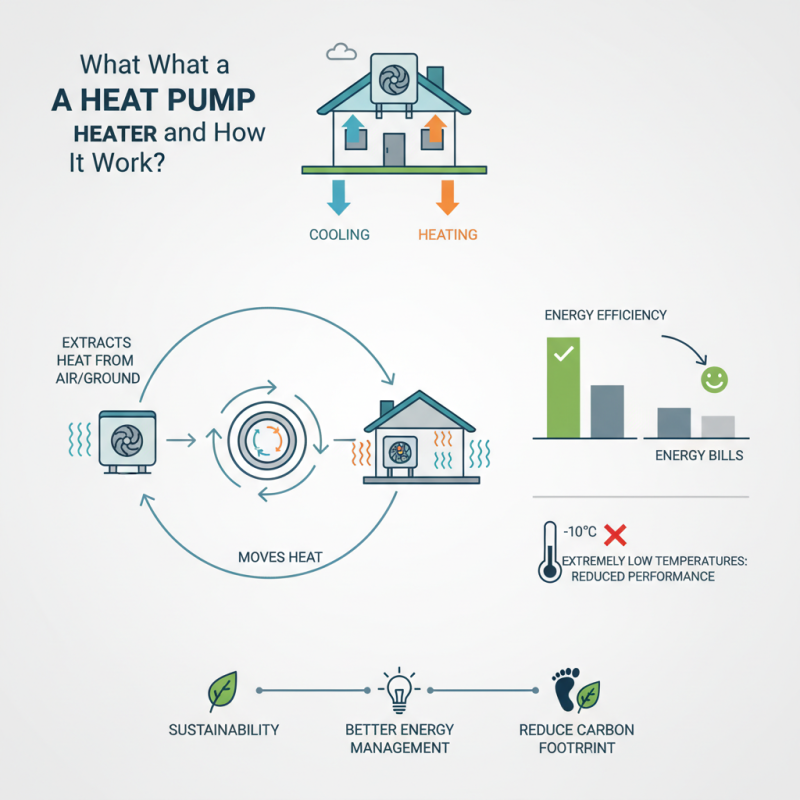
A Heat Pump Heater is an innovative solution for efficient heating and cooling. According to Dr. Emily Thompson, a leading expert in HVAC technology, “Heat Pump Heaters can significantly reduce energy bills.” This technology extracts heat from the air or ground, then uses it to warm or cool spaces.
Heat Pump Heaters work by moving heat instead of generating it. They are often more energy-efficient than traditional systems. Many users report substantial energy savings over time. However, they may not perform as well in extremely low temperatures.
This technology is a growing choice for homeowners seeking sustainability. Awareness is key to understanding its benefits and limitations. Exploring these systems can lead to better energy management. Investing in a Heat Pump Heater can also contribute to reducing your carbon footprint.
What is a Heat Pump Heater and Its Role in Modern Heating Systems?
A heat pump heater is an innovative device used in modern heating systems. It operates by transferring heat from one location to another. This method makes it efficient in both heating and cooling spaces. Unlike traditional heaters that create heat, heat pumps simply move it. They draw warmth from the outside air or ground, even in cold weather. This creates a comfortable indoor environment without consuming excessive energy.
The role of heat pump heaters extends beyond comfort. They are crucial for energy conservation and sustainability. By utilizing renewable energy sources, they significantly reduce carbon emissions. Many households are now opting for this technology due to rising energy costs. However, installation can be complex. Not all homes are suitable for a heat pump system. Proper assessment is needed to determine feasibility. Understanding system limits helps in making informed decisions.
Despite their advantages, heat pump heaters are not perfect. They may struggle in extreme cold, requiring backup heating options. Additionally, regular maintenance is essential for optimal performance. Homeowners need to be proactive about care. This reflects a growing awareness of energy efficiency in modern living. Adjusting to new technology can be challenging, but the benefits often outweigh the drawbacks.
Heat Pump Heater Efficiency Comparison
This chart shows the efficiency ratings of various heating systems compared to heat pump heaters.
Types of Heat Pumps: Air Source, Ground Source, and Water Source Explained
Heat pumps are an efficient way to heat or cool a space. There are three primary types: air source, ground source, and water source. Each type has its unique advantages and considerations.
Air source heat pumps (ASHP) are popular due to their lower installation costs. They capture heat from the outside air, even in cold conditions. According to the U.S. Department of Energy, ASHPs can reduce electricity use for heating by approximately 50% compared to conventional electric resistance heating. However, their efficiency drops in extreme cold, which can be a drawback in colder climates.
Ground source heat pumps (GSHP), also known as geothermal systems, utilize the stable temperature of the ground. They tend to have higher installation costs but deliver more consistent energy efficiency year-round. Reports indicate that GSHPs can achieve efficiencies of up to 600%, meaning for every unit of electricity consumed, they can deliver six units of heating or cooling. While the initial investment is significant, the long-term savings can be substantial.
Water source heat pumps (WSHP) are less common but can be incredibly efficient. They utilize the temperature of a nearby water source to provide heating and cooling. Efficiency can be impacted by seasonal changes, making site evaluation crucial. These systems require proper planning and access to a suitable water source, which might not be available for every installation.
How Heat Pumps Transfer Heat: The Refrigeration Cycle Demystified
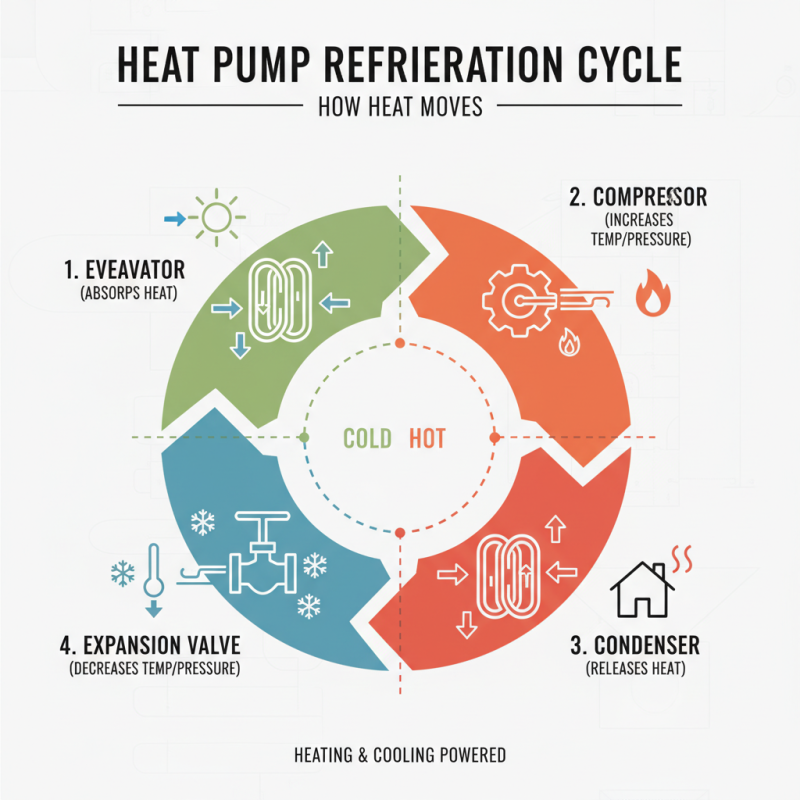
Heat pumps are fascinating devices that transfer heat through a process called the refrigeration cycle. This cycle is essential for operating both heating and cooling systems. At its core, the refrigeration cycle involves four main components: the evaporator, compressor, condenser, and expansion valve. Each part plays a vital role in moving heat from one location to another.
The evaporator absorbs heat from the air or ground. In this stage, the refrigerant becomes a gas. Next, the compressor increases the pressure of this gas, which also raises its temperature. Once it's high enough, the gas moves to the condenser. Here, it releases heat into the living space and returns to a liquid state. Finally, the expansion valve allows the refrigerant to cool down before it re-enters the evaporator, restarting the cycle.
While heat pumps are efficient, they have limitations. They struggle in extremely cold climates, where additional heating may be necessary. Understanding how these systems work helps homeowners make informed decisions about energy efficiency. Overall, the refrigeration cycle is a crucial process that makes heat pump heaters effective and accessible for many households. However, ongoing maintenance and occasional repairs are necessary to ensure optimal performance.
Efficiency Metrics: Comparing Heat Pump Coefficients of Performance (COP)
Heat pump heaters are becoming a popular choice for home heating. Understanding their efficiency metrics is crucial for making an informed decision. One key indicator is the Coefficient of Performance (COP). The COP measures a heat pump's efficiency by comparing the amount of heat produced to the energy consumed. A higher COP indicates better efficiency and more effective heating.
When evaluating heat pumps, consider factors like temperature variation and installation quality. These factors can significantly impact performance. For optimal results, aim for a COP above 3.0. This means the heat pump produces more than three times the heat for every unit of energy consumed. However, keep in mind that seasonal changes can affect these numbers.
Tips: Ensure your heat pump is sized correctly for your space. An oversized unit may cycle on and off frequently, wasting energy. Regular maintenance is essential too; clean filters can enhance performance. Don't overlook these details. They can make a significant difference in efficiency and cost savings.
Applications and Benefits of Heat Pump Heaters in Residential Settings
Heat pump heaters are increasingly popular in residential settings due to their efficiency and eco-friendly benefits. According to the U.S. Department of Energy, heat pumps can reduce energy consumption by up to 50% compared to traditional electric resistance heating. This is especially significant as households seek to lower their energy bills while minimizing environmental impact.
In colder climates, heat pump heaters can still perform efficiently. Advanced models can operate effectively even when outside temperatures drop below freezing. The average lifespan of these systems is around 15 years, but regular maintenance is crucial. Homeowners often forget that neglecting service can lead to decreased efficiency and higher costs. It's essential to clean filters and check refrigerant levels periodically.
The versatility of heat pumps also allows them to provide both heating and cooling. This dual functionality can simplify HVAC systems in homes. However, the upfront installation cost can be a barrier for some. Initial investments may deter homeowners despite the long-term savings. An understanding of long-term return on investment can aid in reframing this perception.