Top 7 Monoblock Heat Pump Options for Efficient Home Heating?
When considering efficient home heating solutions, Monoblock Heat Pumps stand out as a popular choice. These systems consolidate various components into one unit, simplifying installation. They are designed to extract heat from the air, even in colder temperatures, making them a viable option for many climates.
However, not all Monoblock Heat Pumps are created equal. Each model varies in capacity, energy efficiency, and associated costs. Therefore, choosing the best option requires careful consideration and research. It’s important to evaluate the specific heating needs of your home and how each pump will perform.
While Monoblock Heat Pumps can be an excellent solution, they do have limitations. For instance, their efficiency decreases in extreme cold. Additionally, installation may require specific adaptations to your home’s infrastructure. This guide explores the top seven Monoblock Heat Pump options available today, providing valuable insights to help you make an informed decision.
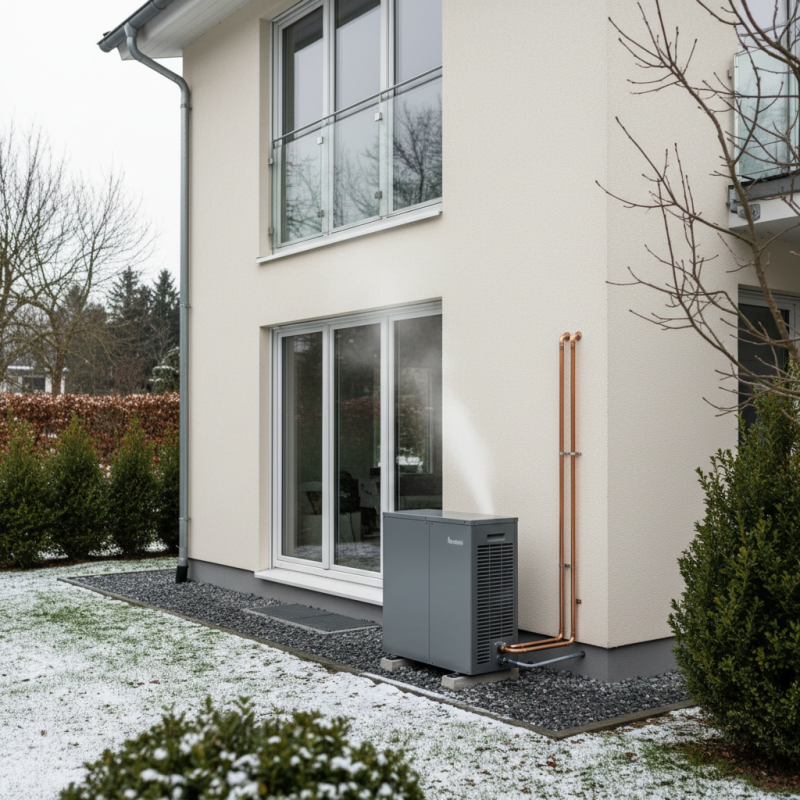
Overview of Monoblock Heat Pumps and Their Efficiency
Monoblock heat pumps are gaining popularity for home heating. They are compact units that combine all components within one housing. This design makes installation simpler compared to split systems. They offer a space-saving solution for those with limited outdoor areas. One big advantage is their efficiency. Monoblock heat pumps can provide significant energy savings, lowering utility bills.
Efficiency varies based on the model and installation. It's crucial to choose the right size for your home. Oversized units can lead to rapid cycling, wasting energy. Smaller units may struggle to maintain desired temperatures. Consider insulation and climate too. Proper insulation enhances performance and comfort.
Tips: Regular maintenance can improve efficiency. Clean filters and check refrigerant levels. Also, monitor outdoor temperature for optimal performance. If temperatures drop too low, supplementary heating may be needed. Adjust settings accordingly to prevent overworking the unit. Be mindful that monoblock systems may not perform equally well in all conditions. Experiment with different settings to find what works best for your space.
Top 7 Monoblock Heat Pump Options for Efficient Home Heating
| Model |
Heating Capacity (kW) |
COP (Coefficient of Performance) |
EER (Energy Efficiency Ratio) |
Noise Level (dB) |
Price Range ($) |
| Model A |
8.5 |
4.5 |
3.8 |
45 |
3,000 - 4,000 |
| Model B |
9.0 |
4.3 |
3.5 |
48 |
3,500 - 4,500 |
| Model C |
7.0 |
4.0 |
3.2 |
50 |
2,800 - 3,800 |
| Model D |
10.5 |
4.7 |
4.0 |
42 |
3,200 - 4,200 |
| Model E |
8.0 |
4.4 |
3.6 |
46 |
2,900 - 3,900 |
| Model F |
9.5 |
4.2 |
3.3 |
44 |
3,800 - 4,800 |
| Model G |
7.5 |
4.1 |
3.4 |
49 |
2,700 - 3,700 |
Key Features to Consider When Selecting a Monoblock Heat Pump
When selecting a monoblock heat pump, consider its efficiency ratings. Look for models with high COP (Coefficient of Performance) values. These indicate how much heat is produced per unit of energy consumed. Higher efficiency means lower energy bills in the long run. Pay attention to the heating capacity as well. It should match your home size for optimal performance. Oversized units can lead to short cycling, which is inefficient.
Noise levels are another crucial factor. Some pumps can be quite loud, affecting your comfort. A quiet model can enhance the overall living environment. Also, check the installation requirements. Some systems need more space or specific conditions. Evaluate your available outdoor area before making a choice.
Lastly, consider the user interface. A simple control system can make operation easier. Some models offer smart home integration. This allows for remote adjustments, adding convenience. It's important to think about maintenance needs too. Regular upkeep ensures longevity and efficiency. Remember, not every feature may be necessary for your setup. Choose based on your specific needs and space.
Top 7 Monoblock Heat Pump Models for Home Heating Efficiency
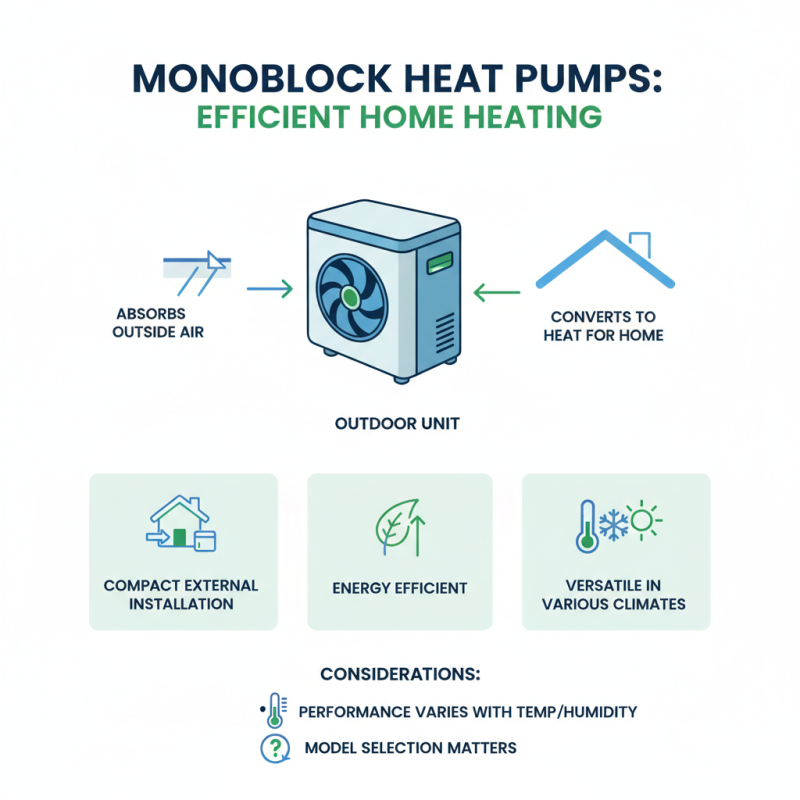
When it comes to heating your home efficiently, monoblock heat pumps offer a compelling solution. These systems work by absorbing outside air and converting it into heat. They are compact and can be installed outside your house, minimizing space usage while maximizing energy efficiency. Many models are designed to operate effectively in various climates. However, performance can vary based on outside temperature and humidity levels.
It's essential to understand that while these heat pumps can provide significant savings on energy bills, they may have limitations. For example, during extremely cold weather, their efficiency may decline. Additionally, some models may require regular maintenance to ensure optimal performance. Researching user reviews can help identify which units are more reliable. Consider the noise level they produce, as some units can be louder than expected. Balancing these factors is crucial for selecting the right model for your home.
Comparative Analysis of Pricing and Performance of Each Model
When considering monoblock heat pumps for efficient home heating, pricing and performance are key factors. Industry reports indicate that the average cost of these systems can range from $3,500 to $10,000. High-efficiency models may have higher upfront costs but often lead to lower operating expenses over time.
Performance metrics show that most monoblock heat pumps have a coefficient of performance (COP) between 3 and 5. This means they can produce three to five units of heat for every unit of electricity consumed. Some models can even achieve COPs as high as 6, especially in moderate climates. However, performance can vary significantly with outdoor temperatures. In colder climates, efficiency may drop, necessitating a backup heating source.
Tips: Always check for energy efficiency ratings. A higher rating can lead to substantial savings on your energy bills. Consider installation costs as well. They can greatly affect the total investment. Finally, remember that maintenance is crucial. Regular checks can prolong the system's lifespan, ensuring consistent performance.
Maintaining Your Monoblock Heat Pump for Optimal Performance
Maintaining your monoblock heat pump is crucial for optimal performance. Regular checks help identify potential issues early. Start by inspecting the air filters. Clogged filters can significantly reduce efficiency. Changing or cleaning them often is key. Check the outdoor unit for debris, too. Leaves and dirt can block airflow. A clean system runs better and uses less energy.
Next, inspect the refrigerant levels. Low levels may indicate a leak. If unsure, consult a professional. Over time, components may wear out. Listen for unusual noises; they can signal problems. Ensure the system is adequately insulated for better heat retention. Regular maintenance is not just beneficial; it’s necessary.
Finally, schedule annual inspections. Technicians can spot issues you might miss. They help optimize system performance. Don't wait for a breakdown to act. Be proactive instead. Keeping your heat pump in top condition will save money and energy. Small, consistent actions lead to better efficiency and comfort.