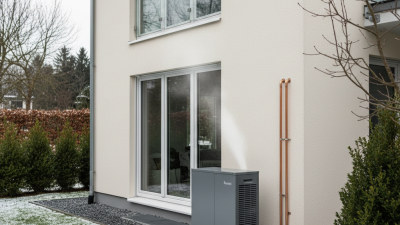
Choosing a Solar Heat Pump in 2026 requires more than comparing brand names or attractive efficiency labels. The right system must match your climate, building envelope, hot-water demand, and available roof space. A well-insulated home in northern Europe may need a different design from a sun-exposed house in Australia. Seasonal performance matters more than a single laboratory COP figure. Ask for measured data at low outdoor temperatures, not only ideal test conditions.
Thomas Nowak, Secretary General of the European Heat Pump Association, has said, “Heat pumps are a key technology for decarbonising heating and cooling.” His point remains practical. A Solar Heat Pump can reduce grid demand when paired with photovoltaic panels, smart controls, and thermal storage. Yet solar electricity does not guarantee free heating. Winter production may fall sharply, while heating demand rises. That mismatch deserves honest attention.
This guide examines compressor type, refrigerant choice, noise levels, operating temperature, defrost performance, and backup heating. It also considers installation quality, maintenance access, warranty terms, and local certification requirements. Look closely at the outdoor unit’s position. A narrow side passage can amplify sound and restrict airflow. A shaded roof can weaken the expected solar contribution. These details often decide real-world results.
Some published savings estimates feel too confident. Your results may differ. Use professional heat-loss calculations, verified product documentation, and references from comparable installations. A reliable decision balances efficiency, resilience, upfront cost, and long-term service support. The cheapest unit may not be the least expensive choice.
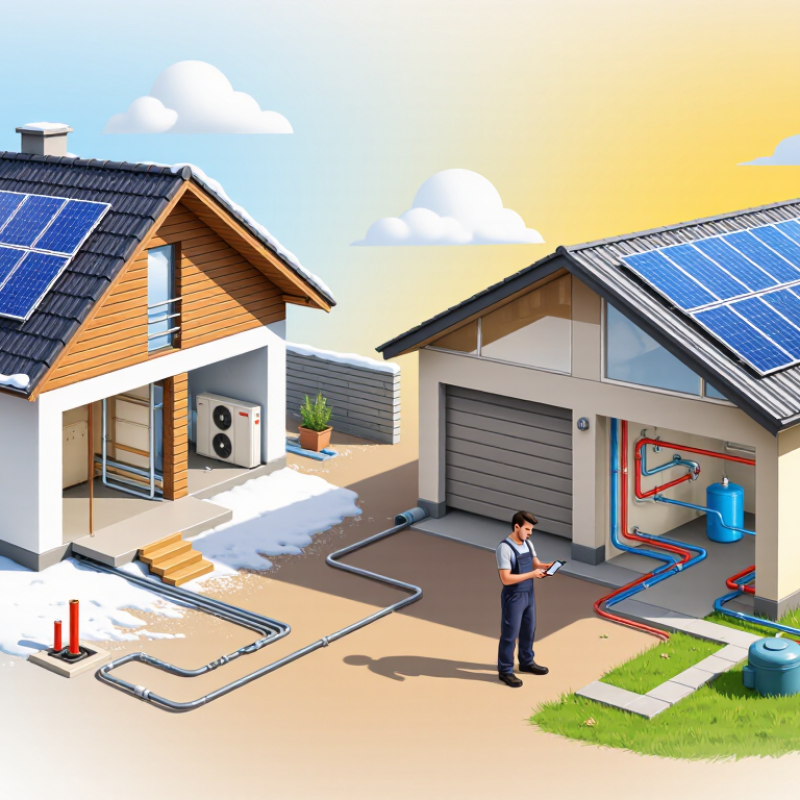
Solar heat pumps combine solar energy with refrigeration technology, but the term covers several designs. Photovoltaic systems use solar electricity to power a compressor, fan, or circulation pump. Solar thermal systems collect heat directly through liquid-filled panels. Hybrid systems can use both methods. The best option depends on climate, roof area, hot-water demand, and available ground space. That sounds simple. It is not.
An air-source heat pump absorbs low-temperature heat from outdoor air. The refrigerant then compresses and releases that heat indoors or into a water tank. Ground-source models transfer heat through buried pipes, offering steadier temperatures. PV panels can supply electricity during sunny hours, while the grid supports operation later.
Solar thermal collectors move heated fluid into a storage tank. The pump draws from that stored heat when needed. Cloudy weather still matters.
A reliable selection starts with measured energy demand, not a sales estimate. Ask for seasonal efficiency data, noise levels, defrost performance, and maintenance requirements. Cold climates may consume extra electricity during defrost cycles. Oversized tanks can lose more heat than expected. Poor controls may also waste solar energy. An experienced installer should inspect shading, pipe routes, insulation, and local winter temperatures. Independent safety certification and clear performance records deserve attention. I would not choose a system from its peak rating alone. Real household performance can differ.
Choosing a solar heat pump starts with the building, not the equipment label. Calculate room-by-room heat loss using the local design temperature. A drafty 120-square-metre house may need more capacity than a larger, well-insulated home. The IEA’s The Future of Heat Pumps reports that heat pumps can deliver three to five units of heat for each unit of electricity under suitable conditions. However, efficiency falls during very cold weather. Check the seasonal performance factor, not only the advertised peak COP. A perfect calculation is unlikely, but guessing is worse.
Climate data should guide the design. Compare winter temperature, humidity, frost frequency, and defrost demand. The solar resource also changes sharply by season. Use monthly irradiation data from the World Bank’s Global Solar Atlas or the European Commission’s PVGIS. Annual sunlight can look excellent while December production remains weak. That mismatch matters. The IEA Renewables 2024 report confirms solar expansion is accelerating, yet winter heating demand still often peaks after sunset. Battery storage, grid supply, or backup heating may remain necessary.
Tips: Request a heat-loss report and monthly solar estimate. Ask how the system performs below freezing. Inspect the roof for shading at 9 a.m. and 3 p.m. Leave space for maintenance. Do not oversize casually; short cycling can reduce comfort and efficiency. I would also test the design with a difficult winter week, because average weather can hide an expensive weakness.
How to Choose a Solar Heat Pump in 2026?
Comparing Efficiency, Capacity, and System Performance
Choosing a solar heat pump in 2026 requires more than reading a seasonal efficiency label. Efficiency changes with outdoor temperature, water demand, and installation quality. A system may perform well at 7°C but lose output near freezing. Ask for tested data across realistic climate conditions. Check seasonal coefficients, standby consumption, and defrost behavior. Small details matter.
Capacity must match the building’s heat loss, not its floor area alone. An oversized unit cycles frequently, wastes energy, and may shorten compressor life. An undersized unit can rely heavily on backup heating during cold evenings. A qualified installer should calculate room-by-room heat loss and inspect insulation, windows, radiators, and hot-water habits. Request the calculation in writing. Guesswork is expensive.
System performance depends on the complete design. Check flow temperature, storage-tank size, circulation-pump controls, noise, and solar input compatibility. Higher water temperatures often reduce heat-pump efficiency. Good controls can prioritize solar electricity, shift heating periods, and limit unnecessary cycling. Ask how the system operates after cloudy days. Real monitoring is more useful than a brochure. Review electricity use, delivered heat, and indoor comfort during the first season. One weakness remains: predicted savings can miss occupant behavior. Leave room for adjustment.
This reference comparison shows how a typical air-source solar-assisted heat pump can perform at different outdoor temperatures. COP decreases as outdoor temperatures fall, while available heating capacity also declines. For system selection, compare low-temperature capacity, seasonal efficiency, and performance under the climate conditions where the system will operate. Actual results vary with system design, solar contribution, water temperature, defrost cycles, and installation quality.
Installation conditions often decide whether a solar heat pump performs well. A technician should inspect roof direction, shading, insulation, electrical capacity, and outdoor unit clearance. In my experience, a shaded roof can reduce expected solar output sharply, especially during winter. The heat pump also needs steady airflow and protection from heavy snow or flooding. Older homes may require panel upgrades, radiator changes, or better insulation before installation. These hidden tasks can affect comfort more than the equipment itself.
Costs vary by home size, climate, and system design. A basic installation may seem affordable, but permits, wiring, mounting, storage, and labor can raise the final bill. Request an itemized quote with seasonal performance estimates, maintenance costs, and warranty responsibilities. My first estimate was too optimistic because I ignored duct repairs. That mistake showed why a site survey matters. Ask about noise levels and backup heating during cold spells.
Compare at least three licensed installers. Check their recent local projects, not only online reviews. Confirm whether rebates apply to equipment, labor, or both. Incentives can change during 2026, so verify details through government energy offices and official tax agencies. Keep copies of invoices and efficiency certificates. Do not assume every advertised credit is guaranteed. Some programs have income limits, installation deadlines, or regional approval rules.
How to Choose a Solar Heat Pump in 2026?
A reliable solar heat pump should respond smoothly to changing sunlight and household demand. Check whether its controller supports solar input, battery storage, grid backup, and temperature sensors. Clear displays matter. You should see water temperature, operating mode, fault codes, and energy use without opening a service panel. During a site inspection, ask the installer to demonstrate a cloudy-day setting. Some controls look advanced but offer limited adjustments.
Maintenance affects performance more than many sales brochures suggest. Inspect filters, fans, refrigerant connections, drainage, and electrical terminals at least once a year. Solar collectors also need cleaning when dust, pollen, or bird deposits reduce light exposure. Keep a service record with dates and measured temperatures. Small issues become expensive when ignored. I would not assume “low maintenance” means maintenance-free.
Expected lifespan depends on climate, installation quality, cycling frequency, and water chemistry. Ask for separate service lives for the compressor, controller, pump, and collectors. Warranty terms need careful reading. Confirm coverage periods, labor costs, replacement parts, transport, and who handles claims. Check whether professional installation and annual servicing are required. A long warranty can still feel weak if exclusions cover corrosion, poor water quality, or storm damage. I once overlooked a labor exclusion on a heating system, and the repair estimate changed my opinion quickly. Ask for every promise in writing.
| Evaluation Area | What to Check | Typical 2026 Market Guidance | Why It Matters | Practical Selection Target |
|---|---|---|---|---|
| System Configuration | Air-source heat pump powered by photovoltaic electricity, solar-thermal-assisted heat pump, or ground-source heat pump | Air-source systems generally have lower installation cost; ground-source systems usually provide more stable winter performance but require drilling or ground loops | The solar component may reduce operating electricity without being the sole heat source | Choose the configuration according to climate, available land, roof orientation, and heating demand |
| Heating Efficiency | Seasonal efficiency rating, COP, and low-temperature capacity | Many modern air-source heat pumps achieve seasonal COP values of approximately 3.0–5.0 in suitable conditions; ground-source systems are often around 3.5–5.5 | Higher seasonal efficiency normally reduces electricity consumption, but actual results depend on climate and water temperature | Compare certified seasonal ratings at the same supply-water temperature rather than comparing maximum COP alone |
| Solar Integration | PV surplus control, solar-thermal priority, thermal storage, and grid interaction | Useful controls can increase heating or hot-water production when solar electricity is available and reduce grid imports | Solar generation and heating demand do not always occur at the same time | Select a system that supports load shifting, hot-water storage, and adjustable operating schedules |
| Temperature Control | Weather compensation, outdoor-temperature sensor, room sensor, and supply-water reset | Weather-compensated controls lower water temperature when outdoor conditions are mild | Lower flow temperatures generally improve heat-pump efficiency and reduce cycling | Prioritize automatic weather compensation and stable modulation instead of simple on/off control |
| Smart Controls | App access, energy monitoring, fault alerts, tariff scheduling, demand response, and backup-heater control | Internet-connected controls are increasingly common, but remote features may require compatible gateways or subscriptions | Good monitoring can identify poor settings, unexpected electricity use, or developing faults | Require local manual control even if the internet connection or cloud service is unavailable |
| Cold-Weather Operation | Rated capacity at low outdoor temperatures, defrost strategy, and backup heat settings | Air-source output and efficiency normally decline as outdoor temperature falls; defrost cycles are expected in cold, humid weather | Undersizing can cause comfort problems and excessive backup-heater use | Check capacity at the local design temperature, not only at mild test conditions |
| Routine Maintenance | Air filters, outdoor coil, condensate drainage, refrigerant circuit, electrical connections, and system pressure | Filters commonly need inspection monthly and cleaning or replacement every 1–3 months, depending on dust and usage; professional inspection is typically annual | Restricted airflow and dirty coils reduce capacity, increase energy use, and may shorten equipment life | Use a written maintenance schedule and keep service records for warranty purposes |
| Solar Equipment Maintenance | PV modules, solar-thermal collectors, pumps, valves, insulation, antifreeze, and mounting hardware | PV systems usually require limited routine maintenance; solar-thermal systems need periodic checks of fluid condition, pressure, and pump operation | Solar-side faults can reduce renewable energy contribution while the heat pump continues operating | Include annual visual checks and follow the installer’s interval for fluid and safety inspections |
| Expected Service Life | Compressor, outdoor unit, indoor hydronic unit, storage tank, PV modules, and ground loop | Air-source heat-pump equipment commonly lasts about 12–15 years; well-maintained ground loops can last 50 years or more, while indoor equipment often lasts about 20–25 years | Different components may need replacement at different times | Evaluate whole-life cost, replacement access, and parts availability instead of focusing only on purchase price |
| Warranty Coverage | Compressor, heat-exchanger parts, labor, refrigerant, controls, storage tank, solar equipment, and corrosion exclusions | Common market terms vary widely; parts coverage is often around 2–10 years, while labor may be limited to the first 1–2 years unless extended | A long parts warranty may not cover diagnosis, labor, refrigerant, transport, or installation defects | Request the complete written warranty and confirm registration, maintenance, transferability, and claim procedures |
| Installation Quality | Heat-loss calculation, pipe sizing, refrigerant commissioning, drainage, noise location, and hydraulic balancing | Correct sizing and commissioning are essential; an oversized unit may cycle frequently, while an undersized unit may rely heavily on backup heat | Installation quality can affect comfort, efficiency, noise, reliability, and warranty validity | Choose a qualified installer who provides commissioning data and a clear handover procedure |
| Noise and Placement | Outdoor sound rating, night mode, vibration isolation, airflow clearance, and neighbor distance | Noise varies by operating speed and defrost mode; manufacturer sound data should be checked at the intended installation position | Poor placement can create nuisance noise and restrict airflow | Select a quiet operating mode and maintain the required clearances around the outdoor unit |
| Best Overall Choice | Balanced controls, documented efficiency, accessible service, durable components, and transparent warranty terms | The most suitable system is not necessarily the one with the highest maximum efficiency or longest headline warranty | Real-world performance depends on design, installation, operation, maintenance, and local climate | Choose a properly sized system with weather compensation, solar-load management, annual service support, and clearly defined warranty responsibilities |
Note: Values shown are typical industry ranges and general selection guidance, not guarantees. Actual performance, service life, maintenance intervals, and warranty terms depend on system design, climate, installation quality, operating conditions, and the final written contract.