
Leave Your Message
AI Helps Write

Top Water Heat Pump Manufacturers for Global Buyers

Choosing a water heat pump manufacturer is not just a matter of comparing output ratings. For global buyers, the real test is whether a supplier can match the equipment to the building, water source, climate, and local service conditions. A unit may look efficient on paper, yet perform differently when inlet temperatures fluctuate or installation space is tight. Small details matter.

This guide introduces leading Water Heatpump manufacturers and the factors buyers can use to assess them. It considers product range, documented performance, system controls, quality processes, warranty terms, and support after delivery. Buyers should also check whether a manufacturer can provide clear technical documentation and help coordinate with local installers. These points are practical, not glamorous.

A polished brochure is not proof of dependable operation. Ask for test conditions, not just headline efficiency figures, and clarify what the warranty covers. A supplier’s response to specific questions can be revealing, though it cannot replace independent verification. No shortlist fits every project. Some buyers need high-capacity equipment for a commercial site; others need a compact system with straightforward maintenance. This overview offers a starting point for comparing manufacturers, while recognizing that product availability and service coverage vary by market. The right choice deserves careful review.
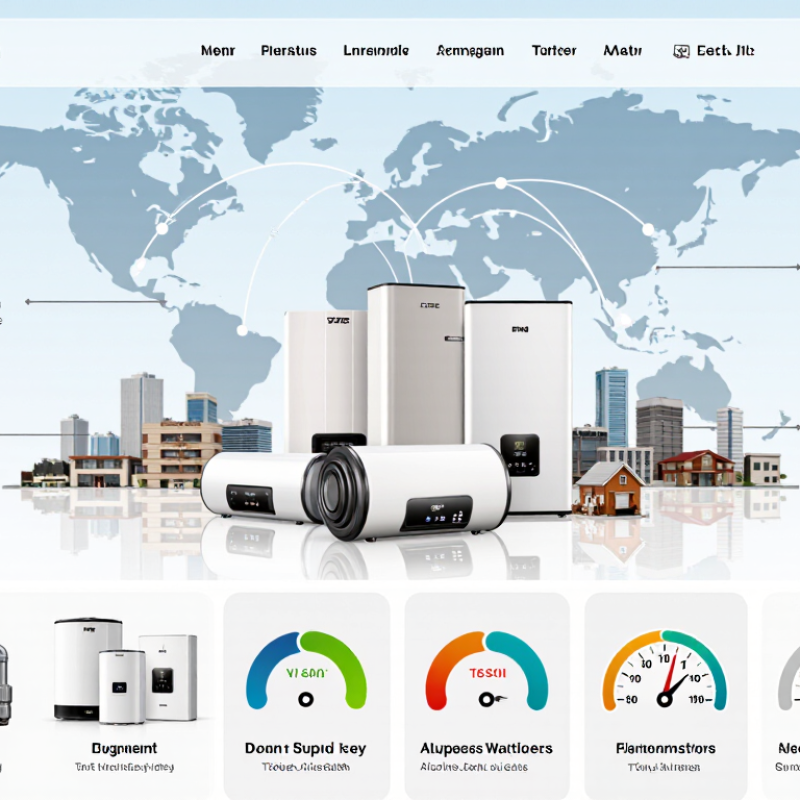
Top Water Heat Pump Manufacturers for Global Buyers

Water Heat Pumps: Technology, Applications, and Market Scope

Water heat pumps move heat rather than create it. In a water-source system, a refrigerant cycle draws energy from groundwater, lake water, a closed loop, or treated wastewater. A compressor raises the heat to a useful temperature for space heating and domestic hot water. In summer, the process can reverse and support cooling.

Not magic.

Common settings include hotels, hospitals, apartment blocks, campuses, and industrial sites with recoverable waste heat. Engineers assess seasonal water temperature, flow rate, water quality, pumping energy, and heat demand before choosing equipment. A nearby river is not automatically a good source. Intake design, filtration, and discharge temperatures can affect performance and operating costs.

Market scope is widening as building owners seek lower-carbon heating and cooling. The IEA’s 2022 report, The Future of Heat Pumps, says heat pumps supplied about 10% of global building heat demand.

Its net-zero pathway requires installed capacity to roughly triple by 2030. This figure covers heat pumps broadly, not water-source units alone. The distinction matters.

Global buyers should compare seasonal performance, tested operating conditions, service access, and controls—not just nominal capacity. Field results still depend on local water conditions, and early estimates can be too optimistic.


How to Evaluate Water Heat Pump Manufacturers

When assessing water heat pump manufacturers, look beyond rated capacity and headline efficiency. Ask for performance data at the water temperatures and outdoor conditions your project will actually face. Numbers need context.

Request independent test reports, clear operating limits, and details about how each unit is tested. Compare seasonal efficiency, noise levels, defrost behavior, and water-side pressure loss. A unit that performs well in a brochure may behave differently in a cold plant room. Check what controls, pumps, and safety components are included, since exclusions can change the installed cost.

A factory audit or video walkthrough can reveal assembly checks, leak testing, and how serial numbers link to production records. Ask who handles commissioning, troubleshooting, and spare parts in your region. If a supplier promises fast service, request response-time terms in writing. Warranty length matters, but coverage exclusions matter too. Talk with customers operating similar systems, and ask what required adjustment after installation. One reference is not enough. I would not treat a polished brochure as proof; it is easy to overlook service gaps when specifications look strong.

Top Water Heat Pump Manufacturers: A Global Buyer’s Efficiency Benchmark

Compare rated efficiency before evaluating manufacturers. The U.S. Department of Energy states that heat pump water heaters can be two to three times more energy efficient than conventional electric resistance water heaters.

How to use this benchmark: Ask manufacturers for independently verified performance ratings and compare products under the same test conditions. Also assess heating capacity, operating-temperature range, certifications, warranty coverage, and local service availability. Efficiency varies by model and installation.

Source: U.S. Department of Energy, “Heat Pump Water Heaters.” COP indicates heat delivered per unit of electricity consumed; the resistance-heater value is shown as 1.0 for comparison.

Leading Water Heat Pump Manufacturers for Global Buyers

Leading water heat pump manufacturers for global buyers should be assessed by application, not catalogue size. A water-source unit serving a hotel has different flow rates and operating demands from a domestic hot-water system. Check rated capacity, leaving-water temperature, seasonal efficiency, noise, and performance at low ambient temperatures. Ask for test conditions and service intervals, not just headline efficiency. Details matter.

The International Energy Agency’s 2022 report, The Future of Heat Pumps, estimates that global heat pump stock could grow from about 180 million units in 2021 to nearly 600 million by 2030 under its net-zero pathway. The report also notes that heat pumps can be three to five times more energy-efficient than gas boilers. These figures cover heat pumps broadly, not water-source models alone, so buyers should avoid treating them as product-specific guarantees. Look for independently verified test data, corrosion protection suited to local water chemistry, and clear warranty terms. A manufacturer’s regional service network can matter as much as its laboratory results. I would not assume the largest range is the safest choice; documentation can be uneven, and commissioning support deserves close scrutiny.

Top Water Heat Pump Manufacturers for Global Buyers - Leading Water Heat Pump Manufacturers for Global Buyers

Product Capability Typical System Arrangement Key Data to Compare Relevant Standards or Checks Suitable Applications Documents Buyers Should Request
Water-to-water heat pumps Transfers heat between a water or brine source loop and a water-based heating or cooling loop. Heating and cooling capacity; COP or EER at stated test conditions; entering and leaving water temperatures; flow rate; pressure drop. ISO 13256-2 provides performance test methods for water-to-water and brine-to-water heat pumps. Compare results only when test conditions match. Hydronic heating and cooling, ground-source systems, and buildings with separate source and distribution loops. Model-specific performance tables, operating limits, hydraulic data, sound data, and installation instructions.
Water-to-air heat pumps Uses a water or brine source loop and delivers heating or cooling through an air distribution system. Heating and cooling capacity; airflow; external static pressure; COP or EER; entering-water temperature range; sound level. ISO 13256-1 covers performance testing for water-to-air and brine-to-air heat pumps. Confirm the rating conditions used. Individual rooms, offices, and buildings with ducted or packaged air distribution. Certified or declared performance data, fan curves, sound data, dimensional drawings, and electrical requirements.
Heat pumps for domestic hot water Heats stored potable water, either in an integrated tank or through a separate storage cylinder. Hot-water output; storage volume; recovery time; maximum water temperature; standby losses; operating sound level. Check applicable local rules for potable-water systems, electrical safety, and energy labeling. Confirm whether test ratings include the storage tank. Homes, hotels, and other facilities with recurring domestic hot-water demand. Hot-water performance data, tank specifications, corrosion protection details, safety instructions, and maintenance requirements.
Reversible heating and cooling units Changes operating mode to provide heating or cooling through a water-based distribution loop. Capacity in both modes; efficiency at specified conditions; minimum and maximum water temperatures; changeover controls; part-load performance. Review applicable regional product and safety requirements. Heating and cooling ratings should be checked separately. Buildings requiring seasonal heating and cooling from a shared hydronic system. Mode-specific performance tables, control sequences, hydraulic schematics, and operating-limit documentation.
Modular commercial systems Multiple units are connected to a shared water loop and controlled to meet changing building loads. Capacity per module and at system level; staging logic; minimum stable output; flow requirements; redundancy options. Verify that published system performance reflects the proposed module arrangement, controls, and operating conditions. Commercial buildings, campuses, and projects with variable or phased heating and cooling demand. System selection report, module combination limits, control documentation, piping guidance, and service plan.
Heat-recovery configurations Recovers heat from one building load or process and transfers it to another compatible load through a heat-pump system. Recoverable heat capacity; simultaneous heating and cooling capacity; temperature lift; flow rates; operating envelope. Request performance data for simultaneous operating conditions; single-mode ratings may not describe heat-recovery operation. Hotels, hospitals, mixed-use buildings, and facilities with concurrent heating and cooling needs. Operating diagrams, simultaneous-mode performance data, control logic, and design assumptions for source and load loops.
Low-temperature hydronic systems Supplies heated water to emitters such as radiant floors or appropriately sized low-temperature radiators. Heating capacity and efficiency at the intended leaving-water temperature; minimum source temperature; defrost or backup strategy where applicable. Compare performance at the project’s actual design temperatures, not only at a single nominal rating point. New-build projects and renovations designed for low-temperature space heating. Capacity tables by water temperature, design guidance, operating limits, and information on auxiliary heat requirements.
Export-ready product support Equipment and documentation prepared for installation and service across different markets. Available supply voltages and frequencies; language and control options; spare-parts availability; warranty terms; lead time. Confirm compliance with the regulations and certification schemes applicable in the destination country; requirements vary by market. International projects, distributors, contractors, and buyers sourcing for multiple regions. Declarations of conformity, market-specific certificates, manuals, warranty terms, parts lists, and service contacts.
This is a product-capability comparison for evaluating manufacturers, not a ranking of named companies. Heat-pump performance depends on the model, system design, and test conditions; request model-specific data before comparing suppliers.

Regional Markets and International Service Networks

Regional demand changes what buyers should expect from a water heat pump. In colder markets, check low-temperature performance and defrost behavior, not just the rated output on a product sheet. In humid coastal areas, corrosion protection deserves close attention. A unit beside a salt-air exposed service lane faces different wear than one in a dry inland plant room. Local water quality matters too, especially where scaling can affect heat exchangers.

International service networks are just as important as factory capacity. Ask who handles commissioning, how technicians are trained, and whether common replacement parts are stocked within the region. A technician arriving with the wrong sensor can turn a short repair into several days of waiting. Response-time promises should be checked against actual service locations and working-hour coverage. This is easy to overlook.

Documentation should match local language, electrical requirements, and installation practice. Buyers can request a sample maintenance checklist and confirm how remote diagnostics work when internet access is unreliable. Regional distributors may provide useful support, but their technical depth can vary. A polished map of service points can still mislead if those locations only handle sales. Even careful planning has gaps; seasonal demand can stretch local teams, and that deserves a direct conversation before purchase.

How to Match a Manufacturer to Project Requirements

A water heat pump should be selected around the project, not a brochure’s headline efficiency. Start with the required heating capacity at the site’s winter design temperature and target water temperature. Ask manufacturers for performance data at those conditions, not only at mild test points. Details matter. A unit rated for 55°C water may perform differently when asked to deliver 70°C during a cold spell. Check whether the proposed system can meet peak demand without excessive backup heating.

Then examine the practical fit. Compare water flow requirements, available electrical supply, noise limits, installation space, and the site’s water quality. For coastal projects, ask how the heat exchanger and casing are protected from corrosion. Request references for installations with similar climates and operating schedules. Ask who handles commissioning, spare parts, and technical support in the project region. Ask for evidence. A polished specification sheet is useful, but it cannot replace clear service arrangements and verifiable test reports.

The best manufacturer is not always the one with the lowest quoted price or highest advertised COP. Review warranty terms, control-system compatibility, and how performance changes at part load. I would also question any proposal that seems unusually simple; heat pump systems can be sensitive to sizing and hydraulic design. Still, some project details change late, so leave room for adjustment without accepting vague promises.