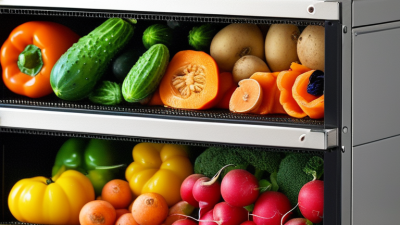
Fruit and vegetable losses remain a practical challenge for growers, processors, and food distributors. FAO’s 2023 reporting estimates that 13.2% of food was lost globally between harvest and retail in 2021. A Fruit Vegetable Dryer cannot prevent every loss, but controlled drying can extend product usability and reduce moisture for storage and transport. The right machine matters.
China’s manufacturers offer equipment ranging from cabinet-style hot-air dryers to continuous and heat-pump systems. Their specifications can look similar on a product page. They are not always similar in operation. Tray loading, airflow distribution, temperature control, and cleaning access all affect the finished product. Sliced apples may need a different drying profile from leafy vegetables or mushrooms. Small details matter.
This guide introduces leading Fruit Vegetable Dryer manufacturers in China and the factors buyers can use to compare them. Look beyond advertised capacity. Ask for measured energy use, material specifications, control-system details, and test results using products like your own. FAO’s food-loss estimates provide important context, but they do not prove that any particular dryer will deliver a specific reduction. That distinction deserves attention. Supplier claims should be checked against documented trials, service support, and clear warranty terms. Even a capable machine may underperform when loading or operation is inconsistent. Not glamorous, but important.
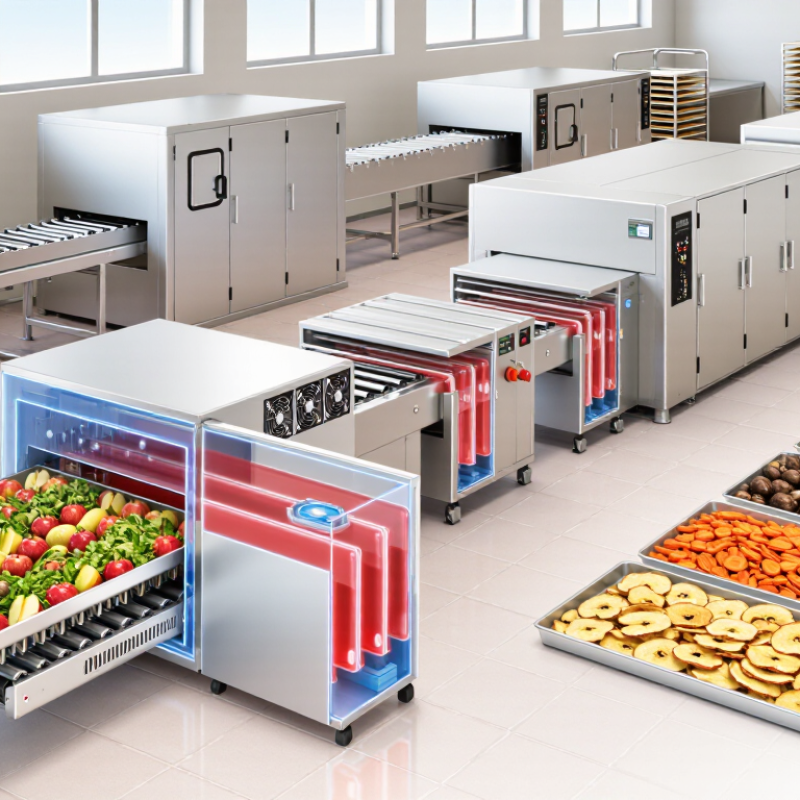
Fruit and vegetable dryers reduce moisture so produce can be stored longer and handled more easily. They do not simply “cook food dry.” Most use warmed air that moves across slices, pieces, or whole produce arranged on trays or a conveyor. As the surface water evaporates, moisture inside the food gradually moves outward. Exhaust air then carries that vapor away.
Airflow matters.
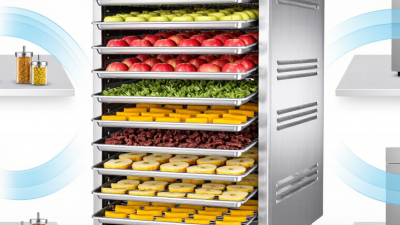
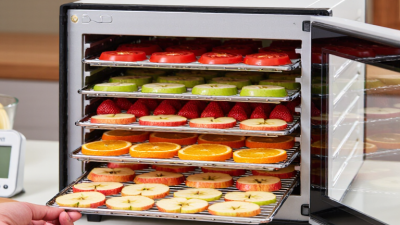
In a cabinet dryer, trays sit inside an insulated chamber while fans circulate heated air around the load. Larger continuous systems move product through drying zones, allowing operators to adjust temperature and belt speed. The right settings depend on the crop, slice thickness, and desired texture. Thin apple rings may dry sooner than dense carrot pieces, even when placed in the same machine. Uneven loading can leave some pieces damp.
Operators commonly monitor temperature, airflow, and moisture loss rather than relying on time alone. Cutting produce to a consistent thickness helps, though real harvests are rarely perfectly uniform. That can make results less predictable. Some products benefit from washing or blanching before drying, but preparation should match the crop and process. A dry surface does not always mean the center has reached the intended moisture level, so representative samples and careful checks are useful.
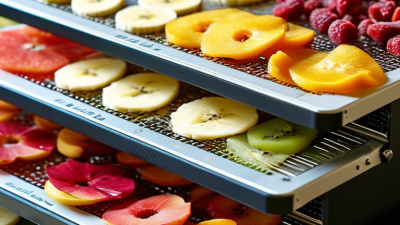
When evaluating Chinese fruit and vegetable dryer manufacturers, request test results using your actual produce. Thin apple slices and leafy greens dry differently. Ask for drying capacity, final moisture range, temperature uniformity, and energy use per kilogram of water removed. A stated hourly capacity means little without the product and starting moisture level. Ask how the supplier measures each figure.
The FAO’s 2023 The State of Food and Agriculture report estimates that 13.2% of food was lost globally between harvest and retail in 2021. This is useful context, not proof that any dryer will reduce losses. Check whether the manufacturer can document airflow, temperature readings, and batch-to-batch consistency. Review cleaning access, food-contact material specifications, spare-parts availability, and the warranty. A polished brochure is not enough. Even a detailed test may not match your factory conditions, so leave room for uncertainty.
Tip: Request a witnessed trial with your own produce. Record drying time, final moisture, and energy use, then compare the results with the written specification.
Leading Fruit and Vegetable Dryer Manufacturers in China serve processors with equipment for sliced apples, leafy greens, mushrooms, and other produce. A capable manufacturer should explain how airflow, temperature, and loading affect drying consistency. Ask for practical details, not just a rated capacity. For example, request a sample run using slices close to your product’s thickness. Compare moisture levels across trays, drying time, and energy use. Small differences matter. Ask whether contact surfaces are food-grade and easy to clean, and whether the control system records operating conditions. These details help buyers assess a machine beyond its appearance.
Tips: Share your target product, batch size, and desired final moisture before requesting a quotation. Ask for drawings and a clear list of included components. Keep the test report.
Supplier selection also depends on service after delivery. Clarify installation support, operator training, spare-part availability, and response times in writing. Check whether the proposed dryer fits your facility’s power supply, ventilation, and available floor space. A larger chamber is not always more efficient; partly filled trays can produce uneven results. Compare specifications carefully, and verify claims with a product trial when possible. Some requirements may change during production, so leave room to review the process after initial batches.
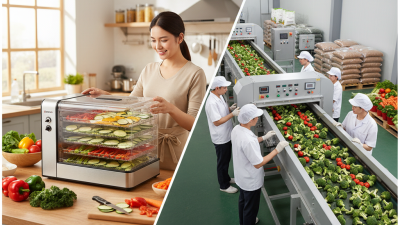
Chinese fruit and vegetable dryer manufacturers differ less by catalog size than by how they control heat, airflow, and moisture removal. Some specialize in cabinet dryers for small batches, while others supply continuous belt systems for higher output. Heat-pump models can offer lower-temperature drying, which may help preserve color and aroma in delicate produce. Hot-air systems are often simpler to configure for varied loads.
Small details matter. Ask how evenly air moves across each tray, and whether operators can adjust temperature and fan speed during a cycle. A test using your own sliced apples, mushrooms, or carrot pieces can reveal more than a brochure. Measure moisture at several points; uneven drying may cause some pieces to stay soft while others become brittle. Specifications alone do not tell the whole story.
Product range also varies, from basic tray units to vacuum or freeze-drying equipment. These methods suit different budgets, textures, and production goals. A wide range is not proof of deep process expertise; that assumption deserves checking. Review sample results, cleaning access, insulation, and spare-parts support. Even an impressive control screen cannot compensate for poorly matched capacity or inconsistent loading.
Dryer manufacturers differ in the technologies and product formats they offer. These indicative temperature ranges show common process options, not specifications for any particular manufacturer.
Hot-air, heat-pump, and vacuum dryers can serve different processing needs. Actual settings depend on the food, its thickness and moisture content, and the equipment design; check individual product specifications when comparing manufacturers.
Fruit and vegetable dryers are used to make snack pieces, soup ingredients, and dried herbs. Small workshops may process seasonal harvests, while larger facilities need steady output across multiple batches. Thin apple slices and leafy greens dry differently, so temperature, airflow, and loading depth affect the final texture. That matters. A dryer suited to one crop may produce uneven results with another.
Tips: Ask for a trial using your actual produce. Check whether the sample dries evenly, keeps its expected color, and reaches your target moisture level. Record the slice thickness and drying time; otherwise, comparisons can be misleading.
When comparing suppliers, look beyond advertised capacity. Ask how air moves through each tray, how temperature is controlled, and which food-contact surfaces are used. Request practical details on cleaning, routine maintenance, spare parts, and operator training. A clear service plan is useful, especially during harvest peaks.
Check whether the supplier can explain energy use under your expected workload and provide test data for comparable products. A specification sheet can still miss awkward details, such as loading effort or uneven tray spacing. These are easy to overlook. If possible, inspect a working unit or speak with a current user before deciding.