Leave Your Message
A Monoblock Air Conditioner is a compact cooling unit built inside one cabinet. Unlike split systems, it does not require a separate outdoor condenser. The compressor, evaporator, fan, and controls sit together indoors. Warm air leaves through a flexible exhaust hose connected to a window or wall opening.
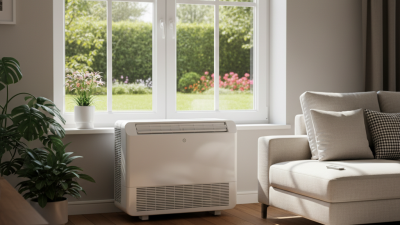
This design can simplify installation, especially in rented homes or older buildings. You can move the unit between rooms with reasonable effort. Imagine a wheeled cabinet beside a sofa, cooling a small bedroom while warm air exits through a sealed window panel. That arrangement is practical, but it is not completely effortless. The hose needs careful positioning, and gaps around the window can reduce efficiency.
Expect some operating noise. The compressor and fan remain inside the room. Energy performance also varies between models, room sizes, insulation levels, and outdoor temperatures. A reliable evaluation should examine cooling capacity, sound ratings, airflow, filter access, drainage, and energy labels. Product specifications matter more than attractive marketing language.
Not every room is suitable.
This guide explains how a Monoblock Air Conditioner works, where it performs well, and where its limitations become noticeable. It also considers installation details and everyday maintenance, based on practical use rather than promises alone. Some recommendations may need adjustment. A sunny top-floor room, for example, can challenge a unit that performs comfortably in a shaded office. Careful sizing remains essential. A larger machine is not automatically better, because excessive cycling may affect comfort and humidity control.
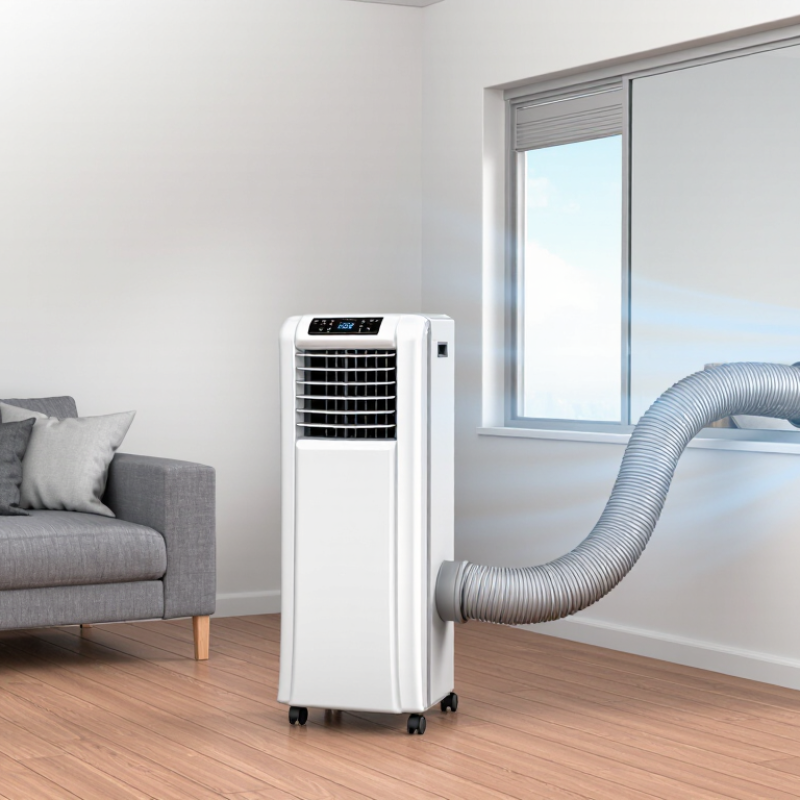
A monoblock air conditioner is a self-contained cooling unit. Its compressor, condenser, evaporator, fan, and controls sit inside one cabinet. Unlike a split system, it does not require a separate outdoor compressor. The unit usually stands on casters, so one person can move it between rooms. That mobility is useful in rented homes, temporary offices, and rooms without permanent cooling equipment.
Its core design depends on two air paths. The indoor side draws warm room air across a cold evaporator coil. The coil removes heat and some moisture before the cooled air returns indoors. The hot condenser air must leave through a flexible exhaust hose, normally connected to a window kit. Without that outlet, the room may feel warmer, not cooler.
Condensation collects in an internal tray or tank. Some models evaporate much of it through the exhaust stream, while humid conditions can still require manual draining. A filter protects the coil from dust, but it needs regular cleaning. Small details matter. A loose window seal can waste cooling quickly. In practical room checks, airflow clearance often matters more than advertised power.
The design has honest limitations. The compressor remains indoors, so noise is noticeable. The exhaust hose also radiates heat. I have found that users sometimes expect split-system silence from a portable cabinet, which is unrealistic. Performance depends on room size, sun exposure, insulation, and hose placement. Manufacturer capacity ratings help, but they cannot predict every room’s behavior.
| Category | Key Point | Definition and Core Design |
|---|---|---|
| Definition | All-in-one air-conditioning system | A monoblock air conditioner is a self-contained unit in which the compressor, condenser, evaporator, expansion device, fan motors, and controls are housed within one cabinet. |
| Primary Function | Room cooling | The system removes heat and moisture from indoor air, then releases the extracted heat outside through an exhaust duct, wall sleeve, or another dedicated outdoor connection. |
| Core Refrigeration Cycle | Vapor-compression cycle | Refrigerant absorbs heat in the indoor evaporator coil, is compressed to a higher pressure and temperature, rejects heat through the condenser, and expands before returning to the evaporator. |
| Main Components | Integrated mechanical package | Typical components include a compressor, evaporator coil, condenser coil, expansion device, indoor and outdoor airflow paths, filters, condensate-management parts, thermostat controls, and electrical protection devices. |
| Cabinet Arrangement | Single enclosure | Unlike split systems, a monoblock unit does not separate the indoor evaporator section from the outdoor condenser section into two independently installed cabinets. |
| Heat Rejection | External discharge required | During cooling, condenser heat must leave the room. Portable versions commonly use a flexible exhaust hose, while through-the-wall versions use a permanent wall opening or sleeve. |
| Airflow Design | Separate intake and exhaust paths | The indoor air path circulates and cools room air, while the condenser air path carries heat away. Dual-hose designs generally reduce room-air dependence compared with single-hose designs. |
| Installation | Low-complexity installation | Portable models usually require a suitable electrical outlet and a correctly sealed window or wall exhaust connection. Through-the-wall models require structural preparation and proper weatherproofing. |
| Mobility | Portable or fixed formats | Portable monoblock units are mounted on casters and can be moved between rooms. Fixed monoblock units remain installed in a wall or window opening. |
| Cooling Capacity | Small- to medium-room applications | Common residential portable models are often rated at approximately 2,000 to 5,000 watts of cooling capacity, although the appropriate size depends on room area, insulation, solar exposure, occupancy, and climate. |
| Temperature Control | Thermostatic operation | A temperature sensor and electronic controls cycle or modulate the refrigeration system to maintain the selected indoor temperature. Many models also provide fan-only and dehumidification modes. |
| Moisture Removal | Condensate management | Moisture removed from indoor air collects as condensate. Depending on the design, it may be stored in an internal tank, discharged through a drain hose, or partially evaporated and expelled with warm air. |
| Refrigerant Circuit | Factory-sealed system | Most monoblock air conditioners are charged and sealed during manufacturing, reducing the need for field refrigerant piping during standard installation. |
| Electrical Supply | Dedicated household circuit recommended | The electrical requirement depends on the cooling capacity and regional voltage standard. The unit should be connected according to its rating label and local electrical regulations. |
| Advantages | Simpler deployment | Key benefits include a single integrated cabinet, no refrigerant-line installation for standard portable use, relatively quick setup, easy relocation, and suitability for rented or space-limited properties. |
| Limitations | Noise and exhaust requirements | Because the compressor is inside the room-side cabinet, operating noise may be more noticeable than with many split systems. Exhaust hoses can also reduce window-sealing quality and occupy floor space. |
| Energy Performance | Depends on design and installation | Efficiency is influenced by compressor technology, heat-exchanger size, airflow resistance, insulation around the exhaust connection, filter cleanliness, and the accuracy of the capacity selection. |
| Maintenance | Routine airflow and drainage care | Regular tasks typically include cleaning or replacing air filters, checking exhaust connections, removing accumulated condensate when required, cleaning accessible coils, and keeping air inlets and outlets unobstructed. |
| Best Use Cases | Temporary, supplemental, or flexible cooling | Monoblock air conditioners are commonly suitable for apartments, bedrooms, offices, temporary workspaces, rooms without existing ductwork, and locations where permanent split-system installation is impractical. |
Note: Actual cooling capacity, energy efficiency, sound level, dimensions, and drainage requirements vary by model and installation conditions. Always verify the product rating label and local installation requirements.