Leave Your Message
AI Helps Write

7 Best EVI Heat Pump Manufacturers for Global Buyers

Choosing an Evi Heat Pump manufacturer is not just a search for the highest efficiency figure. Global buyers must match equipment to winter temperatures, local installation skills, available service, and the building’s actual heating demand. Enhanced vapor injection can help some systems maintain heating capacity in cold conditions, but results depend on design and setup. The details matter.

Professor Eckhard Groll, a refrigeration engineering researcher, offers a useful takeaway from his field: “Judge performance under real operating conditions.” This is a paraphrase, not a verified verbatim quotation. It points buyers toward practical evidence: published capacity at low ambient temperatures, sound data, defrost behavior, warranty terms, and access to replacement parts. A polished brochure is not enough.

This guide compares seven EVI heat pump manufacturers for global buyers, focusing on product range, application fit, technical support, and market presence. Some manufacturers publish clearer performance data than others. That difference deserves attention. Buyers should also ask who commissions the system, how quickly service teams respond, and whether controls can integrate with existing equipment. No single brand suits every climate or project. A selection that looks strong on paper may still need closer review against local operating conditions.
7 Best EVI Heat Pump Manufacturers for Global Buyers

What EVI Heat Pump Technology Is and How It Works

EVI, or enhanced vapor injection, modifies the refrigerant cycle inside a heat pump. A heat exchanger called an economizer cools part of the refrigerant before it reaches the expansion valve. Some refrigerant then vaporizes and enters the compressor through an intermediate-pressure port. This added vapor helps the compressor deliver more heat when outdoor temperatures fall. That matters in winter.

Compared with a basic vapor-compression design, EVI can support higher heating capacity and help control compressor discharge temperatures in cold conditions. The exact performance depends on the refrigerant, compressor, system design, and outdoor temperature. It is not a guarantee of the same output at every site. A brochure number is not a winter test.

The International Energy Agency’s The Future of Heat Pumps report (2022) notes that heat pumps typically deliver three to five units of heat per unit of electricity, depending on operating conditions. EVI can help maintain useful output in colder weather, but it does not remove the need for careful sizing. Installers should check performance data at the local design temperature, not just the mild test point. There is a caveat: defrost cycles, airflow, and installation quality also affect real-world results.
How EVI Heat Pump Technology Works

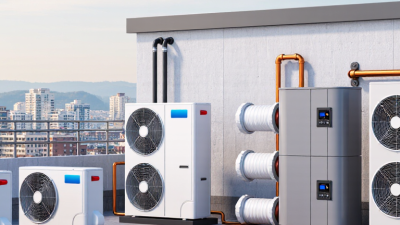
Enhanced Vapor Injection (EVI) adds intermediate-pressure refrigerant vapor to the compressor during compression. This schematic shows the main cycle stages—not measured performance data.

The economizer subcools the main liquid refrigerant while a side stream is expanded and vaporized for injection. The bars indicate sequence only; they do not represent energy, temperature, or efficiency.

Where EVI Heat Pumps Are Used Around the World

EVI heat pumps matter most where winter air turns sharply cold, yet buildings still need steady heat and hot water. Typical locations include northern Europe, Canada, northern China, and high inland districts. Conventional air-source units can lose capacity as outdoor temperatures fall. EVI refrigerant injection helps maintain heating output in colder conditions. Picture a windy farmhouse, a small hotel, or a workshop needing warmth before dawn. Not everywhere.

The International Energy Agency’s 2022 report, The Future of Heat Pumps, recorded nearly 15% growth in global heat-pump sales in 2021. European sales grew about 35%. These figures cover heat pumps broadly, not EVI models alone. That distinction matters.

EVI selection still depends on local design temperatures, radiator water requirements, defrost strategy, and service access. A low-temperature rating on a datasheet is not a winter guarantee. Field performance may disappoint when emitters are undersized or controls are poorly tuned. Compare seasonal performance data from a climate like the installation site, not just a laboratory minimum.

How to Evaluate EVI Heat Pump Manufacturers

When evaluating an EVI heat pump manufacturer, ask for performance data at the temperatures your project will actually face. A single headline COP is not enough. Request capacity, power input, and water-outlet temperature at several outdoor conditions, including sub-zero operation. Check whether the figures come from independent testing or clearly described laboratory methods. Details matter.

Study the unit’s defrost behavior, noise readings, and operating limits. Ask how the system handles frost buildup during damp, freezing weather, not just dry cold. Review the compressor and heat-exchanger specifications, control logic, and refrigerant information. Then check whether the proposed model suits your heating load and existing piping. A model that looks strong on paper may cycle too often in a poorly matched installation.

Manufacturing quality is harder to judge from a brochure. Ask about factory testing, inspection records, spare-parts availability, and technician training in your region. Request references from projects with similar climates and building types. Speak with an installer, too; their notes on startup and winter service can reveal practical issues. Warranty terms deserve careful reading, especially coverage for labor and replacement parts. No supplier can promise every site will perform identically. I would also ask what happens when measured results differ from the selection estimate. That question can feel awkward, but it often shows how clearly a manufacturer supports its equipment.

Seven EVI Heat Pump Manufacturers for Global Buyers

Selecting among seven EVI heat pump manufacturers starts with the climate, not the brochure. Enhanced vapor injection can support heating output in cold air, but actual capacity depends on compressor design, refrigerant, and controls. Ask for capacity tables at -15°C and -20°C, not just a headline COP. That matters. Check defrost behavior, leaving-water temperature, sound levels, and spare-part availability.

Market growth makes supplier checks more important. The European Heat Pump Association’s 2023 market report counted about 3 million heat pump sales across 21 European countries in 2022. That was roughly 38% more than in 2021. Growth does not prove quality. Request independently tested performance data, warranty exclusions, and records of local technician training.

Compare seven manufacturers using one checklist. Include cold-climate capacity, system compatibility, factory quality control, documentation, customization, logistics, and after-sales support. Ask for reference installations in similar climates and review commissioning records where possible. A neat datasheet is not enough. I would treat low-temperature efficiency claims cautiously; field conditions rarely match laboratory conditions perfectly.

How to Match a Manufacturer to Your Project Needs

Matching an EVI heat pump manufacturer starts with your coldest design day, not a headline efficiency figure. Ask for certified capacity and COP data at the outdoor temperatures and water temperatures your project will actually use. EVI systems can improve low-temperature heating performance, but results depend on the unit, controls, and installation. Check defrost behavior, hot-water requirements, sound limits, and whether the manufacturer supports your local voltage and climate. Small details matter. A rating at mild conditions may not reflect a frosty morning with radiators demanding hotter water.

Then compare manufacturers on evidence and service, not promises alone. Request independent test reports, clear warranty terms, spare-parts lead times, and commissioning guidance. The International Energy Agency’s 2022 report, The Future of Heat Pumps, estimates that heat pumps could cut global CO2 emissions by at least 500 million tonnes by 2030 under its stated replacement scenario. That broad estimate is not a project guarantee. Ask suppliers for references from installations with similar climates, building loads, and emitter types. A useful question: can they explain performance at your design temperature in writing? If they cannot, pause. Even strong documentation has limits; site conditions and installer skill can change actual results.

7 Best EVI Heat Pump Manufacturers for Global Buyers - How to Match a Manufacturer to Your Project Needs

How to read this table: The entries below are manufacturer capability profiles, not named or ranked companies. Technical ranges are general sourcing-screen benchmarks, not verified specifications for any individual manufacturer. Confirm operating limits, capacity and efficiency at the same test conditions using current product datasheets and independent test reports.

Manufacturer profile Typical product scope Potential project fit Key EVI specification to verify Questions to ask before selection Main trade-off to consider
Residential air-to-water specialist Compact split or monobloc systems; commonly screened in the roughly 6–16 kW heating-capacity range. Detached homes, radiator or underfloor-heating retrofits, and small residential developments in cold climates. Request the capacity and COP at stated outdoor-air and water-outlet temperatures. Check the declared minimum operating temperature; some cold-climate models are designed for operation around −20°C to −25°C, but this is model-specific. Is the capacity maintained at low outdoor temperatures? What are the defrost strategy, backup-heater requirements, sound levels and local service arrangements? Residential range and controls may not suit larger buildings or complex multi-zone systems.
High-temperature retrofit specialist Air-to-water units designed to supply higher-temperature water for existing heating systems. Buildings with older radiators where replacing every heat emitter is impractical. Verify maximum water-outlet temperature and, more importantly, heating capacity and efficiency at that temperature and at the project’s winter design condition. Does the unit reach the required flow temperature without an electric heater? Are performance curves available for the intended refrigerant and climate? Higher water temperatures can reduce heat-pump efficiency; assess the building’s required flow temperature before choosing this profile.
Cold-climate engineering specialist Systems emphasizing low-ambient heating performance, defrost control and cold-weather component selection. Projects with long heating seasons, low winter design temperatures or limited capacity from conventional heat pumps. Ask for certified low-ambient capacity data, operating-envelope limits and performance during defrost. Do not treat a stated minimum operating temperature as proof of full rated capacity at that temperature. What are the design outdoor temperature and required load? Is a bivalent or backup-heat strategy needed, and how is it controlled? Low-temperature capability varies by model; robust cold-weather performance can come with higher equipment cost or installation requirements.
Commercial modular-system supplier Multiple air-to-water modules that can be staged to serve larger loads; total capacity depends on unit size and configuration. Hotels, schools, offices, apartment buildings and other projects needing redundancy or phased capacity. Check capacity at the site design condition, module staging limits, hydraulic design, noise data and performance when one module is unavailable. Can the controls coordinate modules and backup heat? What are the minimum and maximum system capacities, and what commissioning support is offered? Requires coordinated controls, hydraulic design and commissioning; system-level performance is not established by a single-module rating.
OEM/ODM customization partner Products or assemblies adapted for another company’s specifications, controls, casing, labeling or market requirements. Importers and heating brands developing a localized product line or private-label offer. Confirm that EVI hardware, software, refrigerant circuit and performance data correspond to the final customized model—not just a reference platform. Who owns tooling and software changes? What are minimum order quantities, change-control procedures, warranty responsibilities and spare-parts commitments? Customization can increase development time and create dependence on one supplier for updates and service parts.
Refrigerant-transition-focused supplier Product families using different refrigerants, with designs subject to market-specific safety and regulatory requirements. Buyers planning for local refrigerant rules, long product lifecycles or different installation environments. Verify the refrigerant used in the exact model, applicable safety classification, charge, installation constraints and region-specific compliance documents. Are refrigerant and product approvals valid in the destination market? Are installers trained for the refrigerant and the required safety measures? Refrigerants and safety requirements are not interchangeable; local regulations and installer capability may constrain the choice.
Export-ready full-service manufacturer Equipment offered with export documentation, packaging, regional voltage options and distributor or technical support. International projects where logistics, certification and after-sales coverage are as important as equipment selection. Request current market-specific certificates, electrical compatibility, declared test standards, warranty terms and spare-parts lead times. Who handles commissioning and warranty claims locally? Are manuals, controls and replacement parts available in the required language and region? Export experience alone does not establish suitability; validate local certification, technical support and service response times.