2026 How to Choose a Split Heat Pump?
Choosing a split heat pump in 2026 is not simply a matter of comparing prices. The right Heatpump Split system must match your home, climate, electrical supply, and daily comfort needs. A compact wall unit may suit a renovated bedroom, while a multi-zone system could better serve an open-plan house with several temperature zones.
Thomas Nowak, a recognized heat-pump industry expert, emphasizes, “The best heat pump is the one that is properly designed, installed, and maintained.” That principle remains practical. Look beyond the marketing label. Check seasonal efficiency ratings, heating capacity at low temperatures, sound levels, refrigerant type, and warranty coverage. Ask whether the installer performs a room-by-room heat-loss calculation. Guesswork can create cold corners, short cycling, or unnecessarily high bills.
Your local winter matters.
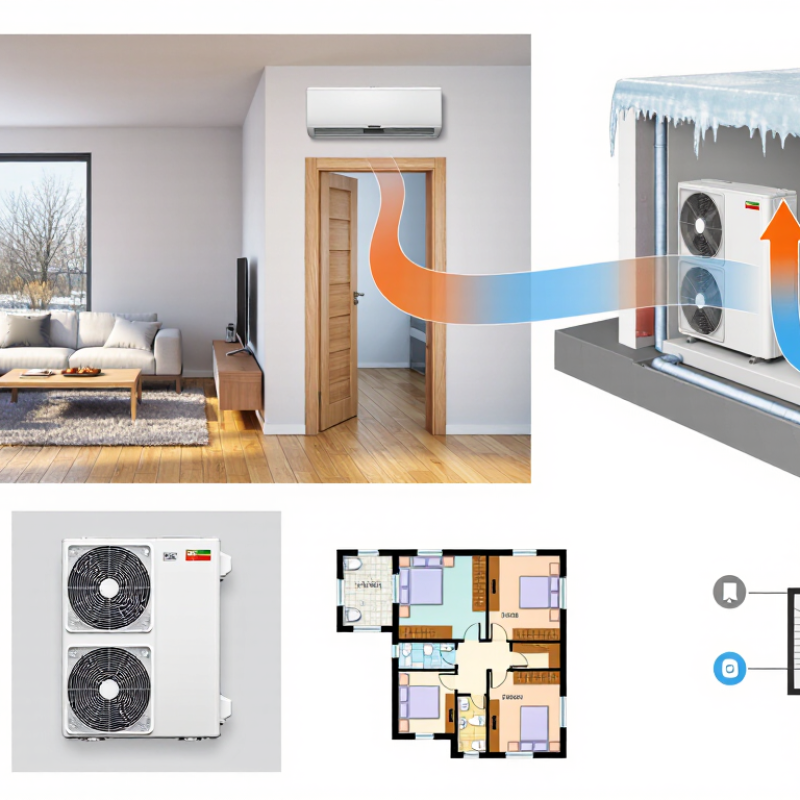
A model designed for mild coastal weather may struggle during a long freeze. In colder regions, examine low-ambient performance and backup heating requirements. Inspect the outdoor unit’s drainage path, defrost behavior, and protection from snow or falling ice. Indoor placement also affects comfort; a unit blowing directly across a sofa may feel unpleasant, even when the room reaches its target temperature.
Service access deserves attention. Filters need regular cleaning, and outdoor coils must remain clear. Some systems promise impressive savings, but real performance depends on installation quality and user habits. That is where this guide may be imperfect: no checklist can replace a qualified site assessment. Still, understanding the critical specifications helps homeowners ask sharper questions and avoid choosing a Heatpump Split system based only on a low purchase price.
Identify Split Heat Pump Types and Their 2–4 COP Efficiency Range
2026 How to Choose a Split Heat Pump?
Identify Split Heat Pump Types and Their 2–4 COP Efficiency Range
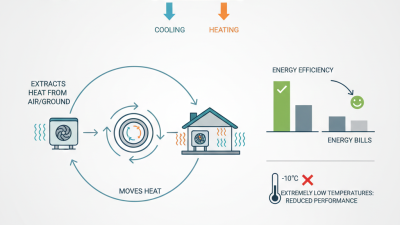
Split heat pumps usually fall into air-to-air and air-to-water designs. Air-to-air units transfer heat directly into rooms through indoor fan coils. Air-to-water systems heat radiators, underfloor loops, or domestic water. In practical installations, COP commonly ranges from 2 to 4. Mild weather may deliver COP 3–4, while freezing conditions can reduce it toward 2. Ground-source systems can perform higher, but they require drilling or buried collectors.
COP is not a permanent rating. It changes with outdoor temperature, water flow temperature, defrost cycles, and installation quality. The IEA’s The Future of Heat Pumps report states that heat pumps can deliver three to five units of heat per unit of electricity under suitable conditions. However, that broad figure should not replace local testing. EN 14825 seasonal measurements are more useful than one laboratory COP value. A unit producing COP 4 at 7°C may perform very differently at -7°C.
Tips: Check the declared COP at your design temperature. Ask for SCOP data, not only peak COP. Keep flow temperatures low, ideally near 35–45°C for underfloor heating. Inspect insulation, pipe length, airflow, and defrost settings. Small details matter. I once saw a high-rated system underperform because the outdoor coil was poorly ventilated. That is easy to overlook. The U.S. Department of Energy also reports that heat pumps can cut electricity use substantially compared with resistance heating, but savings depend on climate, controls, and maintenance.
2026 How to Choose a Split Heat Pump?
Identify Split Heat Pump Types and Their 2–4 COP Efficiency Range
How to read this chart: The bars show indicative heating COP ranges commonly reported for different split heat pump configurations under rated laboratory or standard test conditions. A COP of 3.0 means the system delivers approximately three units of heat for every unit of electricity consumed.
Choosing guidance: Ductless mini-splits can provide high seasonal efficiency in moderate climates, while cold-climate split systems are designed to maintain useful heating performance at lower outdoor temperatures. Actual COP varies with outdoor temperature, defrost cycles, indoor setpoint, installation quality, and operating mode.
Match Capacity Using ACCA Manual J Load Calculations, Not Floor Area
2026 How to Choose a Split Heat Pump?
Choose capacity from the building’s heat loss and heat gain, not its floor area. ACCA Manual J, ANSI/ACCA 2, evaluates outdoor design temperature, insulation, windows, orientation, infiltration, and internal loads. A 1,850-square-foot home with shaded windows may need less capacity than a smaller house with leaky ducts and large west-facing glass. Square-foot rules feel simple. They can be badly wrong.
The U.S. Department of Energy reports that heating and cooling represent about 48% of household energy use. That makes accurate sizing financially important. Ask a qualified contractor for a written Manual J report, including room-by-room loads. A living room with afternoon sun should not be treated like a north-facing bedroom. In practice, a 24,000 Btu/h unit may appear reasonable, yet the calculated cooling load could be only 17,000 Btu/h.
Oversizing has consequences. The system may satisfy the thermostat quickly, then stop repeatedly. Short cycling can reduce comfort and humidity control. The Air Conditioning Contractors of America recommends using Manual S after Manual J to match equipment capacity at the project’s design conditions. Manual D can then verify duct sizing and airflow. This sequence is more dependable than selecting a unit from a sales chart.
Still, load calculations are not perfect. Poor site measurements, unreported air leakage, or future renovations can change the result. Review the assumptions before approving the equipment. That small step may prevent a very expensive mismatch.
Compare SEER2, HSPF2, COP, and ENERGY STAR Performance Ratings
2026 How to Choose a Split Heat Pump?
SEER2 measures seasonal cooling efficiency under updated test conditions. A higher number usually means lower cooling electricity use. However, it does not predict every summer bill. Shade, thermostat settings, duct leakage, and local humidity can change results.
HSPF2 measures seasonal heating efficiency. It matters most in homes that depend on heat pumps during cold months. COP shows the heat delivered compared with electricity consumed at one operating condition. For example, a COP of 3 means three units of heat for each electrical unit. COP is useful, but it can change sharply with outdoor temperature. Check the tested temperature range.
ENERGY STAR certification indicates that a model meets current efficiency and performance requirements. Verify the exact product combination, not only the outdoor unit. Indoor coils, controls, and installation can affect the final rating. A properly sized system should run steadily, rather than start and stop every few minutes. Ask the installer for load calculations, refrigerant checks, airflow measurements, and local cold-weather data. Do not choose the highest rating automatically. It may cost more without matching your climate or usage. The comparison is imperfect. Laboratory ratings cannot recreate every drafty room, blocked filter, or wet winter. Still, reading SEER2, HSPF2, COP, and certification details together gives a more dependable basis for selection.
Select Refrigerants Under EPA’s 750-GWP Residential Heat Pump Limit
2026 How to Choose a Split Heat Pump?
Select Refrigerants Under EPA’s 750-GWP Residential Heat Pump Limit
In 2026, refrigerant choice deserves attention before comparing efficiency ratings. EPA rules generally require new residential heat pumps to use refrigerants with a global warming potential of 750 or lower. Common lower-GWP options include R-32, rated near 675, and R-454B, rated near 466. Older R-410A has a GWP above 2,000 and is not the normal choice for new systems under current transition requirements.
Check the equipment label carefully. Then ask the contractor for the refrigerant’s exact GWP, safety classification, and installation requirements. Many lower-GWP refrigerants are A2L, meaning they have mild flammability. This affects technician training, leak detection, airflow setup, and local code compliance. Do not treat the refrigerant as a simple label.
Performance matters too. A 750-GWP-compliant system can still disappoint if its capacity is poorly matched. In a cold winter, undersized equipment may run constantly near a frosted outdoor coil. In a small, well-insulated home, oversized equipment can cycle too often and control humidity poorly. Review cold-climate capacity, backup heat, noise, and service access. A spreadsheet helps, but it can mislead. I would verify the load calculation and refrigerant plan in writing before signing. EPA provisions and installation dates can change, so confirm current requirements with a qualified local professional.
2026 How to Choose a Split Heat Pump? — Select Refrigerants Under EPA’s 750-GWP Residential Heat Pump Limit
Use this comparison as a screening guide for new residential split heat pump systems in the United States. Final selection must be based on an EPA-compliant, safety-certified system and the manufacturer’s installation instructions.
| Refrigerant |
100-Year GWP |
ASHRAE 34 Safety Class |
EPA 750-GWP Status for New Residential Split Heat Pumps |
Typical System Considerations |
Best-Fit Selection Guidance |
| R-454B |
Approximately 466 |
A2L
Lower toxicity; mildly flammable |
Within the limit |
Designed as a lower-GWP alternative for many air-conditioning and heat-pump applications. It has a slightly lower operating pressure than R-410A, but equipment is not automatically interchangeable.
|
A strong choice when the equipment is specifically listed and certified for R-454B. Confirm required A2L installation procedures, detection or mitigation features, tools, and technician qualification requirements.
|
| R-32 |
675 |
A2L
Lower toxicity; mildly flammable |
Within the limit |
Commonly used in newer high-efficiency residential air-conditioning and heat-pump designs. It operates at pressures that are broadly comparable to R-410A, but the refrigerant, oil, controls, and listed components must match the system design.
|
Suitable when a complete R-32 system is available and certified for the intended application. Do not charge an R-32 system with R-410A or use R-410A components unless the equipment documentation explicitly permits it.
|
R-290
(Propane) |
Approximately 3 |
A3
Lower toxicity; highly flammable |
Below the limit; application-specific |
Has very low climate impact and excellent thermodynamic performance, but its high flammability creates stricter charge, room-size, component, servicing, and installation constraints.
|
Consider only equipment specifically designed, listed, and approved for R-290. It is not a drop-in replacement for R-410A, R-32, or R-454B and is generally less flexible for conventional field-installed split systems.
|
| R-454C |
Approximately 148 |
A2L
Lower toxicity; mildly flammable |
Below the limit; verify product scope |
A very-low-GWP blend suitable for selected refrigeration and heat-pump designs. Its pressure-temperature characteristics and application envelope differ from those of R-410A and other residential alternatives.
|
Choose it only when the complete split system is specifically engineered and certified for R-454C. Availability, capacity range, and local service support should be checked before purchase.
|
| R-410A |
Approximately 2,088 |
A1
No flame propagation under the ASHRAE test classification |
Above the 750-GWP limit |
Widely used in existing residential equipment, but its GWP is substantially above the EPA limit for new residential and light-commercial air-conditioning and heat-pump systems covered by the technology-transition requirements.
|
Do not select it for a new system installation subject to the 2026 EPA requirements. Existing R-410A equipment may continue to be serviced under applicable rules, using properly recovered or newly produced refrigerant permitted for that service.
|
Key selection checks for 2026:
- For covered new residential and light-commercial air-conditioning and heat-pump systems, the EPA technology-transition limit is a refrigerant GWP of 750 or less.
- New-system installation restrictions begin on January 1, 2026; restrictions on the manufacture and import of many covered systems began earlier under the EPA transition schedule.
- A2L refrigerants such as R-32, R-454B, and R-454C require equipment-specific safety measures and installation procedures. Requirements can vary with refrigerant charge, room size, system type, and applicable building and mechanical codes.
- GWP alone does not determine heating capacity, seasonal efficiency, low-temperature performance, sound level, or operating cost. Compare the complete system’s certified performance ratings and cold-climate capacity.
- Refrigerants are not interchangeable. Match the refrigerant, compressor oil, metering device, controls, tubing requirements, service tools, and charging method to the equipment listing and installation manual.
- GWP values may vary slightly by regulatory assessment method or source. The values shown here are commonly used 100-year GWP figures for screening purposes.