Leave Your Message
Choosing the best Air Energy Heat Pumps in 2026 is less about finding one universal winner and more about matching equipment to a home. Climate, insulation, electricity prices, and installer quality all shape real-world performance. A quiet outdoor unit beside a bedroom window may matter as much as a high efficiency rating. Small details count.
The International Energy Agency’s 2022 report, The Future of Heat Pumps, estimates that heat pumps could cut global carbon dioxide emissions by at least 500 million tonnes by 2030 under its stated scenario. That is a meaningful signal, not a guarantee for every household. In the United States, the Department of Energy’s Energy Saver guidance says air-source heat pumps can reduce heating electricity use by about 50% compared with electric resistance heating. Actual savings vary with local weather, equipment sizing, and how the system is installed.
This guide compares models by cold-weather output, seasonal efficiency, sound levels, controls, warranty coverage, and service support. It also considers the practical questions brochures often gloss over: Will the unit maintain comfort during a freezing night? Can a local technician repair it quickly? Is the quoted price clear? A rating is useful. It is not a lived winter. Manufacturer specifications and published test results help narrow the field, but independent, long-term data remain uneven across brands and markets. Treat rankings as a starting point, then check sizing and installation plans with a qualified heat-pump professional.
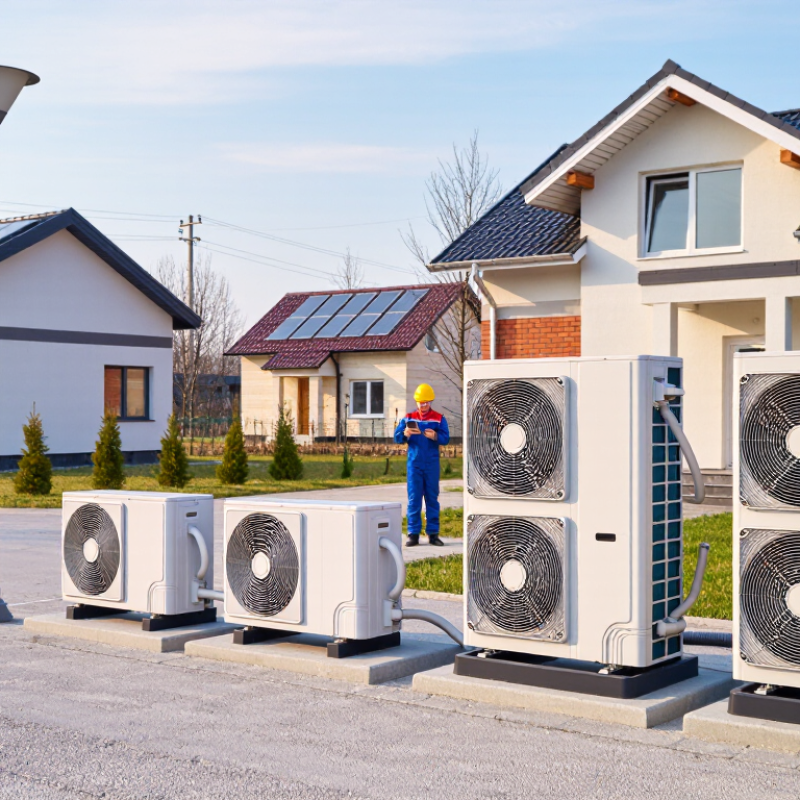
An air-source heat pump moves heat rather than producing it through combustion. Even on a chilly day, outdoor air contains thermal energy. Refrigerant in the outdoor coil absorbs some of that heat and changes from liquid to gas. A compressor raises the refrigerant’s pressure and temperature, then the indoor coil releases heat into the home. In cooling mode, a reversing valve switches the direction of the cycle.
The system uses electricity to run its compressor and fans, so its efficiency depends on the equipment and conditions. Performance can drop as outdoor temperatures fall, though many modern systems are designed for cold climates. During damp, freezing weather, frost may collect on the outdoor coil. The unit periodically defrosts it, sometimes briefly blowing cooler air indoors. That can feel odd. Actual comfort also depends on correct sizing, airflow, insulation, and installation—not just advertised ratings.
Tips: Notice how evenly rooms heat, and whether the outdoor unit has clear airflow around it. Keep filters clean and arrange periodic professional checks. Ask an installer to explain expected performance at your local winter temperatures, not only at a mild test condition. A heat pump is not a perfect fit for every house; older ductwork or poor insulation may need attention. I would check those details before judging the technology by one cold morning.
An air-source heat pump moves heat between outdoor air and a home rather than generating heat by burning fuel. The best system depends on the building, existing distribution equipment, local climate, and installation quality; the configurations below are technology types, not brand rankings.
| System Type | How It Works | Often a Good Fit For | Efficiency and Performance | Key Considerations |
|---|---|---|---|---|
| Ductless mini-split | An outdoor unit exchanges heat with the air and connects to one or more indoor units that heat or cool rooms directly. | Homes without ducts, room additions, and spaces needing separate temperature control. | Efficiency is reported using ratings such as HSPF2 for heating and SEER2 for cooling. Actual efficiency varies with outdoor temperature and system settings. | Indoor-unit placement affects comfort and appearance. Multiple indoor units can provide room-by-room zoning. |
| Ducted split system | An outdoor heat-pump unit connects to an indoor air handler, which distributes heated or cooled air through ducts. | Homes with suitable existing ductwork or a planned ducted heating and cooling system. | Seasonal performance depends on the equipment and the duct system. Leaky or poorly insulated ducts can reduce delivered efficiency. | Have ducts checked for leakage, insulation, sizing, and airflow before installation. |
| Cold-climate air-source heat pump | A design category of air-source heat pump engineered to provide useful heating at lower outdoor temperatures. | Homes in colder regions where the heat pump is expected to supply a large share of winter heat. | Heating capacity and efficiency vary by model and outdoor temperature. Some systems are designed to operate at temperatures well below freezing. | Check certified low-temperature capacity against the home’s heating load; performance limits are model-specific. |
| Air-to-water heat pump | The outdoor unit extracts heat from air and transfers it to water for a hydronic heating system. | Buildings with compatible radiant-floor, radiator, or other water-based heating distribution. | Efficiency depends partly on the water temperature required by the emitters; lower water temperatures generally support more efficient operation. | Confirm compatibility with existing radiators, controls, and any hot-water storage equipment. |
| Packaged air-source heat pump | Major heating and cooling components are housed together in one outdoor cabinet and connected to the building’s air distribution system. | Buildings where a packaged unit suits the available installation space and duct arrangement. | Compare the unit’s certified seasonal ratings and capacity with the building’s needs, just as with split systems. | Installation location, duct connections, weather exposure, and service access need to be considered. |
| Dual-fuel heat pump system | An air-source heat pump works alongside a separate furnace; controls select which heating source operates. | Homes retaining a compatible furnace, or locations where a backup heat source is part of the design. | Seasonal results depend on the heat pump, furnace, control settings, energy prices, and local weather. | The changeover temperature should be configured for the equipment and home rather than assumed to be the same everywhere. |
How to compare systems: A coefficient of performance (COP) expresses heat delivered per unit of electricity at a specified operating condition; it changes with outdoor temperature and system conditions. In moderate conditions, many air-source heat pumps can deliver roughly 2–4 units of heat per unit of electricity, but this is a general range, not a guarantee for a particular model. In the United States, compare certified HSPF2 and SEER2 ratings, and check performance data at the outdoor temperatures relevant to your climate.