How to Choose the Best Heat Pump for Your Home?
Choosing the right heat pump for your home can be a daunting task. With various options available, it's essential to understand the features that matter most. A heat pump not only provides heating and cooling but also impacts your energy bills and comfort levels.
Consider efficiency ratings when selecting a heat pump. Look for units with high SEER and HSPF ratings, as these indicate better energy performance. Furthermore, assess the size of the unit. An incorrectly sized heat pump can lead to inadequate heating or cooling and increased operational costs.
Installation is another key factor. Professional installation ensures optimal performance and longevity. Research local contractors and check their credentials to ensure reliability. Overall, investing time in choosing the right heat pump pays off in comfort and savings. Your home deserves the best, and making informed choices is part of that journey.
Understanding Heat Pumps: Types and Their Functions
Understanding heat pumps is essential for making an informed choice for your home. Heat pumps are versatile systems that can both heat and cool your living space. They operate by transferring heat rather than generating it. This process is efficient, using less energy compared to traditional systems.
There are three main types of heat pumps: air-source, ground-source, and water-source. Air-source heat pumps extract heat from the air outside. They work well in moderate climates but may struggle in extreme cold. Ground-source pumps tap into the earth's stable temperature, providing consistent heating and cooling all year round. Water-source pumps use nearby water bodies to regulate temperature, making them efficient but location-dependent.
When choosing a heat pump, consider factors like efficiency, the climate in your area, and your home’s insulation. An efficient model can significantly reduce energy bills. However, installation costs can vary widely, and energy savings might take time to realize. Take the time to research and consult with professionals. Different options may have hidden challenges that need reflection.
Evaluating Energy Efficiency: SEER, HSPF, and EER Ratings Explained
Choosing the right heat pump for your home requires careful consideration of energy efficiency ratings. Key metrics include SEER (Seasonal Energy Efficiency Ratio), HSPF (Heating Seasonal Performance Factor), and EER (Energy Efficiency Ratio). Understanding these ratings can guide homeowners in making informed decisions.
SEER measures the cooling output for a typical cooling season divided by the total electric energy input during that same season. The U.S. Department of Energy suggests a minimum SEER rating of 14 for optimal cooling efficiency. Higher SEER values indicate better energy savings. HSPF calculates heating efficiency over a season. The minimum recommended HSPF is 8.2. EER, on the other hand, assesses energy efficiency at a specific temperature, providing insight into performance during peak heat.
Tip: Look for models with SEER ratings above 16 for better long-term savings. Also, consider local climate conditions when evaluating HSPF; a higher rating is beneficial in colder regions. It's essential to evaluate these factors comprehensively. However, not all high-rated models suit every home. Homeowners should consult a qualified technician for personalized recommendations.
Sizing Your Heat Pump: Importance of BTU Calculations for Home Comfort
When selecting a heat pump, sizing it correctly is crucial. BTU calculations play a vital role in this process. BTU, or British Thermal Unit, measures the energy needed to heat or cool a space. A heat pump that is too small will struggle to maintain comfort. Conversely, an oversized unit can lead to higher energy bills and frequent cycling.
To calculate the required BTUs, consider factors like home size, insulation quality, and local climate. A well-insulated home requires fewer BTUs to maintain comfort. In contrast, drafts or poor insulation significantly increase heating or cooling needs. Working with a professional can yield accurate assessments, though some DIY methods exist. Remember, though, that it's easy to make miscalculations, especially when estimating insulation levels or ceiling heights.
Choosing the right heat pump is about more than BTU numbers. Take time to evaluate your home's unique needs. Forced air systems may differ from radiant heating solutions. Understanding these distinctions can help avoid future regrets. Inadequate sizing decisions can lead to discomfort and extra costs. Always reflect on your home's specifics and make choices accordingly.
How to Choose the Best Heat Pump for Your Home?
| Room Size (sq ft) |
BTU Requirements |
Recommended Heat Pump Capacity (Tons) |
Efficiency Rating (SEER) |
Average Cost ($) |
| 500 |
12,000 BTU |
1 |
16 |
3,500 |
| 1,000 |
24,000 BTU |
2 |
16 |
4,200 |
| 1,500 |
36,000 BTU |
3 |
14 |
5,800 |
| 2,000 |
48,000 BTU |
4 |
14 |
6,500 |
| 2,500 |
60,000 BTU |
5 |
13 |
8,000 |
Assessing Installation Costs and Rebates: Reducing Your Initial Investment
When choosing a heat pump, installation costs can significantly impact your decision. Understanding these expenses helps you budget effectively. Typically, installation costs vary based on factors like your home's size and the complexity of the installation. It’s essential to get multiple quotes from professionals before making a final decision. This ensures you're getting a fair price and can spot any hidden fees.
Rebates can further reduce your initial investment. Many regions offer financial incentives for energy-efficient home upgrades. Research local programs that may apply to heat pump installations. Some might cover up to a substantial percentage of the costs. Just remember, eligibility criteria can be strict. Missing a detail could mean losing potential savings.
While many options exist, it's crucial to reflect on your needs. Choosing the right model is key to maximizing savings. A heat pump that’s too large or too small can lead to inefficiencies. Always consider your long-term energy costs, not just the upfront price. Investing time in research will yield better results in the end.
Cost Comparison of Heat Pump Types
Maintenance Considerations: Ensuring Longevity of Your Heat Pump System
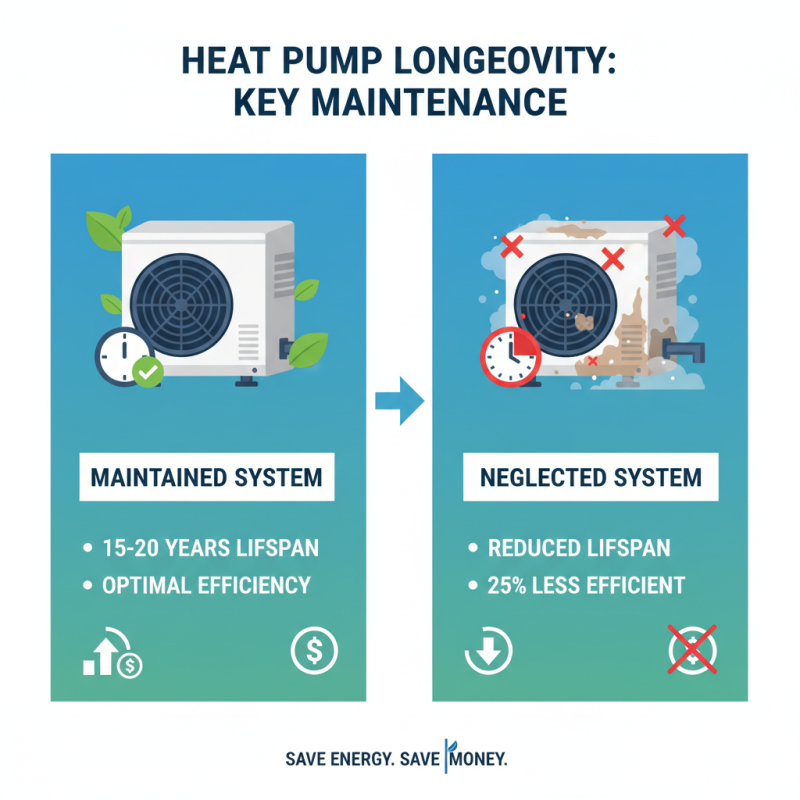
Maintaining your heat pump system is crucial for its longevity and efficiency. Regular maintenance can extend the lifespan of a heat pump to 15-20 years, as reported by the Department of Energy. Neglecting maintenance can lead to significant issues. A study showed that poorly maintained systems can reduce efficiency by up to 25%, resulting in higher energy bills.
One key maintenance task is to check and change filters. Clogged filters restrict airflow, forcing the system to work harder. In a survey, HVAC professionals noted that regular filter changes could improve efficiency by 5-15%. Clean coils also play a vital role. Dirty coils hinder heat exchange, reducing overall performance. Cleaning them can boost efficiency and preserve system function.
Homeowners should also schedule annual professional inspections. Technicians can identify potential problems early, preventing costly repairs later. Studies reveal that regular inspections can catch issues before they escalate, saving homeowners up to 30% on repairs. Remember, ignoring maintenance may seem like a small oversight, but it can lead to bigger, more expensive problems down the line.