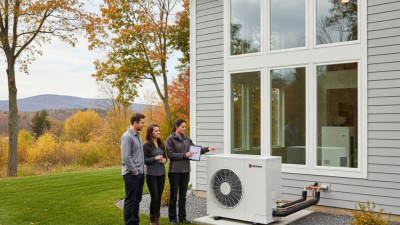
A Mini Split Heat Pump heats or cools a space without relying on a network of ducts. It usually has an outdoor unit and one or more indoor air handlers. Narrow refrigerant lines connect them through a small opening in an exterior wall. Inside, a quiet fan moves conditioned air into the room. No bulky ductwork is required.
Here is the basic idea. In cooling mode, the system moves heat from indoors to outdoors. In heating mode, it reverses that process, drawing available heat from outside air and transferring it indoors. A reversing valve helps switch between these modes. Even on a chilly day, outdoor air contains some heat, though performance can decline as temperatures fall. Not magic. Just heat transfer.
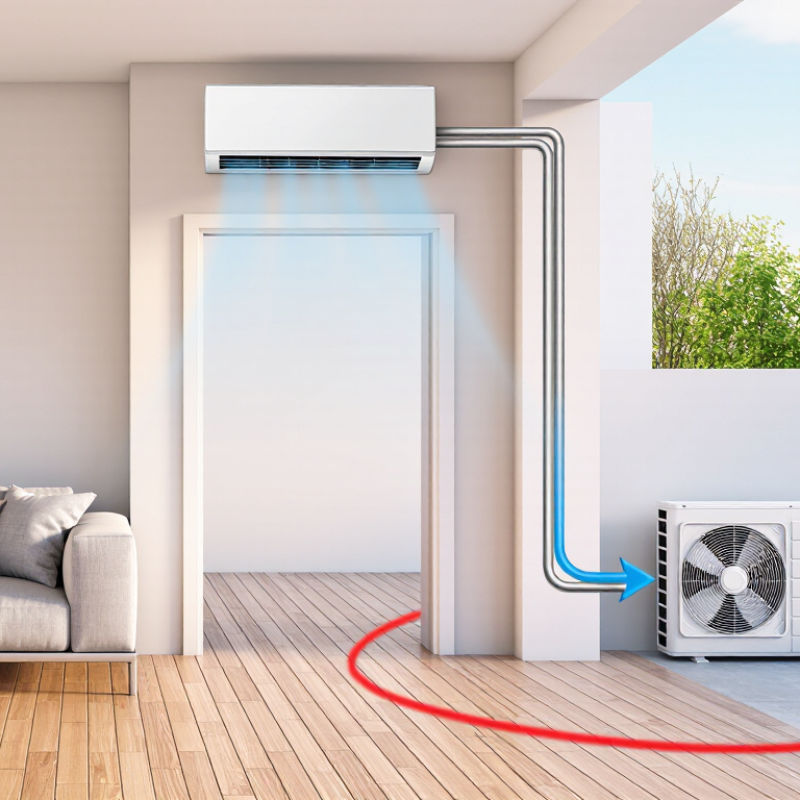
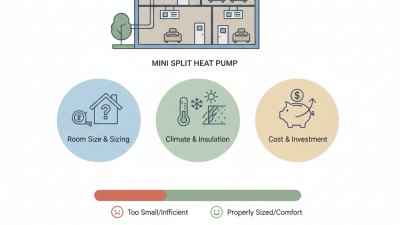
For example, an indoor unit above a living-room doorway can blow warm air across the space on a cold morning. Many systems also let users set different temperatures in separate rooms. That can help avoid heating an empty bedroom, but comfort depends on placement, insulation, and airflow. A unit that is too small may struggle during extreme weather. One that is too large may cycle frequently and control humidity less effectively. Correct sizing matters.
It is tempting to judge a system by its advertised efficiency alone. Real-world results also depend on climate, installation quality, maintenance, and how the home is used. A qualified HVAC professional can assess those conditions and explain suitable options. The details vary. This guide introduces the main components, operating cycle, benefits, and limitations of a Mini Split Heat Pump, so readers can ask better questions before choosing a system.
A mini-split heat pump is a ductless heating and cooling system with an outdoor unit connected to one or more indoor units. The outdoor unit moves heat between the outside air and the home; indoors, a fan circulates conditioned air directly into the room. No ductwork required. A refrigerant line and small electrical connections link the units, so installation still needs careful planning for wall placement, drainage, and power.
In heating mode, the system gathers heat from outdoor air and transfers it inside. A reversing valve changes the refrigerant’s direction for cooling. It does not create heat like a resistance heater; it moves heat, which helps explain its efficiency. The U.S. Department of Energy’s Energy Saver guidance says heat pumps can use about 50% less electricity than electric resistance heating. The International Energy Agency’s 2022 report, The Future of Heat Pumps, notes that heat pumps can be three to five times more energy-efficient than gas boilers. Those figures describe broad comparisons, not a promise for every home. Performance depends on outdoor temperature, sizing, and installation quality. That last part is easy to underestimate. A poorly placed indoor unit can leave one corner chilly, even when the equipment is working normally.
A mini-split heat pump is built around an outdoor unit and one or more indoor air handlers. The outdoor cabinet contains a compressor, a coil, and a fan. The compressor circulates refrigerant through insulated pipes, called a line set. That refrigerant absorbs heat outdoors and releases it indoors, or reverses direction for cooling. Inside, a coil transfers heat to the room, while a fan moves air across it. A reversing valve changes the refrigerant’s direction. Small, but important.
Each air handler usually has a washable filter, a temperature sensor, and a remote or wall controller. A condensate drain carries away water formed during cooling. In heating mode, the outdoor coil can collect frost; the system may briefly reverse operation to defrost it. That pause can feel odd on a cold day, but it is part of normal operation.
The U.S. Department of Energy’s Energy Saver guidance reports that duct systems can lose about 20% to 30% of their air through leaks and poor connections. A mini-split avoids those ducts, though installation details still matter: refrigerant lines need sound insulation, and indoor units need clear airflow. The DOE also reports that heat pumps can use about 50% less electricity for heating than electric resistance systems. Actual performance varies with climate, sizing, and setup. A misplaced indoor unit can leave one corner chilly.
A mini-split heat pump moves heat rather than creating it directly. In heating mode, its outdoor coil absorbs heat from the outside air, even when the air feels cold. Refrigerant flowing through the coil picks up that energy and changes from liquid to gas. The compressor then raises the refrigerant’s pressure and temperature, sending it indoors. At the indoor coil, the warmer refrigerant releases heat into the room and condenses back into liquid.
That is the key. A reversing valve changes the refrigerant’s direction for cooling. The indoor coil then draws heat from the room, and the outdoor coil releases it outside. It is easy to picture heat traveling in a simple loop, though the real cycle involves changing pressure and state. On chilly days, the outdoor coil can collect frost. The system may briefly run a defrost cycle, so indoor heating can pause or feel less steady. Airflow, outdoor temperature, and correct system sizing all affect how comfortably heat reaches a room. A warm stream near the unit does not always mean every corner feels warm.
Illustrative heating example: for each 1 kWh of electricity used, the system absorbs 2 kWh of heat from outdoor air and delivers 3 kWh indoors. Actual performance varies with outdoor temperature and operating conditions.
A mini-split heat pump transfers heat between indoors and outdoors using refrigerant, rather than making heat by burning fuel. In heating mode, the outdoor coil absorbs heat from the air, even when the air feels cold. The refrigerant carries that energy indoors, where a fan pushes warm air into the room. A reversing valve changes the refrigerant’s direction for cooling: the indoor coil then collects room heat and releases it outside. No combustion is involved. The indoor head can mount high on a wall, so airflow may feel different from heat coming through floor registers.
The U.S. Department of Energy’s Energy Saver guidance says heat pumps can use about 50% less electricity for heating than electric-resistance systems. That comparison is useful, but it does not promise the same savings in every home. Outdoor temperature, unit sizing, insulation, and installation all matter. On a frosty morning, you may notice the system pause or briefly blow cooler air while it defrosts the outdoor coil. It is normal, though not especially comforting. In cooling mode, moisture condenses on the indoor coil and drains through a small line, which needs a clear path. A correctly sized unit should deliver steady comfort; an oversized one may cycle too often and leave a room clammy.
A mini-split indoor unit is more than a vent on the wall. Inside, a fan draws room air through a washable filter and across a heat-exchange coil. In cooling mode, the coil absorbs heat from the air; in heating mode, it releases heat into the room. The fan then sends conditioned air back through adjustable louvers. Most systems recirculate indoor air rather than supply fresh outdoor air, so ventilation may need separate attention.
A built-in sensor monitors room temperature and signals the system to adjust its output. Many units vary compressor speed instead of simply switching between full power and off. That can help maintain a steadier temperature. Quiet, but not silent. Depending on the layout, one indoor unit may serve one open area, while separate units allow room-by-room settings. Aim the louvers to avoid blowing directly onto a bed or desk. A strong breeze can feel uncomfortable even when the thermostat shows the chosen temperature. Placement matters. Filters also need regular cleaning; a clogged filter can restrict airflow and reduce comfort. The exact controls and maintenance steps vary by model, so check the unit’s manual rather than guessing.
A mini split heat pump moves heat between an outdoor unit and one or more indoor units through refrigerant lines. The indoor unit circulates and conditions room air; it does not bring in outdoor air unless the system has a separate ventilation feature.
| Indoor Unit Part or Function | What It Does | How It Affects Air Delivery or Control |
|---|---|---|
| Return-air inlet and filter | Room air enters the indoor unit through an intake grille and passes through a washable or replaceable filter, depending on the model. | The filter captures some airborne dust and lint. Keeping it clean helps maintain airflow; it is not a substitute for a dedicated ventilation or high-efficiency air-cleaning system. |
| Indoor coil (heat exchanger) | Refrigerant transfers heat between the coil and the air moving through the unit. In cooling mode, the coil absorbs heat from room air; in heating mode, it releases heat to the air. | The same indoor coil can cool or heat because the system changes the direction of refrigerant flow. The coil also removes moisture from air during cooling when its surface is below the air’s dew point. |
| Indoor fan and blower | A fan draws room air through the filter and coil, then pushes the conditioned air back into the room. | Fan speed may be selected manually or adjusted automatically by the unit’s controls. Higher airflow can distribute heating or cooling more quickly, while lower airflow may reduce air movement and sound. |
| Adjustable discharge vanes | Horizontal and, on many models, vertical vanes direct air leaving the unit. | Vane position helps guide airflow around the room. In heating mode, directing warm air downward can support room-level circulation; in cooling mode, airflow is often directed across the space rather than straight at occupants. |
| Temperature sensor and setpoint | The indoor unit uses temperature sensing and the user’s selected target temperature to help determine when and how the system should operate. | The control may adjust compressor output and fan operation to move the room toward the setpoint. Sensor location and room-air mixing can affect the temperature the unit detects. |
| Remote control or wall controller | Controls commonly allow users to choose heating, cooling, dry, fan-only, or automatic operation, as well as a temperature setpoint and fan speed. | Available settings vary by model. A controller may also provide scheduling, vane adjustment, quiet operation, or other functions. |
| Condensate drain | During cooling or dehumidification, moisture removed from room air collects on the coil and drains away through a condensate line. | A properly installed and unobstructed drain helps prevent water from backing up or dripping indoors. Drain arrangements differ among installations and indoor-unit types. |
| Indoor-to-outdoor communication | Electrical wiring carries power and control signals between the indoor and outdoor equipment, according to the system design. | The indoor unit’s demand is coordinated with the outdoor unit, which operates the compressor and manages refrigerant flow. Inverter-driven systems can vary compressor speed rather than relying only on repeated full-capacity starts and stops. |
| Multi-zone operation | Some systems connect multiple indoor units to one outdoor unit, with individual room controls. | Each indoor unit can often be set independently, but the zones share outdoor equipment and may have operating limits. The exact combination of modes and capacities depends on system design. |
Operation, controls, filtration, and airflow features vary by system. Follow the equipment instructions and have refrigerant, electrical, and installation work handled by qualified professionals.