Choosing a High Temperature Heat Pump is not simply a matter of comparing prices. The right system must match your building, heating demand, and existing distribution network. Older homes may require water temperatures of 70°C or more. Some modern units can provide this heat, but performance may decline in colder weather.
The International Energy Agency’s Executive Director, Dr. Fatih Birol, described heat pumps as “an indispensable part of the solution to reduce emissions and natural gas use.” His observation reflects a wider shift in building technology. However, efficiency claims need careful checking. A unit’s seasonal performance, refrigerant, backup heater, noise level, and maintenance requirements all matter. The cheapest quotation may not deliver the lowest lifetime cost.
This guide presents seven practical tips for buying a High Temperature Heat Pump. It examines heat-loss calculations, radiator compatibility, operating temperatures, coefficient of performance, installation quality, controls, and after-sales support. Look for measured data, not only attractive brochure figures. Ask whether the quoted output applies at your local winter temperature. Request clear information about warranties and replacement parts.
A good purchase begins with the building.
Still, no checklist is perfect. Occupant habits, poor insulation, and inaccurate surveys can change real-world results. I have seen impressive specifications lose value when installers ignored pipework or airflow. That is why independent advice remains useful. A qualified installer should inspect the property, explain assumptions, and show expected annual energy use before any contract is signed.
High-temperature heat pumps can deliver water above 70°C, making them useful for hotels, hospitals, food processing, and older buildings. Their technology usually combines a specialized refrigerant circuit, a high-pressure compressor, and carefully controlled heat exchangers. Some systems use two-stage or cascade compression for demanding temperatures. The design choice matters.
Check the required water temperature before comparing equipment. A lower setting usually improves efficiency. Inspect the available heat source, such as outdoor air, waste heat, or process water. Its temperature changes across seasons. Ask for performance data at your actual conditions, not only laboratory ratings. A system producing 80°C water may consume much more electricity than expected. Look closely at the COP, noise level, defrost behavior, and installation space.
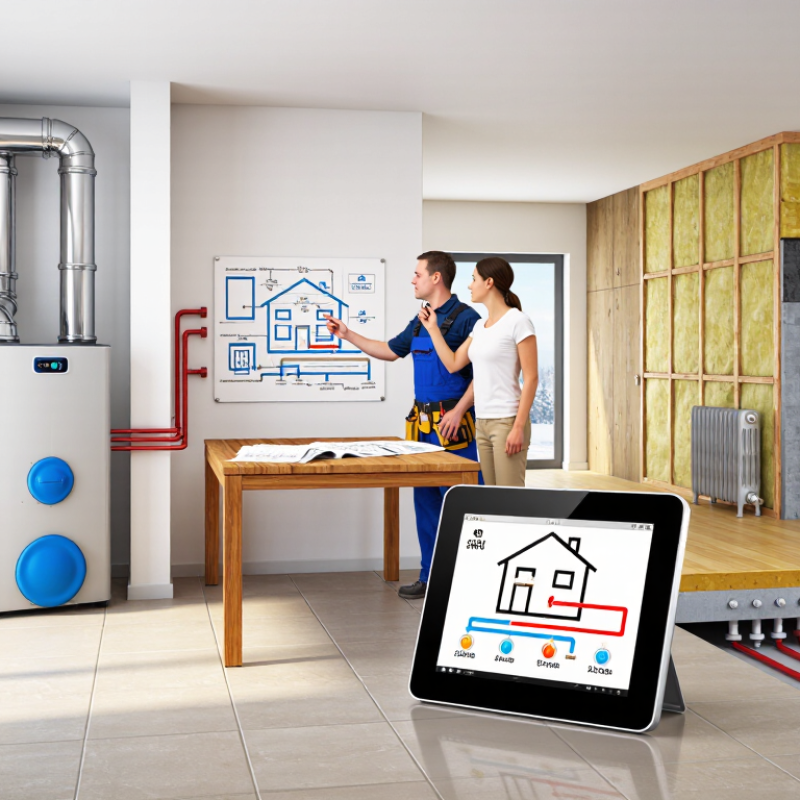
Hydraulic design deserves equal attention. Existing radiators, storage tanks, pumps, and pipework may need adjustment. Poor flow can reduce output and create unstable temperatures. Controls should coordinate the heat pump with backup heaters and demand schedules. Safety devices and local compliance requirements also need professional review. In field assessments, I have seen promising systems underperform because insulation was overlooked. That was an avoidable mistake. Plan filter cleaning, sensor checks, refrigerant inspections, and compressor servicing before commissioning. A small monitoring screen can reveal rising energy use early. Performance should be measured after installation, because calculated savings rarely match every building’s daily behavior.
Assess your heating needs before comparing equipment. Measure the rooms, insulation, window areas, and current energy use. A poorly insulated house may need more output than expected. Check the heat loss calculation, not just the floor area. I once saw a system selected by room size alone. It struggled during a cold week.
Your local climate matters greatly. Record the lowest outdoor temperatures from recent winters. Ask how the unit performs below freezing, including its defrost cycle. A heat pump may advertise high water temperatures, but efficiency usually falls as temperatures rise. Radiators designed for 70°C water may need replacement or balancing. Underfloor heating often works well at lower temperatures. Test the required flow temperature on the coldest days.
Hot water demand needs equal attention. Count daily showers, baths, and kitchen use. A small household may need a different cylinder than a busy family. Confirm the maximum stored water temperature and the time needed for reheating. Safety controls should reduce scalding risks. Local regulations may also affect installation and maintenance. Request seasonal efficiency data, sound levels, warranty terms, and service access. Leave space around the outdoor unit. I would not ignore noise near a bedroom. My own estimates have sometimes been too optimistic, especially when wind exposure and open doors were overlooked. A qualified installer should verify the design on site.
7 Tips for Buying a High Temperature Heat Pump
Compare Efficiency Ratings, Capacity, and Operating Costs
Do not judge a high temperature heat pump by one efficiency number. Check COP at several outdoor temperatures, especially near your winter design temperature. Seasonal ratings can be useful, but test conditions may differ from your home. Ask for the rating details. Look for heating capacity at low temperatures, not only the maximum output. A unit that produces 12 kW at mild weather may deliver much less during a freezing morning. Match capacity to a professional heat-loss assessment, rather than guessing from the old boiler size.
Check the required water temperature for your radiators. Higher flow temperatures usually reduce efficiency and increase electricity use. A system operating near 45°C may cost less than one constantly reaching 65°C. Compare estimated annual energy consumption using your local electricity tariff. Include standing charges, maintenance, backup heating, and possible electrical upgrades. The cheapest purchase can become expensive. I once focused too heavily on the advertised COP and overlooked poor insulation, which distorted the real cost.
Review the sound level, defrost behavior, control settings, and warranty conditions. Ask an experienced installer how the system performs in similar homes and climates. Request measured capacity data, not vague claims. Check whether the outdoor unit can receive clear airflow during snow or heavy rain. A spreadsheet helps, but it cannot predict every household habit. Leave room for uncertainty. Heating use changes with weather, comfort preferences, and hot-water demand.
Compare seasonal efficiency, heating capacity, and estimated annual electricity cost before choosing a system. The benchmark below uses representative high-temperature air-source heat-pump ranges for a 55°C supply temperature.
Estimated operating cost assumes an annual heating demand of 18,000 kWh, an electricity rate of $0.16/kWh, and cost calculated as heating demand ÷ SCOP × electricity rate. Actual results vary with climate, controls, installation quality, and building heat loss.
7 Tips for Buying a High Temperature Heat Pump
Start with system compatibility. Check the existing radiators, pipework, electrical supply, controls, and hot-water cylinder. A heat pump may reach high flow temperatures, but efficiency usually falls as temperature rises. The International Energy Agency reports that heat pumps can reduce heating emissions by at least 20% compared with gas boilers, even with carbon-intensive electricity. Cleaner electricity delivers much larger reductions.
Measure before choosing capacity. Review heat-loss calculations, insulation levels, room sizes, and local winter temperatures. Oversizing can increase cycling, noise, and purchase costs. Undersizing may leave rooms cold during frost. Ask for seasonal performance data, not only the advertised maximum temperature. The U.S. Department of Energy states that heat pumps can reduce electricity use for heating by about 50% compared with electric resistance systems.
Installation details matter. Confirm outdoor clearance, drainage, service access, refrigerant rules, and noise limits. Existing radiators may work, but some rooms might need larger emitters. Set controls carefully, then record flow temperature, return temperature, and electricity use after commissioning. Maintenance should include filter cleaning, coil inspection, pressure checks, and defrost review. Small defects matter. A tidy installation can still perform poorly when controls are misunderstood. I would also allow a contingency budget, because older wiring and hidden pipe corrosion often appear only after work begins.
| Tip | Key Dimension | What to Check | Practical Guidance | Potential Risk if Overlooked |
|---|---|---|---|---|
| 1 | Confirm Heating-System Compatibility | Identify whether the existing system uses radiators, underfloor heating, fan coils, or domestic hot-water storage. Check the required flow temperature and pipework condition. | High-temperature heat pumps can support higher water temperatures than standard models, but lower-temperature emitters generally improve efficiency. Confirm compatibility with a qualified heating designer. | Insufficient heat output, noisy operation, poor efficiency, or the need for unexpected radiator and pipework upgrades. |
| 2 | Evaluate Cold-Weather Performance | Review the manufacturer’s published heating capacity and efficiency at low outdoor temperatures, not only at mild test conditions. | Compare performance data at the design outdoor temperature for the property. Consider defrost behavior, backup heat, and the local winter climate. | Capacity may fall during very cold weather, potentially causing longer run times or inadequate indoor comfort. |
| 3 | Size the Unit Correctly | Request a room-by-room heat-loss calculation based on insulation, windows, building orientation, ventilation, and local design temperature. | Choose capacity from calculated demand rather than floor area alone. Avoid excessive oversizing because frequent cycling can reduce comfort and efficiency. | An undersized system may rely heavily on backup heat; an oversized system may cycle frequently and cost more to install. |
| 4 | Check Electrical and Site Requirements | Verify voltage, maximum current, circuit protection, outdoor-unit clearances, drainage, service access, and permissible sound levels. | Have an electrician confirm that the consumer unit or electrical panel can support the equipment and any auxiliary heater. Keep airflow paths clear around the outdoor unit. | Electrical upgrades, installation delays, airflow restrictions, ice buildup, or complaints about operating noise. |
| 5 | Review Refrigerant and Environmental Details | Check the refrigerant type, global-warming impact, applicable regulations, charge limits, and whether certified technicians are required for service. | Use the latest local regulations and product documentation. Select equipment with accessible service information and an appropriate long-term refrigerant strategy. | Higher compliance costs, restricted servicing options, or difficulties obtaining parts and qualified support in the future. |
| 6 | Assess Installation Quality and Controls | Confirm installer qualifications, hydraulic design, weather compensation, hot-water controls, condensate drainage, insulation, commissioning, and user training. | Ask for a written scope of work, commissioning records, control settings, warranty conditions, and instructions for normal operation. | Even a suitable unit can perform poorly if flow rates, controls, pipe insulation, or commissioning are incorrect. |
| 7 | Plan Maintenance and Lifecycle Costs | Review service intervals, filter cleaning, coil inspection, water-quality requirements, defrost-drain checks, spare-parts availability, warranty, and expected electricity use. | Keep outdoor coils and airflow paths clear, clean or replace filters as recommended, monitor unusual noise or performance changes, and arrange periodic professional servicing. | Reduced efficiency, frozen or blocked components, premature wear, higher operating costs, and avoidable repairs. |
Note: Actual performance, operating cost, and installation requirements vary with climate, building heat loss, system design, electricity rates, and local regulations.
7 Tips for Buying a High Temperature Heat Pump
Safety, warranty coverage, and total purchase value deserve more attention than the advertised outlet temperature. The International Energy Agency reported that global heat pump sales increased by 11% in 2022, while European sales rose by nearly 40%. More installations also mean more varied installation quality. Check for high-pressure cut-offs, compressor protection, electrical overload protection, and automatic freeze prevention. A temperature-limiting control matters when the system supplies domestic hot water. Ask how faults appear on the controller. Clear alerts can prevent expensive guesswork.
Read the warranty before comparing prices. Confirm coverage for the compressor, heat exchanger, sensors, labor, and replacement refrigerant. Check whether annual servicing is required. The U.S. Department of Energy’s maintenance guidance links correct airflow, clean filters, and proper refrigerant charge with efficient operation. A long parts warranty is less useful if labor coverage ends after one year. Get every exclusion in writing.
Look beyond the invoice.
The European Heat Pump Association reports that operating costs depend heavily on system design, electricity prices, and building efficiency. Request a seasonal performance estimate, not only a peak efficiency figure. Include electrical upgrades, pipework, controls, commissioning, and future servicing in the calculation. I would not choose the highest temperature rating automatically; hotter water can reduce efficiency and increase wear. This is easy to overlook. A cheaper unit may become costly if it cycles frequently, lacks local technical support, or needs specialized parts. A site survey and a written heat-loss calculation provide stronger evidence than optimistic sales language.