Leave Your Message
Choosing the right Food Dehydrator Machine can change how confidently you preserve fruit, vegetables, herbs, and homemade snacks. The best model is not always the largest or most expensive. It should match your kitchen space, drying habits, batch size, and cleaning routine.
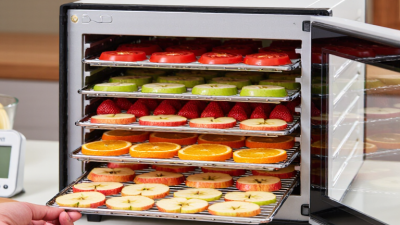
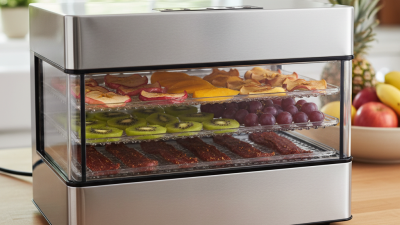
A reliable machine needs steady heat, consistent airflow, and accurate temperature control. These details matter when apple slices must dry evenly without becoming brittle. Adjustable trays can support different foods, while stainless steel surfaces may simplify cleaning and improve long-term durability. Check the timer, noise level, power use, and warranty before trusting impressive product photos. Small controls matter.
Think about real use.
A compact dehydrator may suit occasional family batches. A larger unit could save time during harvest season, but it may occupy valuable counter space. Horizontal airflow often reduces flavor transfer between trays, although performance varies by design. Read independent reviews, examine user photographs, and compare manufacturer specifications carefully. Marketing language can sound convincing. It is not always evidence.
Food safety also deserves attention. Follow tested drying temperatures, prepare ingredients hygienically, and store finished foods in clean, airtight containers. A dehydrator cannot correct spoiled ingredients or careless storage. Some recommendations may need adjustment for humidity, altitude, or specific recipes. That is easy to overlook.
This guide will help you assess practical features instead of chasing unnecessary extras. It will compare machine types, explain useful specifications, and highlight common buying mistakes. Your perfect choice may still require compromise. That is normal.
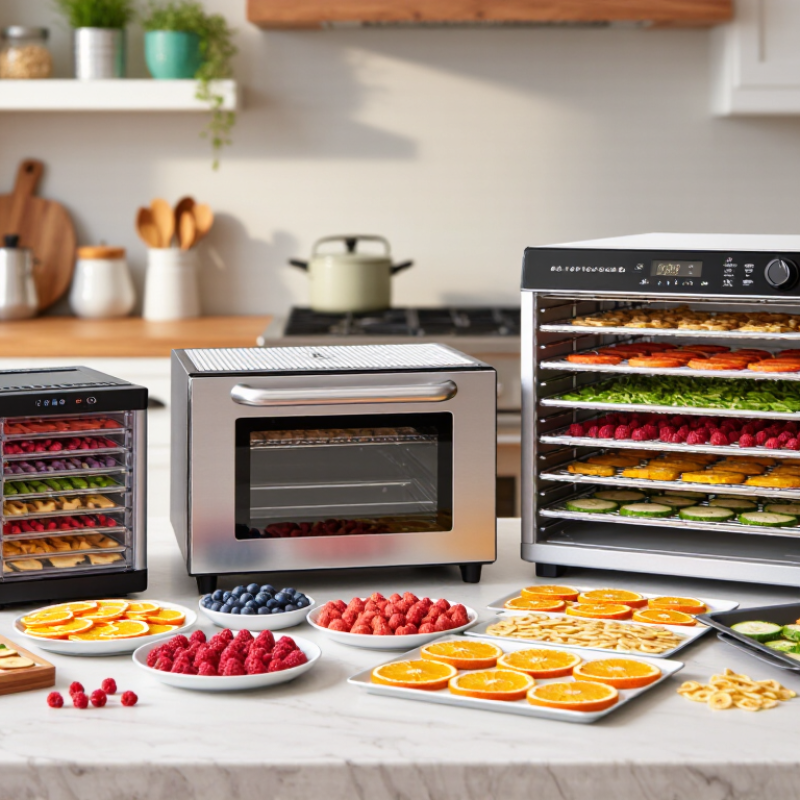
How to Choose the Best Food Dehydrator Machine?
A food dehydrator removes moisture through gentle, controlled heat. Its fan moves warm air across sliced food, while vents carry humid air away. Less moisture slows bacterial, yeast, and mold growth. The food becomes lighter, firmer, and easier to store.
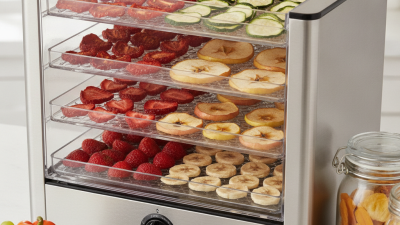
Temperature control matters. The National Center for Home Food Preservation recommends about 125–140°F for fruits and 125–135°F for vegetables. USDA guidance also stresses clean preparation and safe storage after drying. A machine with adjustable heat, steady airflow, removable trays, and a clear timer offers better control. Stackable trays are useful, but crowded trays can trap moisture. I learned this the hard way with thick apple slices. The outside felt dry, while the center stayed soft.
Tips: Slice food evenly, usually ⅛–¼ inch thick. Leave space between pieces. Rotate trays when airflow seems uneven. Cool samples before testing texture. For storage, USDA FoodKeeper guidance commonly places dried fruit at roughly six to twelve months in a cool, dry pantry, although quality declines sooner with heat or humidity. Check for condensation inside the container. If you see it, dry the food again. Do not rely on appearance alone. A simple kitchen scale can reveal weight loss and improve consistency. I still find texture subjective, so recording slice thickness, temperature, and drying time is worth the extra effort.
| Selection Dimension | Typical Data or Range | What It Does | Why It Matters | Recommended Choice |
|---|---|---|---|---|
| Drying Temperature Range | Approximately 35–70 °C (95–158 °F) | Moves warm air across food to evaporate moisture gradually. | Different foods require different temperatures. Herbs and delicate produce generally need lower heat, while meat requires a higher, food-safe setting. | Choose a model with adjustable temperature control rather than a single fixed setting. |
| Temperature Accuracy | Preferably within about ±5 °C of the selected setting | Maintains a more consistent drying environment during the cycle. | Stable heat helps reduce uneven texture, over-drying, and under-drying. | Look for clear controls and reliable temperature regulation. |
| Airflow Design | Horizontal or vertical airflow | A fan circulates heated air through the drying chamber. | Horizontal airflow usually provides more even drying and reduces the need to rotate trays. | Choose horizontal airflow for frequent use or for drying multiple food types at once. |
| Usable Drying Area | About 0.3–1.0 m² for common home units | Determines how much food can be spread out in one batch. | More surface area is useful for families, garden harvests, and batch preparation. | Estimate the amount of food you normally process before selecting the chamber size. |
| Number of Trays | Commonly 5–10 trays | Provides separate drying levels inside the machine. | Additional trays increase capacity, but overcrowding can restrict airflow and extend drying time. | Select removable trays that can be rearranged or removed for larger pieces of food. |
| Tray Spacing | Usually about 2–4 cm between trays | Creates room for air to circulate around the food. | Wider spacing is better for fruit slices and thicker pieces; narrow spacing is suitable for herbs and thin slices. | Choose adjustable or removable trays when drying different food sizes. |
| Typical Power Rating | Approximately 300–1,000 W for household models | Powers the heating element and fan. | Higher wattage can support larger chambers, but electricity use also depends on drying time and thermostat cycling. | Match the wattage to the machine’s capacity instead of choosing the highest number alone. |
| Timer Function | Commonly 1–48 hours, depending on the model | Turns the dehydrator off automatically after a selected period. | Useful because drying times vary significantly by food type, slice thickness, moisture content, and humidity. | A timer with an automatic shut-off is preferable for overnight or unattended cycles. |
| Noise Level | Often about 45–60 dB | Reflects the sound produced mainly by the circulation fan. | A quieter machine is more comfortable in kitchens or living areas during long drying cycles. | Choose a lower-noise model if the dehydrator will operate near occupied rooms. |
| Tray Material | Food-grade plastic, stainless steel, or a combination | Supports food while allowing warm air to pass around it. | Stainless steel is durable and resists odors; food-grade plastic is usually lighter and easier to handle. | Confirm that trays are food-contact safe and suitable for the intended cleaning method. |
| Cleaning Requirements | Removable trays and accessible interior surfaces | Allows crumbs, sugars, oils, and food residue to be removed after use. | Regular cleaning helps prevent odors, contamination, and residue buildup. | Prioritize dishwasher-safe trays only when the manufacturer specifically permits it. |
| Best Food Applications | Fruits, vegetables, herbs, mushrooms, fruit leather, and properly prepared meat | Removes moisture while preserving food in a lightweight, shelf-stable form. | Different foods have different preparation and safety requirements. | Use a model with adjustable heat for greater versatility. |
| Drying Time | Approximately 4–24 hours for many foods | Allows moisture to migrate from the center of the food to the surface and evaporate. | Time varies with food thickness, initial moisture, temperature, loading density, and room humidity. | Choose a machine with a timer and check food texture rather than relying on time alone. |
| Meat-Drying Capability | Requires a suitable high-temperature setting and safe preparation | Produces dried meat products such as jerky by reducing moisture. | Temperature and handling are critical because dehydration alone may not eliminate all harmful microorganisms. | Follow current food-safety guidance and use a food thermometer when preparing meat. |
| Energy Consideration | Energy use depends on wattage, operating time, and thermostat cycling | Converts electrical energy into heat and airflow for moisture removal. | A larger or more powerful unit may finish a batch faster but can consume more electricity per hour. | Compare capacity, expected batch size, and drying time—not wattage alone. |
| Control Interface | Manual dial, digital buttons, or touchscreen | Adjusts temperature and drying duration. | Simple controls are easy to operate, while digital controls can provide more precise settings. | Select the interface that is easiest to read, clean, and use consistently. |
Note: The figures shown are typical ranges for household food dehydrators. Actual performance depends on food thickness, moisture content, loading method, ambient humidity, airflow, and the specific machine design.