Leave Your Message
AI Helps Write

Top 10 Food Dehydrator Machines for Global Buyers

A Food Dehydrator Machine can turn sliced apples, herbs, mushrooms, or meat into shelf-stable foods, but results depend on more than its advertised wattage. Buyers need to consider airflow, temperature control, tray capacity, cleaning, and the machine’s intended use. A crowded tray can dry unevenly. That matters.

Drying researcher Arun S. Mujumdar is known for his work on drying technology. In paraphrase, a principle associated with his work is: “Good drying depends on managing heat and moisture together.” This is a useful lens for comparing machines. A fan that moves air evenly and controls that hold a steady temperature may matter more than a long feature list. Still, product specifications alone cannot promise identical results in every kitchen.

This guide to the Top 10 Food Dehydrator Machines for Global Buyers compares practical features for home users and small-scale food businesses. It considers capacity, temperature range, construction, ease of cleaning, and the needs of different food batches. Availability, voltage, and plug type can vary by market, so buyers should verify local product details before ordering. Some machines look ideal on paper. Real use can be less tidy: trays may need rotating, and drying times change with slice thickness and humidity. The comparisons aim to make those trade-offs easier to see, not to suggest one machine suits everyone.
Top 10 Food Dehydrator Machines for Global Buyers

How Food Dehydrators Work and Their Common Uses

A food dehydrator removes water from ingredients by circulating warm air around them. Most units use a heating element, a fan, and stacked trays. Airflow matters. When moisture leaves the food, it becomes less favorable for many spoilage organisms, but dehydration does not sterilize it. Clean hands, clean trays, and sound storage still matter.

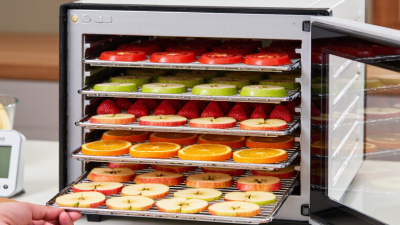
For even drying, slice apples or tomatoes to a similar thickness and leave space between pieces. A crowded tray can trap damp air, so rotate trays if your machine dries unevenly. Fruit often becomes chewy, while herbs should feel brittle and crumble easily. Drying times vary with slice size, humidity, and machine design; a recipe’s timing is a guide, not a guarantee. That part can be frustrating.

Common uses include making dried fruit for snacks, crisp vegetable chips, and herbs for cooking. Some people also prepare dried ingredients for soups or lightweight hiking meals. Meat requires particular care: use a tested food-safety method rather than assuming a dehydrator’s heat alone makes it safe. Let finished food cool before packing it in airtight containers, and check for condensation later. A slightly soft center can be easy to miss, especially in thick pieces.
Features and Specifications Global Buyers Should Compare

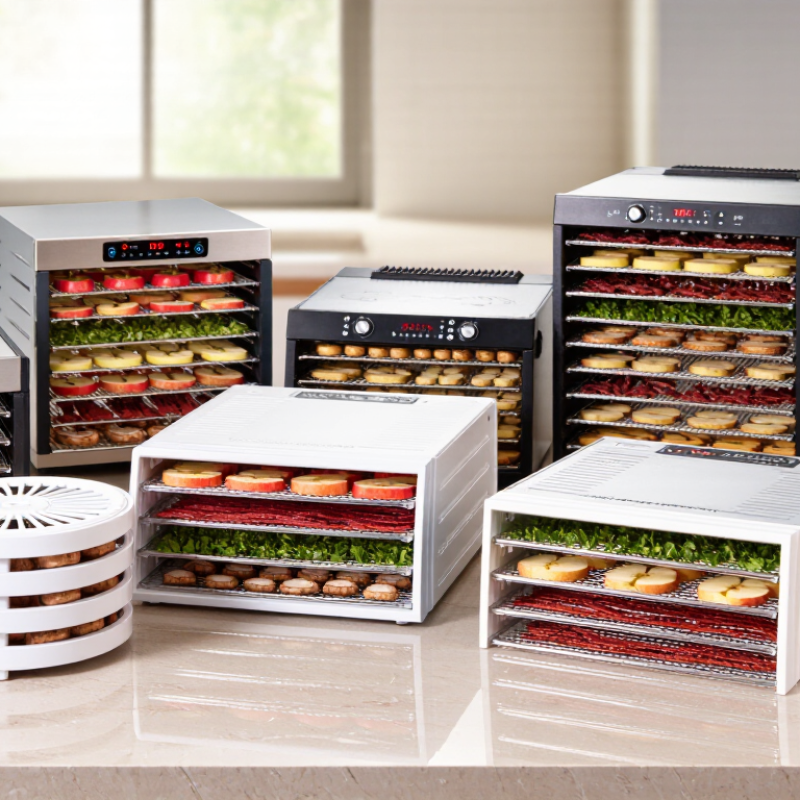
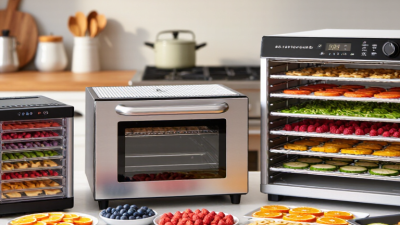
When comparing food dehydrators for global purchasing, examine usable tray area rather than relying on tray count alone. A ten-tray cabinet may hold less than expected if trays are narrow or crowded. Check the temperature range, adjustment increments, and timer length against the foods and batch sizes you plan to dry. Consistent airflow matters, too. Horizontal airflow can reduce uneven drying between shelves, while a fan’s position and access for cleaning deserve a close look.

Compare rated power, voltage, and frequency with the destination market’s electrical supply, and confirm plug options and local conformity requirements with the supplier. Inspect tray material, spacing, and whether trays can be removed and washed easily. Small details matter. For example, a door that opens wide can make loading a heavy batch less awkward. Record the unit’s dimensions and packed weight before estimating freight or storage space. A specification sheet cannot show every practical weakness; uneven results may only appear during a full load. If possible, ask for clear operating instructions and replacement-part availability. Even then, my comparison may miss a detail that matters in a particular kitchen, so leave room to test a sample before a large order.

Top 10 Food Dehydrator Machines for Global Buyers

A useful top-ten guide to food dehydrator machines should compare everyday performance, not just advertised wattage. Buyers can look for steady airflow, adjustable temperature settings, removable trays, and clear controls. These details matter when drying apple slices one day and herbs the next. Even drying is essential. A machine with uneven airflow may leave some pieces leathery while others become brittle.

Capacity should match real use. Compact units suit small kitchens, while larger cabinet-style machines can handle several trays at once. More trays are not always better; crowded shelves can slow drying and make checking food awkward. Look for washable tray surfaces and accessible fan areas, since crumbs and sticky fruit can collect in corners. A timer helps, but it does not replace checking texture and following reliable food-handling guidance.

Global buyers should confirm voltage, plug type, replacement-part access, and local service before ordering. These practical details are easy to overlook. A ranking can change with shipping costs, testing methods, and regional availability, so treat any top-ten list as a starting point rather than a universal verdict. I would also compare noise and counter space in person when possible; product specifications rarely capture how a machine feels in a small kitchen.

Top 10 Food Dehydrator Machines for Global Buyers

Rank Machine Type Typical Capacity or Scale Typical Temperature Range Typical Power / Energy Best Suited For Key Buyer Check
1 Horizontal-Airflow Countertop Dehydrator Usually 6–12 trays; small batches About 35–75°C (95–167°F) Often 400–1,000 W Home use, herbs, fruit, and snacks Check tray dimensions, airflow uniformity, and cleaning access.
2 Stackable Tray Dehydrator Typically 4–10 trays; small batches About 35–70°C (95–158°F) Often 250–700 W Occasional home drying and limited storage space Confirm whether trays rotate and whether the unit has a timer.
3 Stainless-Steel Cabinet Dehydrator Commonly 6–20 trays; small business or frequent home use About 30–90°C (86–194°F) Often 500–1,500 W Frequent batches and a durable, wipe-clean interior Check food-contact materials, door seal, and electrical certification.
4 Commercial Tray-Cabinet Dehydrator Often 10–40 trays; batch production About 30–90°C (86–194°F) Commonly 1–5 kW, depending on size Restaurants, processors, and small food businesses Compare usable tray area, loading capacity, and cleaning requirements.
5 Rotating-Rack Tray Dehydrator Typically tens of trays; larger batch runs Often about 40–90°C (104–194°F) Varies substantially with cabinet size; commonly several kW Operations seeking more consistent drying across loaded racks Ask for loaded-rack performance data and the required floor space.
6 Solar Cabinet Dehydrator Small to medium batches; capacity depends on collector and tray area Sunlight-dependent; temperature is not fixed Solar thermal; optional fan may use a small electrical supply Sunny locations with low-grid-energy requirements Assess local weather, ventilation, insect protection, and backup drying needs.
7 Solar-Tunnel Dehydrator Medium to large batches; often used for agricultural produce Sunlight- and airflow-dependent; not a fixed setpoint Primarily solar heat; fans may require electricity Farm-scale drying in regions with reliable sunshine Check weather protection, airflow control, and product-loading workflow.
8 Heat-Pump Dehydrator Commercial batch sizes; capacity is model-specific Often about 30–80°C (86–176°F) Electric heat-pump system; consumption depends on load and conditions Businesses prioritizing heat recovery and controlled drying Request energy-use data for the intended product and operating conditions.
9 Vacuum Dehydrator Specialty batch processing; chamber size determines capacity Product-dependent; reduced pressure allows drying at lower temperatures Electric heating plus vacuum pump; varies by chamber size Products needing controlled low-pressure drying Check vacuum level, chamber material, cycle time, and maintenance needs.
10 Continuous-Belt Dehydrator Continuous production; throughput is engineered for the product and line Set by product, belt speed, and process design Industrial-scale energy demand; configuration-specific Large processors requiring continuous feed and discharge Validate throughput using the target product, moisture level, and belt loading.

Specifications are indicative ranges for machine categories, not guarantees for a particular unit. Actual capacity, temperature, power use, and performance vary by design, product, loading, and local electrical supply. Confirm detailed specifications and applicable safety certifications before purchase.

Regional Power, Safety, and Certification Considerations

A food dehydrator that performs well in one market may not suit another’s electrical supply. Check the rated voltage and frequency against the destination country’s mains, not just the plug shape. A plug adapter does not convert voltage. Also compare the machine’s wattage with the outlet and circuit capacity, especially in small kitchens with several appliances running.

Small details matter. Look for clear instructions on grounding, ventilation, and overheat protection. During operation, warm air needs room to escape; placing a unit against a wall or beneath low cabinets can trap heat. Food-contact trays and liners should have material information available for review. A polished product page is not a substitute for a readable manual or a complete rating label.

Certification requirements differ by market and product category, so buyers should confirm applicable documentation with the supplier and local importer. Do not assume one certificate covers every destination. Ask for test reports, model-specific records, and labels matching the exact unit being shipped. Even a thorough specification can leave questions unanswered. Check them before ordering, rather than after a shipment arrives with an incompatible cord or unclear safety markings.

Matching Dehydrator Capacity to Home or Commercial Needs

For home use, match capacity to the amount you can prepare and load in one sitting, not the advertised tray count alone. Tray sizes and usable drying area vary, so compare square footage or fresh-food load per batch. A few trays may suit herbs, apple slices, or occasional garden surplus. That matters. FAO’s 2023 State of Food and Agriculture estimated that 13.2% of food was lost between harvest and retail in 2021, highlighting the value of practical preservation.

Commercial buyers should calculate throughput: kilograms of fresh produce processed per batch, drying time, and batches per working day. A large cabinet can still become a bottleneck if loading, cleaning, or uneven airflow slows production. Test with the thickest pieces you expect to dry. Small batches work. Record the time and final texture before scaling up.

UNEP’s Food Waste Index Report 2024 estimated 1.05 billion tonnes of food waste worldwide in 2022 across households, food service, and retail. Dehydration can help use surplus, but capacity estimates remain imperfect: crop moisture, slice thickness, and room conditions change drying times. Leave headroom for peak harvests, while checking that your regular batches will not leave most trays empty.